


Dividers do more than keep a meal tidy. They help keep different foods apart, which can be useful for customers with allergies or specific dietary needs. Choosing compartment takeaways and lids that suit your menu also helps protect presentation from kitchen to customer.
It makes sense to weigh more than the number of sections. The right choice depends on what you serve, whether it’s hot or cold, how the meal needs to travel and how the lid fits. This guide explains how dividers support separate portions, what to consider when choosing containers and lids, and how available options and carton quantities compare. You’ll also find practical pointers on material choices and compostability, so you can make a considered decision for your Sydney food-service business and customer experience.
Key Takeaways
- Use dividers to keep different foods separate and make multi-part meals easier to present.
- Match the container and lid to the food’s temperature, moisture and travel needs to help preserve the meal’s presentation.
- Compare materials, compartment layouts and relevant compostability certifications when selecting packaging.
- Plan carton quantities around menu demand and storage space, then consider how bags, cutlery and custom branding complete the takeaway experience.
How Choosing Food Containers with Dividers Helps?
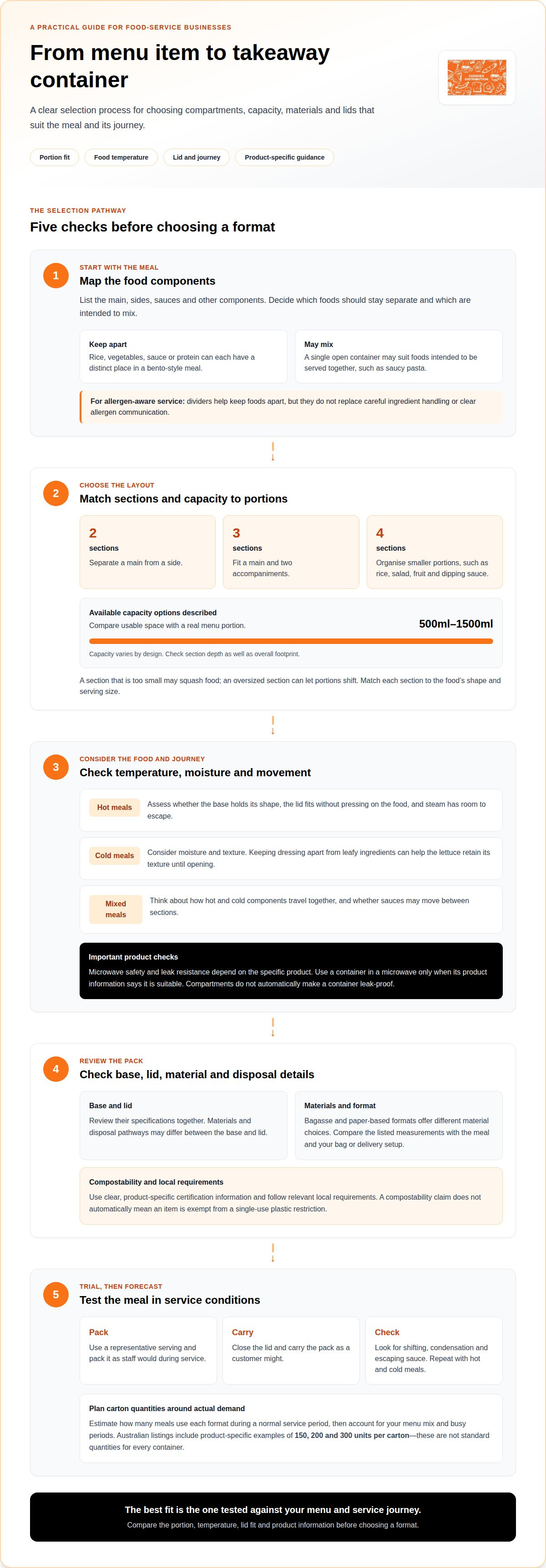
Dividers keep meal components in separate sections during packing and transport. In a bento box, rice can sit apart from vegetables, sauce or protein. This makes portions easier to arrange and helps preserve the intended presentation. Separate sections can also help keep foods apart for customers with allergies or specific dietary needs. They don’t replace careful ingredient handling or clear allergen communication.
Choose the layout to suit the meal, not just the number of compartments. A two-section container can separate a main from a side, while three sections suit a main and two accompaniments. Four sections can organise smaller portions, such as rice, salad, fruit and dipping sauce. A section that’s too small may squash food; an oversized one can let portions shift. Match each section to the shape and serving size of the food.
Container capacity is another useful guide. Available compartment options typically range from 500ml to 1500ml, with two, three or four sections. Bento-style meal containers work well when a menu includes distinct components, such as curry with rice or a protein with salad. A single open container may suit foods intended to mix, such as a saucy pasta dish. The lid should fit the base securely for the meal’s journey.
Alternatives to disposable compartment containers in Australia include reusable stainless-steel or glass food containers. Separate reusable pots can hold sauces or sides alongside a larger container. For food-service operators, the practical choice depends on portioning, transport and whether customers can return or reuse the packaging.
Before choosing, map a menu item to its packaging: list each component, note which foods should stay separate, then select a suitable layout and capacity. This helps bento boxes support efficient packing and neat presentation.
Choosing containers for hot or cold food
Match a container to the food’s temperature, moisture and journey. Hot curry, rice and steamed vegetables need a base that holds its shape during packing and transport. Cold salads, cut fruit and dressings have different needs: moisture can soften some packaging, while sauces may move between sections. Choose compartment takeaways and lids to suit the menu item and its travel conditions.
Microwave safety and leak resistance depend on the specific product. Use a container in a microwave only when its product information says it’s suitable. For leak resistance, consider how the lid fits and whether the design suits liquid foods such as soup or dressing. Compartments separate foods, but don’t automatically make a container leak-proof.
For hot meals, assess whether steam has room to escape and the lid closes without pressing against the food. A saucy dish needs a different transport approach from grilled vegetables. For cold meals, consider wet ingredients beside crisp items. Keeping dressing separate can help lettuce retain its texture until the customer opens the meal.
- Hot curry: assess the base, lid fit and space for steam.
- Cold salad: keep dressing apart from leafy ingredients.
- Mixed meal: consider how hot and cold components travel together.
The performance of compartment takeaways and lids depends on the specific product, not its section count alone. Trial a representative serving before adopting a format across your menu. Pack it as staff would during service, close the lid, then carry it as a customer might. Check for shifting, condensation and escaping sauce. Repeat with hot and cold meals to see whether another layout or lid style better suits your menu.
Compartment takeaway container options
Compare material, disposal guidance and format before selecting packaging. In Australia, both local requirements and product design matter.
Container Materials and Sustainability
Bagasse and paper-based formats offer different material choices for takeaway service. Assess the base and lid separately, since their materials and disposal pathways may differ. Australia’s single-use plastic restrictions apply to specified disposable items, with requirements depending on the item and jurisdiction. A compostability claim doesn’t automatically mean an item is exempt from a restriction. Use clear, product-specific certification information and follow relevant local requirements when choosing packaging.
Sizes and Compartment Counts
Choose capacity by comparing the container’s usable space with a real menu portion. A side-by-side packing trial can show whether the main, sides and sauce fit without crowding or excessive unused space. Check compartment depth as well as the overall footprint: a shallow section may suit sliced fruit, while a deeper one may better contain a substantial side. This practical fit assessment helps match the format to your service.
Available Container Types and Sizes
Australian takeaway formats include bento-style meal boxes and compartment containers with bases and matching lids. Capacity and dimensions vary by design, so compare the listed measurements with the meal and your bag or delivery setup. For example, a lunch with a separate dip may need room for a small pot, while a meal with several sides benefits from sections shaped for individual portions. Review the base and lid specifications together to select a compatible pack.
The described compartment containers include options with two, three or four compartments, allowing operators to separate a main from sides or keep distinct menu items apart.
Planning takeaway container orders
Carton quantities affect storage, replenishment and how well packaging matches your menu. Australian listings show examples of 150, 200 and 300 units per carton. These are product-specific pack sizes, not a standard that applies to every container. Check the quantity for each base and lid before planning an order.
Start with a simple forecast. Estimate how many takeaway meals use each container during a normal service period, then account for your menu mix and busy periods. For example, a three-compartment meal may sell less often than a single-portion option. Forecast each format separately rather than treating all containers as interchangeable.
Keep lids in the same count plan as their matching bases. A carton of 300 lids won’t suit a base carton of 150 unless you intentionally need spare lids. Where bases and lids have separate carton quantities, note both figures in your stock records. This helps staff spot a mismatch before service.
- Match the pack: record each container type beside its compatible lid.
- Estimate demand: use sales patterns for each menu item.
- Plan storage: account for the space taken by full cartons.
For a bento-style menu, track each layout separately. A four-compartment meal and a two-compartment meal may use different packaging at different rates. Reviewing those patterns helps avoid ordering excess cartons of a slower-moving format while a popular option runs low. Include takeaway volume from catering or seasonal menus where relevant.
Set a replenishment point for each format based on how quickly it moves and the space available. A clear record of carton quantity, matching lid and menu use gives staff a practical stock guide. Review it when the menu changes, such as when you add a meal with separate sides, so ordering keeps pace with service needs.
Goodies Distribution: Takeaway Containers
Goodies Distribution helps food-service businesses choose takeaway containers to suit their menu, portioning and service style. For meals with separate components, a divided format can support tidy packing; bagasse containers, trays and bowls offer another material choice. Packaging should suit the food and present your brand clearly from counter to customer.
Consider the complete takeaway order, not just the container. A compatible lid completes the pack, while a paper bag can bring an order together for takeaway. Cutlery can suit meals customers eat away from home. Matching these choices to your service helps staff pack orders consistently during busy periods.
- Takeaway Containers: choose formats around menu portions and service needs.
- Custom Branding Services: reflect your business identity on packaging.
- Paper Bags and Cutlery: complement meals prepared for takeaway.
Custom branding can make packaging part of the customer experience. Consider how your logo and design appear alongside the food, and create a consistent look across containers and bags. For environmental claims, use clear, product-specific information. Certified compostable bagasse bowls are one option for businesses considering packaging with relevant certification.
Goodies Distribution brings together packaging choices for cafés, restaurants and takeaway operators. Share the meals you serve, how customers receive them and the presentation you want to create. These details can guide a practical conversation about containers, branded packaging, bags and cutlery for your operation.
Contact Goodies Distribution to discuss takeaway packaging for your business.
Frequently Asked Questions
What are compartment takeaways and lids?
Compartment takeaways and lids are food-service packaging designed to carry a meal in separate sections. For a kitchen team, the useful detail is how the base and lid work together during packing: staff need to close orders consistently without shifting portions or catching food in the rim. Include the container format in your packing guide, especially when several meals look similar at the pass.
What materials are compartment takeaway containers and lids made from?
Materials vary by product, and a lid may differ from its base. Before adopting a format, read the product details for both pieces and record their materials in your packaging specifications. This gives staff clear information for stock handling and disposal instructions. If you’re comparing alternatives, assess the complete pack rather than assuming one component’s material describes the whole set.
How do you compare compartment takeaway container formats in Australia?
Compare like with like by checking the container style, carton quantity and whether lids are ordered separately. Match these details to your menu, portion sizes and packing routine. This gives your business a useful basis for planning stock without confusing different pack formats.
Are compartment takeaway containers and lids recyclable or compostable in Australia?
That depends on the specific product, its certification and the collection service available where the meal is discarded. Check the packaging’s disposal instructions, and keep base and lid information together for staff. Local facilities can have different acceptance rules, so a certification mark alone doesn’t explain every collection requirement. Clear bin signage can help customers sort items according to local guidance.
Which compartment takeaway containers are best for hot, cold, wet or oily foods?
Choose a format by considering the meal’s full service journey, including packing time, stacking and delivery. A practical trial should use the actual portion and the way your team closes and carries orders. For oily dishes, check for visible seepage after packing; for crisp foods, assess whether condensation affects presentation. Record the results by menu item to guide consistent packaging choices.
How do you choose the right compartment container size and number of sections?
Use a representative serving to assess fit, portion separation and how the meal sits once the lid is closed. Check that staff can fill each section quickly during service and stack the packed container as needed. If the menu has several meal combinations, group them by shared packaging needs. This can simplify kitchen routines while keeping each order organised for handover.