


Coffee cup sleeves can give takeaway customers another point of contact with your café’s identity. A thoughtfully branded sleeve adds to the presentation, but a logo alone won’t create lasting loyalty.
For Sydney cafés, custom coffee cup sleeves are worth considering as part of a wider customer experience: one that includes a comfortable, well-presented drink and packaging that fits the way your team serves it. The design should feel true to your brand, while any material or compostability claims need product-specific evidence.
This article explores how sleeve branding can support recognition and contribute to a memorable café experience, without promising that packaging alone will bring customers back. You’ll also find practical ways to assess design, material claims and daily service fit, so you can make a considered choice for your business and the people who enjoy your coffee.
Key Takeaways
- Use coffee cup sleeves where they improve grip and hand comfort, rather than adding them automatically to every takeaway order.
- Check product-specific documentation before relying on material or compostability claims. A material description alone doesn’t confirm how packaging should be disposed of.
- Choose sleeve artwork for a clear purpose, whether that’s brand recognition or useful customer information, and keep text easy to read.
- Test samples with the cups and lids your café actually uses. Check fit, staff handling and customer use during service.
- Ask suppliers about materials, certification evidence, printing options and compatibility before settling on a sleeve for your packaging system.
Coffee cup sleeves: why cafés use them and what is changing
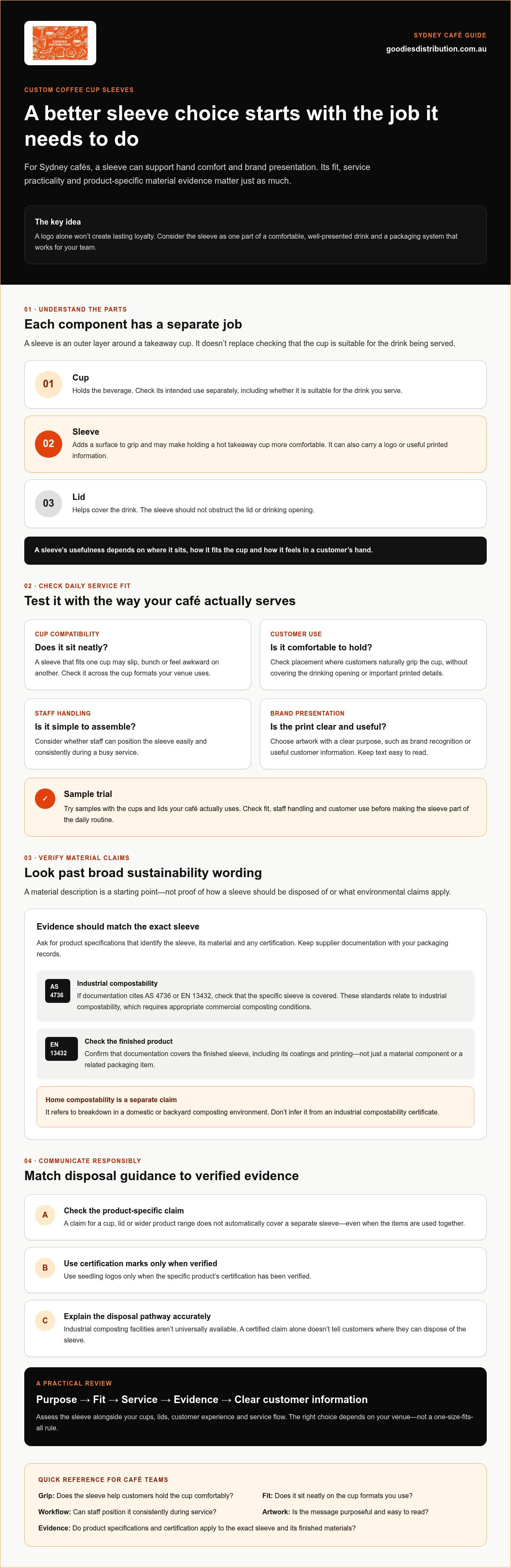
A coffee cup sleeve is an outer layer fitted around a takeaway cup to give customers a surface to hold when carrying a hot drink. It sits between the cup and the hand, while the cup holds the beverage and the lid helps cover it. Each part has a separate job. A sleeve can also provide space for a café logo or useful printed information, but it doesn’t replace checking that the cup itself is suitable for the drink being served.
The basic purpose is simple, but the right choice depends on the cup format, drink service and the way orders move through your venue. A sleeve that sits neatly on one cup may slip, bunch or feel awkward on another. For a concise overview of common purpose, history and use, see Coffee cup sleeve.
What job does a coffee cup sleeve do?
A sleeve adds a layer for customers to grip and may make holding a hot takeaway cup more comfortable. Its usefulness depends on placement and fit. It should sit where the customer naturally holds the cup without obstructing the lid, drinking opening or printed details. Check the cup’s intended use separately. Adding a sleeve doesn’t establish that the cup is suitable for hot drinks.
For staff, the sleeve is another step in assembling an order. Consider whether it’s easy to position during a busy service and whether staff can place it consistently across the cup sizes you offer. A sample trial can reveal handling issues before a packaging choice becomes part of the daily routine.
Why are cafés reassessing sleeve choices?
A 2026 consideration: Rather than assuming cafés are changing sleeves in one uniform way, operators can use this as a prompt to review how each packaging component serves customers and the business. Customer comfort, brand presentation, material evidence and service routines may all prompt a closer look, but their importance will vary between venues.
For a Sydney café, a compact takeaway station may call for fast, simple assembly, while a venue with several cup formats may need to pay closer attention to fit and staff handling. Printed sleeves can carry a brand mark or practical message, provided it remains legible and useful. Any material or compostability statement should be supported by product-specific evidence, not inferred from appearance or general wording.
Start with the job the sleeve needs to do. Then assess how it works alongside your cups, lids, customer experience and service flow. That practical review helps cafés make considered packaging decisions without treating a sleeve as a one-size-fits-all solution.
Coffee cup sleeve materials: look past broad sustainability claims
A sleeve’s material description is a starting point, not proof of how it should be disposed of or what environmental claims can be made. Paper-based sleeve designs may differ in fibre, coatings, printing and intended use. Consider those details alongside practical needs such as fit, customer handling and the pace of service.
Assess each coffee cup sleeve using evidence that applies to that exact item. A claim for a cup, lid or wider product range doesn’t automatically cover a separate sleeve, even if the items are used together. Keep supplier documentation with your packaging records so staff can refer to the right product information when reviewing customer-facing messages.
How to check a sleeve’s material and certification
Ask the supplier for specifications identifying the sleeve, its material and any certification. If documentation cites AS 4736 or EN 13432, check that the sleeve itself is covered. These standards relate to industrial compostability, which requires appropriate commercial composting conditions. Use seedling logos only when the specific product’s certification has been verified.
Home compostability is a separate claim. It refers to breakdown in a domestic or backyard composting environment, so don’t infer it from an industrial compostability certificate. Check whether documentation covers the finished sleeve, including its coatings and printing, rather than relying on information about a material component or a related packaging item.
In Australia, certification is useful only when it matches the product and the disposal pathway being communicated. Industrial composting facilities aren’t universally available, so a certified claim alone doesn’t tell customers where they can dispose of the sleeve. Focus on evidence and practical end-of-life instructions, not the material’s appearance.
What disposal claims should a café communicate?
Give customers guidance that reflects the verified certification and disposal arrangements available to them. Avoid suggesting that compostable packaging will break down in every environment or that industrially compostable means suitable for a backyard compost bin. If you can’t confirm an appropriate local collection route, don’t promise that the sleeve can be composted through a particular service.
- Check which exact item the certification covers.
- Confirm whether the claim relates to industrial compostability or home compostability.
- Match disposal instructions to verified product details and local arrangements.
Precise wording helps customers act on your guidance and keeps environmental claims grounded in evidence. Goodies Distribution supplies compostable packaging options for Sydney hospitality businesses, including takeaway containers and other sustainable food packaging. Coffee cup sleeves aren’t a confirmed offering, so verify any sleeve-specific availability, material and certification separately. Explore compostable packaging options for your broader packaging needs.
Coffee cup sleeve trends in design, printing and customer experience
Design is most useful when it serves a clear purpose. A plain sleeve can keep the cup presentation simple, while branded printing can help a takeaway order feel connected to the café’s identity. An information-led design might carry a short message or practical detail. None is automatically the better choice. The right direction depends on what customers need to see and how the sleeve fits into your packaging system.
Think of the sleeve as one part of the customer experience, not a shortcut to loyalty. Consistent presentation can support recognition, but a printed design alone can’t guarantee repeat visits or stronger customer relationships. The drink, service and overall packaging experience still matter.
What makes a sleeve design work at the counter?
Prioritise readability and useful content over decoration. A logo should be recognisable at a glance, and any service information should remain easy to read. Before approving artwork, view it on a sleeve fitted to the cup. Curves, overlaps and the sleeve’s position can affect whether a logo or message is visible when a customer picks up the drink.
Keep the design aligned with your existing café identity, including the colours, type and tone used on other packaging. Check colour limitations only after confirming the relevant print process and its specifications. A design that looks clear on screen may need adjustment for the actual material and print result.
How can cafés assess custom branding options?
Ask suppliers what artwork files they need, which print method is available and whether that method is suitable for the specific sleeve material. Confirm how the finished design will appear on the fitted product, and request clear specifications before committing to artwork. If the sleeve’s material or printing details are unverified, don’t make environmental claims based on the design or ink description alone.
- Will the logo and message stay visible when the sleeve is fitted?
- Are artwork requirements and print specifications confirmed for this product?
- Does the sleeve design work alongside the cup and other takeaway packaging?
- Can staff identify and assemble the right packaging quickly during service?
Customisation should be confirmed for the item you plan to brand. Goodies Distribution offers custom branding services for packaging, but coffee cup sleeves aren’t a confirmed offering. Check availability and sleeve-specific printing capability before treating them as an option. Its branding support may also be relevant to other packaging products, including BioPak cups and takeaway containers. For cafés, the strongest presentation is cohesive, legible in use and suited to the pace of service. Artwork alone can’t promise customer loyalty.
How Sydney cafés can assess coffee cup sleeves for daily service
A sleeve can look suitable on a supplier’s product page and still be awkward in your café. Before changing your setup, test samples with the cups and lids your team actually uses. That practical check helps reveal fit and handling issues before they become part of a busy service routine.
A practical sleeve assessment for café teams
Run a short trial across the cup formats you serve. Check whether the sleeve sits securely, stays in place when the cup is picked up and feels comfortable to hold. See whether staff can fit it quickly, and whether customers can grip the cup and remove the sleeve easily when needed. Confirm sizing and compatibility with the supplier rather than assuming one sleeve fits every cup.
- Cup fit: Does the sleeve sit evenly without slipping, bunching or covering important cup details?
- Drink service: Does the complete cup-and-lid setup work as intended for the drink you serve?
- Staff handling: Can team members position the sleeve consistently during a busy counter service?
- Customer use: Is it comfortable to hold and straightforward to handle?
Ask staff to record what they notice during the trial, including any delays, awkward placement or inconsistent fit. Observations from the people assembling orders can help you compare options on service performance, not appearance alone.
How should sleeve decisions fit the wider packaging system?
Assess cups, lids and sleeves together, but don’t assume every combination is compatible. A change to one item may affect how the full takeaway order feels and handles. Ask suppliers to confirm the specifications for each product and test the combination before adopting it across your service.
Consider storage as well as customer use. Check whether sleeve cartons fit your available space, how staff will access them at the counter and how often they need replenishing. If your team uses just-in-time inventory, include sleeves in the same stock review as cups and lids so replenishment fits your ordering routine. Keep a simple record of usage and staff feedback to guide any adjustment.
Goodies Distribution supplies BioPak cups and other compostable food packaging to businesses in Sydney. Coffee cup sleeves aren’t a confirmed offering, so check their availability and product details separately. Explore BioPak cups and packaging to consider how available packaging options may fit your café’s wider setup.
Choosing a responsible coffee cup sleeve direction for your business
A sensible sleeve decision brings four questions together: does it handle well, are material and environmental claims verified, does the presentation suit your café, and can your team manage it during service? No single feature should decide the choice on its own. A sleeve that looks appealing but slips on your cup or comes with unclear disposal guidance may not be the right fit for your business.
Before making a change, ask the supplier for details about the exact sleeve under consideration. Use the answers to compare options on evidence and everyday use, rather than broad sustainability language or assumptions about compatibility.
Questions to ask before changing sleeve packaging
- Materials: What is the sleeve made from, and are there coatings or other components that affect its use or disposal?
- Certification: Which exact product does the documentation cover, and what disposal conditions does the certification refer to?
- Printing: What print method and artwork specifications apply to this sleeve? Is custom branding confirmed for this particular item?
- Compatibility: What cup formats is the sleeve specified for, and can your team test it with the cups and lids used in your café?
- Service fit: Can staff position it smoothly, and does it remain comfortable and practical for customers?
Request product-specific specifications and supporting evidence before making environmental statements to customers. A supplier’s branding service may cover some packaging but not every item in a broader range, so confirm the sleeve itself before planning custom artwork. If a sample is available, trial it during normal service and note any issues with placement, handling or customer use.
Where Goodies Distribution can support Sydney businesses
Goodies Distribution supplies a range of compostable food packaging for businesses, including BioPak cups, takeaway containers and bagasse containers, trays and bowls. The company also offers custom branding services. These options can help Sydney cafés consider how their broader packaging works together, but they don’t confirm sleeve availability or sleeve-specific printing, materials or certification.
Goodies Distribution serves businesses in Sydney. Check directly for current product details and suitability for your operation. A considered packaging system should make sense for your customers and your team, with claims supported by evidence and choices that suit the way your café serves takeaway orders. Explore sustainable packaging options for your broader café packaging needs.
Make your brand part of the takeaway experience
A custom sleeve can give your café another small moment of connection with a customer. Thoughtful design and consistent presentation may help your brand feel familiar, but loyalty grows from the whole experience, not packaging alone. Use coffee cup sleeves to express what makes your café recognisable, while keeping any environmental claims specific and supported by evidence.
Goodies Distribution offers wholesale BioPak cups, takeaway containers and other compostable packaging, along with custom branding services. Sleeve availability and sleeve-specific branding should be confirmed separately.
Explore sustainable packaging options for your Sydney café’s wider packaging needs.
Frequently Asked Questions
What is the purpose of a coffee cup sleeve?
A coffee cup sleeve is an outer layer placed around a takeaway cup to give customers a surface to hold. It can support grip and hand comfort, and may carry a café logo or useful information. The sleeve doesn’t replace the cup or lid: the cup holds the drink, while the lid covers it. Check that the cup itself is suitable for the beverage being served.
Do all takeaway coffee cups need sleeves?
No, not every takeaway cup needs a sleeve. Whether one is useful depends on the cup format, drink service, customer handling and how the order is assembled. Consider offering or applying sleeves where they serve a practical purpose, then trial them with your actual cups and lids. Staff feedback can help you decide whether they improve handling or add an unnecessary step to service.
Are paper coffee cup sleeves compostable?
Not necessarily. A paper description alone doesn’t confirm that a sleeve is compostable or identify the correct disposal route. Coatings, printing and other product details may affect the claim, so check documentation for the specific finished sleeve. If it’s certified for industrial composting, suitable facilities are needed. Don’t describe it as home compostable unless product-specific evidence confirms that claim too.
How can I check whether a coffee cup sleeve is certified compostable?
Ask the supplier for documentation that names the exact sleeve and the certification it holds. Check whether the evidence covers industrial compostability, such as AS 4736 or EN 13432, or home compostability, such as AS 5810. These refer to different composting conditions. Use seedling logos only when you’ve verified certification for that product, and don’t assume evidence for a cup or lid applies to its sleeve.
Can coffee cup sleeves be custom branded?
They can be printed with branding where the sleeve and print process support it, but confirm specifications with the supplier before preparing artwork. Ask about artwork requirements, material compatibility and how the design will appear once fitted to a cup. Goodies Distribution offers custom branding services for packaging, but sleeve availability and sleeve-specific branding aren’t confirmed. Check these details before treating sleeves as a branding option.
What should a Sydney café consider when choosing coffee cup sleeves?
Sydney cafés should assess fit, grip, staff handling, customer use, storage and replenishment alongside the sleeve’s material evidence and any disposal guidance. Test samples with the cups and lids used in your venue, including during a busy service period. Ask suppliers to confirm product compatibility rather than assuming a standard fit. If making sustainability claims, check the exact product documentation and consider the disposal arrangements available to customers.
Are coffee cup sleeves recyclable or compostable?
It depends on the specific sleeve’s materials, coatings, printing and verified certifications, as well as the disposal options available locally. Don’t assume a paper sleeve is recyclable or that a compostable claim means it belongs in every composting system. Ask the supplier for product-specific guidance, then check local collection instructions before advising customers. If the disposal route isn’t confirmed, avoid making a definite claim.