


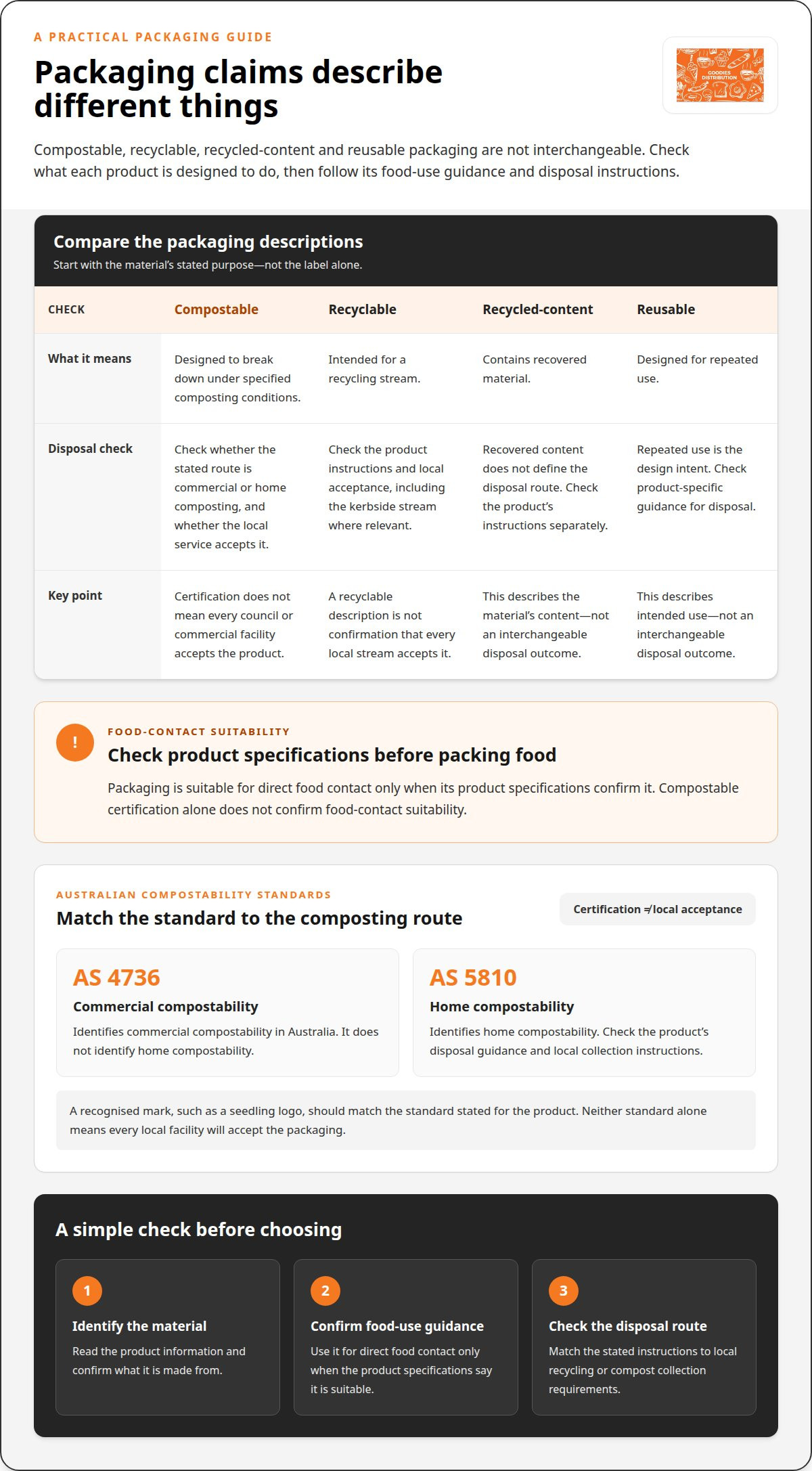
Eco-friendly packaging can be used for direct food contact when its product specifications confirm it’s suitable. For a small business in Australia, choosing eco-friendly packaging means matching the material to the food, its protection needs and the way it should be disposed of. Compostable certification alone doesn’t confirm food-contact suitability: AS 4736 identifies commercial compostability, not home compostability.
It’s understandable to want eco-friendly packaging for a small business in Australia that protects products and reflects your environmental values without complicating daily operations. The right choice depends on what you’re packing, how it will be handled and whether customers can dispose of it as intended.
This guide explains how to assess food-contact packaging, protect delicate or perishable products, and plan logo printing for a starter order. It also covers how wholesale supply can support regular packing needs, including planning cartons around your replenishment routine. You’ll have a clearer path to packaging that works for your business and gives customers a thoughtful experience.
Key Takeaways
- Choose food packaging by its intended use, environmental attributes and disposal instructions, not by material name alone.
- Protect delicate or perishable goods by matching the pack to the product’s size and weight, plus its storage and freight conditions.
- Plan starter logo packaging around how the material, printing method and brand presentation work together.
- Align bulk orders with packing volume and replenishment needs to keep regular supplies organised.
Can eco-friendly packaging be used for direct food contact?
Yes, provided the product specifications confirm it is suitable for direct food contact. For Australian businesses, check both the food-use guidance and the disposal instructions.
Food-contact material options
Bagasse containers, trays and bowls suit many food-service formats, while coated paper and eco-friendly wraps may work for other packing tasks. Match each product’s specifications to the food and how it will be served. Recyclable plastic may also be suitable for direct contact if its specifications say so. Mono-material soft plastic bags and pouches use one material type, but that alone doesn’t confirm recyclability or food-contact suitability. Check product-specific guidance before packing food.
Packaging material comparisons
Compostable packaging is designed to break down under specified composting conditions; recyclable packaging is intended for a recycling stream. Recycled-content packaging contains recovered material, while reusable packaging is designed for repeated use. These terms describe different characteristics, not interchangeable disposal outcomes. AS 4736 identifies commercial compostability in Australia, while AS 5810 identifies home compostability. Neither label alone establishes acceptance by every local facility.
Recycled gift packaging, genuine cellophane, cardboard and paper each have disposal instructions suited to their material. Clean cardboard and paper may be recyclable where accepted in the local kerbside stream. Genuine cellophane differs from plastic film, so follow its product guidance rather than assuming the same disposal route. Padded paper mailers can combine different layers, so check whether the entire construction can enter the intended recycling stream.
Compostable products are accepted only where the relevant council or commercial facility’s requirements allow them. AS 4736 certification indicates commercial compostability, not acceptance by every facility or suitability for a home compost bin. Check local collection instructions and the product’s disposal guidance before placing packaging in a composting service.
To assess recyclability or compostability, read the product information and identify its material, certification and recommended disposal route. Check whether the instructions specify kerbside recycling, commercial composting or home composting. Look for recognised certification marks, such as a seedling logo, and match them to the stated standard. For recyclable plastic bags and pouches, confirm local acceptance rather than relying on the mono-material description alone.
Can compostable packaging still protect fragile or perishable products?
Yes. Compostable packaging can protect products when its structure suits their size, weight, packing process, storage and freight conditions. Test the complete packing method, not just the material.
Start with the product’s risks. A fragile item needs a snug fit and cushioning to limit movement; a perishable item needs packaging suited to its moisture and handling requirements. For takeaway food, consider how containers hold the meal when stacked and transported. A compostable label alone doesn’t show how a package will perform in your specific use.
For cafés and takeaways, match each product to its packing task. Cups are for drinks, containers hold or separate meals, and paper bags help carry orders. Compare package dimensions with the food and any secondary packaging. A bag that fits one takeaway order may not keep a taller or heavier order stable.
For ecommerce, assess the journey from packing bench to customer. A ceramic item, a garment and sealed food have different risks: breakage, moisture exposure and movement in transit. Consider the item’s weight, outer carton, void fill and freight handling together. Recycled paper can cushion some goods, but the complete pack still needs to prevent shifting and damage.
Switch in stages: list the products, measure their packed size and weight, then match materials to handling and freight conditions. Trial the packaging through your usual storage and dispatch process before replacing existing formats across the range.
Risks include reduced shelf life if packaging is unsuitable for the product, and food-safety concerns if direct-contact specifications aren’t followed. Claims such as “biodegradable” can mislead without clear evidence or disposal instructions. Use precise, supported descriptions.
Choose packaging sizes and colours around product fit, storage space and brand presentation. Printed designs should remain legible on the selected material, while a consistent range can simplify packing different orders. Explore compostable packaging options as you compare practical choices for your products.
Can I put my logo on starter packaging?
Yes. Logo printing can help a small business create a recognisable experience from its first customer orders. Start with the packaging customers notice most, such as a takeaway bag or outer mailer. A clear logo and consistent colours can make the handover feel intentional, while keeping essential information easy to read.
Custom printing may have a minimum order quantity, depending on the packaging format and print method. For a starter run, choose one packaging type and a simple design before extending the artwork to other formats. Prepare the logo in a suitable print file and check its size against the available print area. This helps prevent artwork from appearing too small or crowded.
The material and print method need to work together. A design created for kraft paper may look different on another surface, so review colour, contrast and legibility on the chosen packaging. If you add handling labels, make sure they adhere properly and don’t obscure the brand or instructions. Keep environmental wording specific to the packaging’s verified attributes.
Custom-branded sustainable packaging can shape how customers experience an order before they open it. For example, matching the design across a café’s takeaway bags and food containers creates a consistent presentation. A mailing pack may need a simpler layout, with the logo visible and practical handling information clear.
New-customer discounts or promotions may have eligibility conditions, so read the terms before planning a branded order around them. Australian grants, rebates and support programs also depend on their purpose and eligibility criteria. Treat potential support as a planning consideration, not assured funding for packaging.
Before approving artwork, review a proof for spelling, logo placement and readability at the final size. Careful proofing helps printed packaging represent your business clearly from the first order.
Wholesale and bulk packaging supply
Wholesale supply works best when orders reflect actual packing volume and replenishment needs. Start by recording the packaging formats your team uses, such as cartons, bags, labels and protective mailers. Estimate how quickly each format is used, where cartons can be stored and which items need frequent replenishment. This turns a broad order into a practical stock plan for eco-friendly packaging for small businesses in Australia.
Consolidating related supplies can simplify purchasing. Group materials used in the same packing workflow, while keeping each item’s purpose clear. Record food-contact packaging separately from outer shipping materials. This helps staff choose suitable materials for each task and makes it easier to spot which supplies need replenishing.
For a small café, switching packaging in stages can reduce disruption. Identify a frequently used format, then compare its function, material and disposal instructions with the replacement. Trial the new format during normal service and observe how it stacks, carries and stores. Introduce other formats once the new routine works for staff and customers.
Environmental claims should describe the complete packaging item, not just one component. A printed label or another component may affect disposal instructions. Record material details and disposal guidance in your ordering notes. This gives staff a clear reference when customers ask about the packaging and helps keep purchasing information consistent.
Wholesale planning should account for seasonal changes and storage space. A business with busier periods may need a different replenishment rhythm from one with steady orders. Keep stock rotation simple, use older cartons first and avoid formats that no longer suit your packing needs. A considered wholesale plan for eco-friendly packaging for small businesses in Australia can align orders with actual use.
Review the stock plan whenever order patterns or packing routines change. Compare recent usage with the cartons remaining, then adjust the next order to suit available storage and expected demand. This keeps replenishment decisions tied to daily operations rather than assumptions.
Goodies Distribution: Custom Branding Services
Goodies Distribution’s Custom Branding Services help hospitality businesses put their identity on packaging customers see and use. It’s a natural next step once you’ve selected suitable materials and want your takeaway presentation to feel consistent.
For example, custom branding can connect Paper Bags with Takeaway Containers across a café or takeaway order. Biodegradable Cutlery can also contribute to a considered customer experience. Match the artwork to the packaging format, keep essential details easy to read and make sure environmental claims accurately reflect the product.
Turn to Goodies Distribution when you’re ready to plan branded packaging around your service and customer experience. Visit goodiesdistribution.com.au to explore the next step.
Make your next packaging choice count
Packaging decisions can evolve with your business. As your menu, order mix or brand changes, review whether each format still suits how customers receive and use your products. A simple check can keep packaging aligned with daily operations and the experience you want to create.
Choosing eco-friendly packaging for a small business in Australia doesn’t mean changing everything at once. Start with the next step that suits your service, then build from there with materials and claims you can explain clearly. Thoughtful choices can support a distinctive customer experience while meeting practical needs.
Goodies Distribution can help you explore packaging options for your business. Contact Goodies Distribution to discuss a considered next step. Small, well-chosen changes can set your business on a positive path.
Frequently Asked Questions
Can eco-friendly packaging be printed with branding or handling labels?
Yes. Branding or handling labels can help customers recognise an order and staff sort it correctly. For takeaway dispatch, keep the business name distinct from order identifiers, such as a customer name or collection note. Use a consistent layout across packaging types so staff can find key details quickly. A clear proof before printing helps catch spelling errors and misplaced information.
Can used eco-friendly packaging be reused before disposal?
Yes, if the packaging’s construction and intended use allow it. A sturdy shipping carton, for instance, could be reused for internal transfers, while a food wrapper may have no practical second use. Set reusable items aside from waste and give each a clear purpose. This helps staff distinguish packaging kept for another task from material ready for disposal.
Does eco-friendly packaging cost more than traditional packaging?
Not necessarily. No packaging category is automatically a better fit for every business. Compare options by protection, handling, storage and disposal needs, then choose a format that suits your operation. A café’s requirements can differ from a caterer’s, so compare packaging designed for the same task. This is more useful than relying on a broad environmental label alone.
How can I tell if packaging is genuinely compostable in Australia?
Match the exact product name and packaging format to its compostability documentation. Check that any certification mark applies to the finished item, not just one material or ingredient. Read the product information for the composting conditions it describes. This product-level check helps distinguish a substantiated claim from general wording that doesn’t identify what was assessed.
What eco-friendly packaging options are available for small businesses in Australia?
Small businesses can choose packaging formats for counter service, takeaway, catering or ecommerce, with materials and designs suited to each task. Start with your product range: note which items need a secure closure, clear identification or consistent presentation. Then group requirements by use, so your packaging plan reflects how orders are prepared and handed to customers.
How much does sustainable packaging cost in Australia for small businesses?
There isn’t one figure that suits every small business. Start by listing the packaging formats your operation uses, expected demand and branding needs. This creates a clear specification for comparing suitable options without treating unlike formats as equivalent. Cafés, caterers and ecommerce businesses have different order patterns, so shape the packaging plan around your workflow and storage capacity.