


Less packaging isn’t automatically better packaging. Sustainable food delivery packaging matters when it protects the meal while reducing unnecessary materials, using suitable renewable options and supporting a realistic recycling or composting pathway. The best choice depends on the food, how it travels and what customers can do with the packaging afterwards.
For Sydney cafés, restaurants and takeaway businesses, packaging affects more than waste. Containers need to suit the menu and delivery journey, while bags and other materials influence how an order arrives. Thoughtful choices can reduce excess without compromising food quality or the customer experience.
This article explains how to assess takeaway containers, bagasse and paper packaging, and how to reduce extras such as cutlery and condiments when customers don’t need them. You’ll also see how Goodies Distribution’s takeaway containers, paper bags, bagasse products and custom branding services can support practical choices for your business.
Key Takeaways
- Match each container to the food, delivery journey and disposal options customers can realistically access.
- Compare bagasse and paper packaging for practical fit as well as material and compostability claims.
- Choose paper bags and cardboard thoughtfully, and make clear disposal guidance part of the customer experience.
- Reduce unnecessary waste by offering cutlery, condiments and other extras only when customers need them.
1. Why is Sustainable Food Packaging important?
Sustainable food delivery packaging can reduce reliance on conventional plastic, but the material alone doesn’t determine environmental impact. A container must protect takeaway food in transit and suit a practical disposal route. For Sydney cafés, consider the menu, delivery time, customer use and local waste options together.
How much does sustainable food delivery packaging cost compared with conventional packaging? There’s no single like-for-like comparison: material, format, order volume and waste handling all affect packaging spend. Compare products that do the same job, such as containers for hot meals or cups for takeaway coffee.
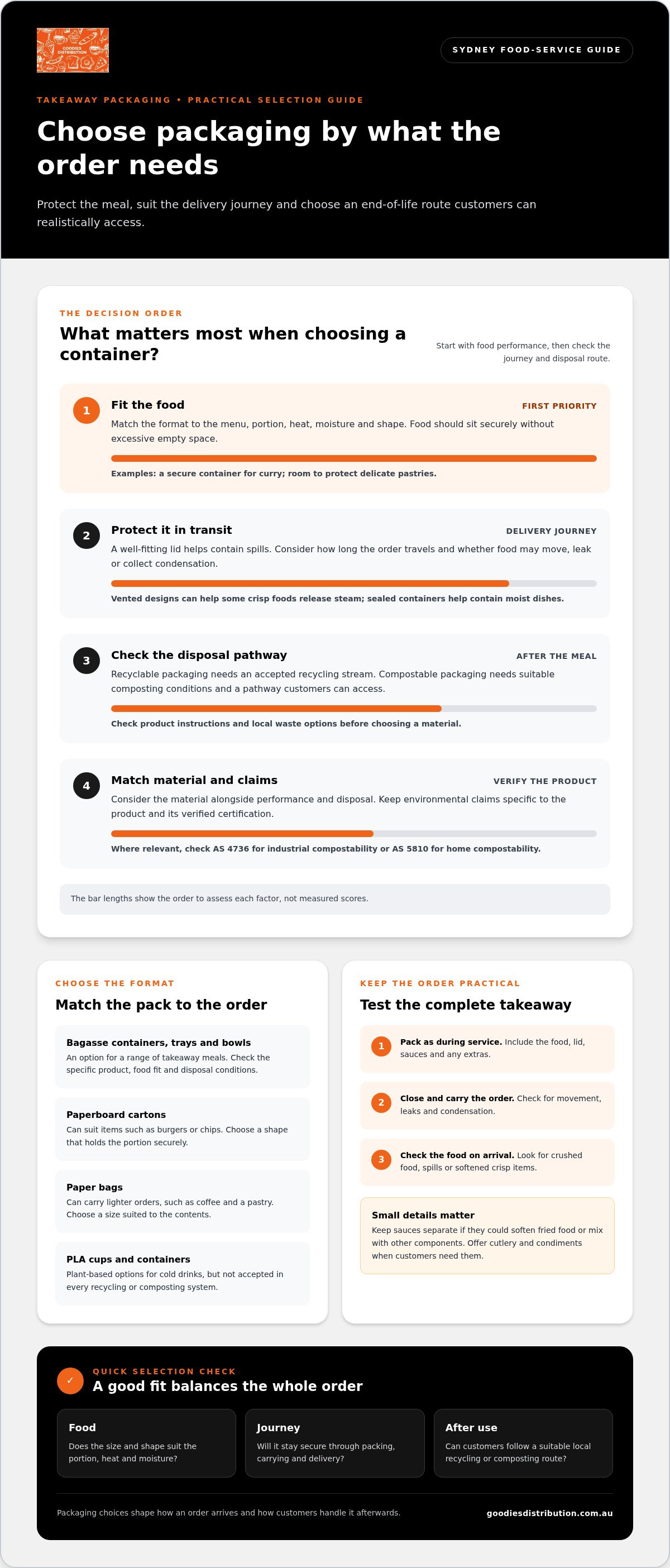
Start with performance. Match packaging to the food’s heat, moisture and shape, then consider the delivery journey. A lidded container may help contain a saucy meal, while a paper bag can suit a lighter order. Test the complete takeaway order, including cutlery, to identify leaks, crushed food or unnecessary layers before changing materials.
Plant-based options include corn, bamboo, wheat, bagasse and wood pulp. Bagasse, made from sugarcane processing, is a plant-fibre material; paper and cardboard also use fibres. Recycled paper packaging uses recovered fibres, which can save trees and reduce manufacturing energy. End-of-life conditions matter: recyclable packaging needs an accepted recycling stream, while compostable packaging needs an appropriate composting pathway.
Paper, compostable, recyclable and reusable packaging each have different environmental impacts. Paper and recycled fibres use plant material; compostable packaging needs suitable composting conditions; recycling depends on collection and processing. Reusable packaging avoids disposal after each meal, but requires washing and return transport. How do reusable food delivery packaging schemes work in Australia? A business supplies containers, customers return them through an agreed system, and the containers are cleaned before reuse. Return and washing are essential parts of the model.
2. Takeaway containers and accessories
Different orders need different formats. A restaurant packing curry needs a secure, leak-resistant container; a bakery sending pastries needs room to protect delicate finishes. Bagasse containers, trays and bowls suit a range of takeaway meals, while paperboard cartons can work for items such as burgers or chips. Choose a shape that fits the portion so food sits securely without excessive empty space. A well-fitting lid also helps contain spills during delivery.
Test the complete order before settling on a format. Pack the food as staff would during service, close the lid, then carry the order as a delivery driver might. Check for movement, leaks and condensation. A vented design can help some hot, crisp foods release steam, while sealed containers help contain moist dishes. Keep sauces separate if they could soften fried food or mix with other components.
Sauce pots and lids need to match the portion and the journey. A 60 millilitre sauce container offers a practical example for a small dip; larger servings need a suitable alternative. Check that the lid fits firmly and remains easy for customers to open. For cold drinks, PLA cups and containers are plant-based options, but PLA is not accepted in every recycling or composting system. Match disposal guidance to the product’s certification and the local pathway.
Palm leaves can be moulded into containers for fresh fruit, vegetables and nuts. Their distinctive natural appearance may suit a particular presentation, but food type, fit and handling still matter. Compostable claims also depend on the specific product and its disposal conditions. Look for applicable certification, such as AS 4736 for industrial compostability or AS 5810 for home compostability, where relevant. Explore bagasse containers, trays and bowls as one option for takeaway menus.
3. Kraft paper and recycled paper or cardboard
Kraft paper and cardboard suit takeaway food when the format matches the order. A paper bag can carry coffee and a pastry, while a sturdy cardboard carton can hold a meal. Choose packaging that fits the contents instead of adding extra wrapping. This keeps presentation neat and gives hospitality businesses a practical way to carry orders. Paper and cardboard can decompose under the right conditions, but coatings and food residue affect disposal.
Recycled paper packaging uses recovered fibres, which can save trees and reduce manufacturing energy. Check the packaging instructions before placing it in a recycling bin, especially if grease or food scraps remain. A clean cardboard takeaway box is easier to sort than one covered in leftover food. Where practical, reuse a sound paper bag for another order, then follow local disposal guidance.
For paper linked to certified forest sourcing, look for FSC certification on the product. FSC-certified paper cups are available in the market, providing an example of certification on a food-service item. Certification can support specific sourcing claims, rather than broad phrases such as “friendly packaging”. Keep claims tied to the product and its verified certification.
Branded paper bags and cartons can carry a café’s name or artwork, making packaging part of the customer experience. Keep print legible and avoid covering disposal instructions or certification marks. Paper straws may suit some cold drinks, but choose them for the beverage and service style because their performance differs from other straw materials. A service trial can show whether a straw softens before the customer finishes their drink.
Stone paper is another material option. Made from calcium carbonate, it can be used for bags, food cartons and greaseproof wraps. Its mineral base differs from wood-pulp paper, so assess the product’s intended use and disposal guidance. Compare options by food contact, carrying strength, carbon considerations and available end-of-life routes before choosing packaging for takeaway orders.
4. Reducing excess packaging and disposable cutlery
Start with the order screen. Let customers choose cutlery, napkins and condiments instead of adding them automatically. A diner eating at home may already have utensils, while someone collecting lunch may need them. This choice helps keep unused items out of takeaway bags and lets customers decide what they receive.
Australia’s National Packaging Targets called for single-use packaging to be phased out by 2025. That target describes a national objective, not a blanket item-by-item ban in itself. For food businesses, the practical step is to reduce avoidable packaging and select materials that suit the food and available disposal pathways.
Review the materials used for each order. Remove duplicate bags, excess wrapping and printed menus when customers order online. Keep the container, lid and carry bag only when they protect food or make the order easier to transport. For example, a sealed meal container may not need extra wrapping. Staff can trial a revised packing sequence and note where leaks or damage occur.
Reducing plastic means looking beyond the container. Ask whether a straw, sauce sachet or utensil is genuinely needed, then offer it on request. Where cutlery is required, choose an option suited to the meal and communicate its disposal instructions clearly. Sugarcane-fibre packaging is one plant-based material used for food service, but its end-of-life route depends on the product and local facilities.
Less material can mean less demand for packaging production, while efficient delivery routes can reduce fuel use. Grouping orders headed in the same direction may help avoid unnecessary trips, provided food arrives safely. Track discarded extras and packaging damage during service; these practical observations show where a change could reduce waste without harming the customer experience. Choose biodegradable cutlery for orders where customers need utensils.
Goodies Distribution: Custom Branding Services
Goodies Distribution provides custom branding services to help food businesses create a consistent look for takeaway packaging. Use the service when planning branded packaging that reflects your café, restaurant or takeaway identity while meeting everyday operational needs.
Consider where branding will appear across an order: on takeaway containers for meals, paper bags for carrying orders, or biodegradable cutlery for customers who need utensils. A consistent design can connect these practical items with the customer experience. Packaging still needs to suit the food, delivery journey and disposal pathway, so consider function and environmental claims alongside visual presentation.
Discuss how custom branding can work with the packaging your business uses. Contact Goodies Distribution or visit goodiesdistribution.com.au.
Make your next packaging choice count
Start with a small, practical review: choose one busy service period and note which packaging protects orders, which extras go unused and where customers may need clearer disposal guidance. This gives your team a useful starting point for refining sustainable food delivery packaging without losing sight of meal quality or presentation.
Goodies Distribution offers takeaway containers and certified compostable cups, alongside custom branding services for businesses creating a consistent look across customer orders. Consider how each item fits your menu and service routine, and keep environmental claims specific to the materials and disposal pathway involved.
A packaging refresh doesn’t need to happen all at once. Start with the item that creates the clearest opportunity to improve function or reduce excess, then build from there as your needs evolve. Plan your packaging refresh with Goodies Distribution and take a positive next step for your business.
Frequently Asked Questions
Why is Sustainable Food Packaging important?
This gives food businesses a practical way to align purchasing decisions with their environmental commitments. For a Sydney café, clear packaging criteria can help staff choose suitable items consistently during busy shifts. They also give managers a basis for reviewing supplier claims and explaining choices to customers, rather than relying on broad promises that are difficult to substantiate.
Do you sell sustainable packaging in Sydney?
Yes. Goodies Distribution supplies sustainable food-service packaging wholesale to businesses across Sydney and local surrounding areas. Its range includes compostable cups, takeaway packaging, paper bags and biodegradable cutlery. The business serves hospitality and food-service buyers, and purchases require an Australian Business Number (ABN). This wholesale service suits businesses buying packaging for their operations, rather than individual household shoppers.
How can restaurants offer delivery and takeaway options without using excessive plastic?
Review the delivery menu alongside the packing workflow. For each dish, record the packaging staff need and remove duplicated steps. A short packing guide at the dispatch station can help staff follow the same method during service. Use customer feedback and packing errors to refine the guide over time.
What Makes Packaging More Responsible?
Responsible packaging relies on clear, product-specific information. Food businesses can keep supplier specifications and certification details with purchasing records, then make claims that accurately reflect those documents. Staff handling customer-facing claims can refer to the same information. This helps keep environmental messaging consistent across menus, packaging artwork and online ordering pages.
What is the most environmentally friendly packaging?
No single packaging type suits every business. Narrow the choice by comparing options for a specific menu item, then trial them during normal service. Consider whether the packaging handles the food reliably, fits the preparation process and works with the business’s waste arrangements. Record staff observations before making a wider change.
What kinds of takeaway containers do restaurants use?
Restaurants use different formats to suit their menus, from cups for drinks to cartons and trays for meals. Goodies Distribution’s range includes FSC Mix paper rectangle containers with lining in 750ml and 1000ml sizes, as well as BioBoard sushi trays and lids. These examples offer distinct formats for portioning and presenting orders, helping businesses match packaging choices to their menu.