


What if the difference between a loyal regular and a one-time visitor came down to just fifty millilitres? In the fast-paced Australian cafe scene, getting your measurements right is about more than just filling a vessel; it's about the delicate balance of flavour and the integrity of your brand. When you're looking at wholesale coffee cup sizes australia, the choice between a 200ml and a 250ml option can feel like a minor detail, but it actually dictates your coffee-to-milk ratio and your daily overheads.
Most baristas agree that nothing ruins a morning rush like a lid that won't fit or a flat white that tastes like weak, warm milk. We're here to help you master these nuances so you can serve the perfect pour every single time. This guide provides a clear understanding of Australian wholesale standards and helps you streamline your ordering process for BioPak compostable cups and matching lids. You'll discover how precise portioning leads to better cost control and a more sustainable, successful business that your community will love to support.
Key Takeaways
- Understand the technical differences in wholesale coffee cup sizes australia to eliminate the common confusion between metric millilitres and imperial ounces.
- Discover why the 250ml cup remains the industry standard while the smaller 200ml size is carving out a niche for specialty brews and piccolos.
- Learn how to map your drink menu to specific cup volumes to maintain the perfect coffee-to-milk ratio for every flat white and latte you serve.
- Optimise your cafe’s cash flow and environmental footprint by sourcing BioPak compostable solutions from local Sydney distributors.
Understanding Wholesale Coffee Cup Sizes in the Australian Market
Australian coffee culture has matured into a world-leading standard where precision is expected by every customer who walks through your door. When you first explore the landscape of wholesale coffee cup sizes australia, you'll notice that "standard" can be a flexible term. This inconsistency often stems from manufacturers alternating between traditional imperial ounces and the Australian metric cup, which is defined as 250ml. For a barista, even a minor discrepancy in volume can disrupt the carefully balanced ratio of espresso to milk, leading to a drink that either lacks punch or feels overly heavy.
Establishing a reliable baseline is essential for any venue looking to maintain high standards during a morning rush. This is why BioPak compostable cups have emerged as the industry benchmark for Sydney businesses. They offer a predictable, consistent volume that allows your team to work with speed and accuracy. By choosing a reputable brand, you ensure that your 8oz cup remains identical across every order, providing a stable foundation for your drink recipes and your customers' expectations.
The Role of the "Small, Medium, Large" Hierarchy
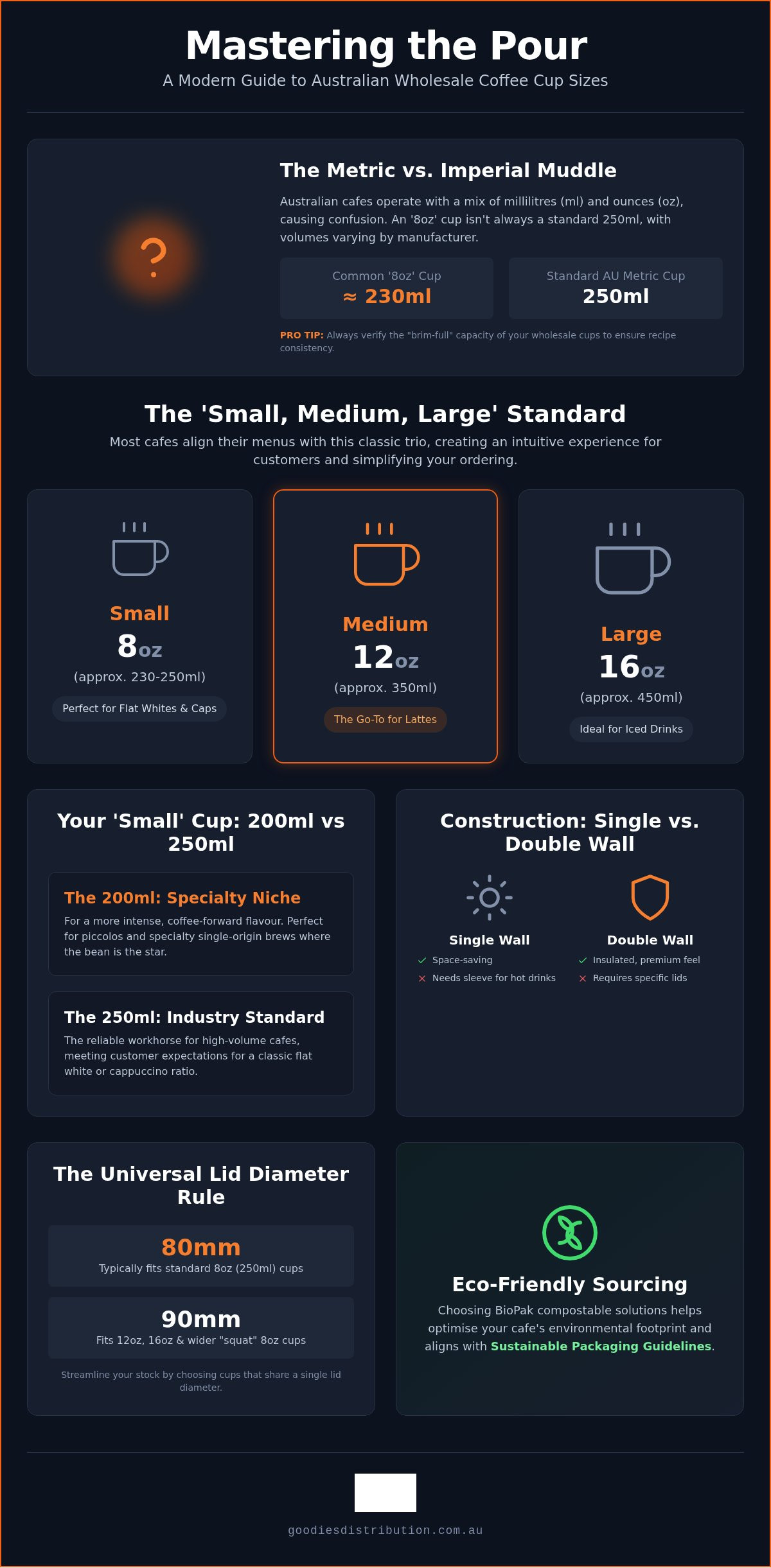
Most Australian cafes organise their menus around the classic 8oz, 12oz, and 16oz trio. These sizes have become the unofficial shorthand for small, medium, and large in the takeaway world. Understanding the nuances of wholesale coffee cup sizes australia helps you align your menu with these consumer habits, ensuring your customers feel they're getting true value for money.
- 8oz (approx. 230-250ml): Usually the "small" and the most frequent choice for flat whites and cappuccinos.
- 12oz (approx. 350ml): The standard "medium" that provides a longer milk pour for latte lovers.
- 16oz (approx. 450ml): The "large" option, perfect for iced beverages or those who need an extra-large caffeine kick.
Sticking to these industry-recognised volumes simplifies your wholesale ordering and ensures your lids fit perfectly every time. If your "small" is too large, you risk serving a diluted product; if it's too small, the perceived value drops. It's a delicate balance that directly impacts your brand's reputation for quality.
Single Wall vs. Double Wall: Sizing Implications
The physical construction of your cup affects more than just heat retention. Single wall cups are the traditional choice, offering a slim profile that takes up less storage space in tight Sydney cafe layouts. They often require a separate cardboard sleeve for hotter drinks like long blacks or tea, which adds an extra step to your service workflow.
Double wall cups feature a built-in insulating layer that eliminates the need for sleeves. However, this extra layer increases the external diameter of the cup. You must be careful to select lids that are specifically designed for these thicker rims to prevent leaks and spills. While double wall cups take up more room in your stockroom, they provide a premium feel and a more comfortable experience for the customer, making them a popular choice for high-end specialty venues.
The Metric vs. Imperial Muddle: Converting ml to oz
Australian hospitality operates in a unique space where we buy milk in litres but order our packaging in ounces. This mix of systems is a legacy of the global coffee trade, and it often leads to confusion when browsing wholesale coffee cup sizes australia. While an 8oz cup is roughly 230ml and a 12oz is about 350ml, these are mere approximations that vary between different manufacturers. To keep your ratios consistent, you must verify the "brim-full" capacity. This figure represents the total volume a cup holds when filled to the very top edge, which is often 10 to 20ml more than the intended serving volume. In boutique Sydney espresso bars, the 200ml cup is increasingly popular. It caters to a growing segment of customers who prefer a more intense flavour profile where the milk doesn't drown out the bean's origin. Aligning your inventory with the Sustainable Packaging Guidelines ensures your business remains compliant with modern standards while keeping your portioning precise.
The Universal Lid Diameter Rule
Matching lids to cups is one of the most common logistical hurdles for cafe owners. In the Australian market, the industry generally splits into 80mm and 90mm diameters. Usually, 250ml cups take 80mm lids, while 350ml and larger require 90mm. However, some "squat" 8oz cups are designed with wider rims specifically to accommodate 90mm lids. This allows a cafe to use a single lid size across their entire range, but it requires careful planning during the ordering process. Mixing these up during a busy morning rush is a recipe for spills and customer complaints. Organising your stockroom with clear labels for lid diameters is a simple, effective way to prevent these service interruptions and keep your workflow moving.
Calculating Your Pour: ml vs. oz Accuracy
Precision in your pour protects your profit margins and ensures your signature flavour remains the same every day. The standard 8oz cup is the 227-230ml benchmark for the Australian flat white. If your wholesale stock actually holds 245ml, your baristas might be over-pouring milk by 15ml per cup without even noticing. Over a single day of serving hundreds of coffees, this small splash of waste adds up to significant milk overheads. Training your team on the specific volumes of your current stock is essential for maintaining your bottom line. If you want to tighten up your portioning and reduce waste, you can explore our range of BioPak solutions to find a size that fits your specific menu needs perfectly.
Choosing Between 200ml and 250ml Takeaway Cups
The debate between 200ml and 250ml is a classic example of the flavour versus volume dilemma that many Sydney cafe owners face. While the 250ml cup has long been the backbone of the industry, the 200ml newcomer is gaining ground in specialty precincts. Deciding which one fits your benchtop depends entirely on your brand's personality and your customers' expectations. When you examine wholesale coffee cup sizes australia, you'll see that the 250ml (8oz) cup remains the undisputed king, but the 200ml option offers a more refined experience for the true coffee enthusiast.
Stocking both sizes can be a double-edged sword for your operations. On one hand, it shows a deep commitment to honouring traditional coffee ratios. On the other, it complicates your inventory management and requires more storage space in often cramped service areas. Smaller volumes generally lose heat faster due to a higher surface-area-to-volume ratio. However, because a 200ml drink is typically consumed more quickly than a larger latte, customers rarely find the temperature to be an issue.
When to Opt for the 200ml Cup
The 200ml cup is the ideal choice for cafes that pride themselves on a traditional 6oz-style flat white. It prevents the espresso from being overwhelmed by too much milk, ensuring a punchy and balanced flavour profile. High-volume environments often find that this size helps reduce milk waste, as baristas aren't tempted to overfill a larger cup just to make it look "full" for the customer. It brings a sophisticated, European aesthetic to your takeaway window, signalling that your team takes their ratios seriously.
The Case for the 250ml (8oz) Standard
Despite the specialty trend, the 250ml (8oz) cup is the safe bet for a reason. It is perfectly compatible with standard car cup holders and pram accessories, which is a massive factor for suburban commuters and parents. Choosing this size as your primary small cup makes your search for wholesale coffee cup sizes australia much more focused. Since it's the industry standard, sourcing matching lids and BioPak compostable cups in bulk is never an issue. It provides that familiar hand-feel that most Australian coffee drinkers have come to expect over the last few decades, ensuring high levels of customer satisfaction from the first sip.
How to Match Your Coffee Menu to Wholesale Cup Sizes
Your menu should be a roadmap for your customers, guiding them toward their perfect morning brew. Designing this experience requires more than just high-quality beans; it requires the right vessel. When you finalise your wholesale coffee cup sizes australia, you are essentially defining the flavour profile of every drink you serve. A latte in a 250ml cup offers a different sensory experience than one in a 200ml vessel; it's about the ratio of espresso to silky, textured milk. Using BioPak sustainable packaging allows you to tell a story of environmental responsibility while ensuring your portioning remains precise and professional.
The "Double Shot" dilemma is a common conversation in Sydney's specialty circles. If you serve a standard double shot in a 200ml cup, you create a punchy, coffee-forward experience that appeals to purists. In contrast, that same double shot in a 250ml cup provides the classic, smooth balance that the majority of Australian takeaway drinkers adore. Custom branding services can help you distinguish these sizes visually, using unique designs or colours to signal the strength of the brew inside.
Perfecting the Flat White and Latte Ratio
The 250ml cup has earned its place as the gold standard for the Australian latte. It provides enough volume for a generous amount of micro-foam without diluting the espresso's character. If you're introducing 200ml serves, your baristas may need to adjust their extraction times or grind settings slightly to ensure the shorter milk pour doesn't result in an overly bitter finish. Consistent milk texturing is vital. A wider cup diameter often requires a more aggressive vortex to achieve that glossy, paint-like finish your customers crave.
Streamlining Your Wholesale Inventory
Managing a stockroom is an art form in itself. To keep your workflow efficient, aim to minimise the number of different lid sizes you need to keep on hand. Choosing universal diameters across your wholesale coffee cup sizes australia range simplifies the morning set-up and reduces the risk of staff grabbing the wrong lid during a rush. We recommend consulting with your eco friendly packaging supplier to forecast your monthly needs based on your peak periods. This proactive approach ensures you never run short of your bespoke branded stock. If you're ready to upgrade your cafe's setup, you can browse our full inventory of sustainable cups to find the perfect match for your menu.
Sourcing Sustainable Wholesale Cups in Sydney
Finding the right wholesale coffee cup sizes australia is only half the battle; the other half is ensuring a reliable supply chain. In a city like Sydney, where storage space behind the counter is often at a premium, local distribution isn't just a convenience. It's a lifeline for your cash flow. Instead of tying up your capital in massive shipments that sit in a warehouse for months, partnering with a local supplier allows for more frequent, smaller deliveries that keep your shelves stocked and your bank account healthy. This agile approach to inventory management is vital for maintaining a smooth barista workflow during peak periods.
As we move through 2026, the shift toward sustainable materials has become non-negotiable for the modern cafe. BioPak's compostable technology provides a robust solution that meets both consumer demand and evolving environmental standards. Transitioning your current stock to a more sustainable sizing model doesn't have to be overwhelming. We suggest starting with your most popular size, typically the 250ml (8oz), and gradually introducing the 200ml option as your customers become more familiar with your specialty menu. This phased approach allows you to manage your costs while demonstrating a clear commitment to the planet.
Custom Branding for Your Chosen Sizes
A takeaway cup is a moving billboard for your business. When a customer walks down a busy Sydney street with your branded 200ml or 250ml cup, they're advertising your cafe to every passerby. Bespoke designs don't just look beautiful; they serve a practical purpose. You can use specific design elements or colour palettes to help both your baristas and your customers instantly identify the drink size. This reduces errors during the morning rush and reinforces the bespoke, high-quality nature of your brand, making every sip a touchpoint for your business identity.
Partnering with Goodies Distribution
With over 40 years of industry experience, Goodies Distribution understands the unique pressures of the Sydney hospitality scene. We aren't just a supplier; we're a partner committed to your long-term success as a "Visionary Mentor" for your brand. Our deep roots in the community allow us to provide urgent wholesale support when you're facing an unexpected surge in demand. Whether you need a tailored branding consultation or advice on the latest wholesale coffee cup sizes australia, our team is here to guide you toward the best choices for your business and the planet. Reach out today to see how we can help you serve the perfect pour in packaging that reflects your values.
Elevate Your Cafe’s Experience with Precision Sizing
Mastering the subtle shift between 200ml and 250ml vessels is about more than just filling a cup; it's about respecting the craft of the barista and the expectations of the customer. By choosing the right wholesale coffee cup sizes australia, you ensure every flat white and latte maintains its intended flavour profile while minimising milk waste. Sustainable choices like BioPak compostable cups allow your business to grow alongside the planet, proving that professional reliability and environmental stewardship go hand in hand.
We're here to help you navigate these choices with over 40 years of Aussie hospitality experience. Our local Sydney warehouse ensures fast delivery, while our specialist custom branding services turn every cup into a bespoke marketing tool. Browse our range of BioPak coffee cups and find your perfect size today to start your journey toward a more streamlined, eco-friendly service. We look forward to partnering with you to create a better future for your cafe and our community.
Frequently Asked Questions
What is the most common coffee cup size in Australia?
The 250ml (8oz) cup is the most popular choice across the Australian hospitality industry. It serves as the standard "small" for most Sydney cafes and is the most frequently requested size for takeaway orders. Because it fits perfectly in car cup holders and pram accessories, it remains the go-to vessel for commuters. Choosing this size for your wholesale coffee cup sizes australia inventory ensures you meet the general expectations of the majority of your customers.
Is an 8oz cup the same as 250ml?
Technically, a standard 8oz cup holds approximately 227ml to 230ml, while a metric cup is exactly 250ml. In the Australian wholesale market, these terms are often used interchangeably, which can lead to some confusion for new business owners. We always recommend checking the "brim-full" capacity of your BioPak cups to ensure your baristas are pouring the correct volume. This precision helps you maintain a consistent flavour profile and keeps your milk overheads under control.
Do all wholesale coffee cups use the same lid size?
No, lids are not universal and depend on the diameter of the cup's rim rather than the volume alone. Most 8oz cups in Australia use an 80mm lid, while 12oz and 16oz cups typically require a 90mm lid. However, some "squat" 8oz cups are designed with a wider rim to fit 90mm lids. It's vital to verify lid compatibility with your supplier to avoid the frustration of mismatched stock during a busy morning rush.
Why should I choose compostable BioPak cups over plastic-lined ones?
Choosing BioPak compostable cups aligns your business with strict Australian environmental standards and helps reduce your reliance on single-use plastics. Unlike traditional cups lined with polyethylene, these are designed to be industrially composted, turning waste into nutrient-rich soil. This choice is especially important in New South Wales where single-use plastic regulations are becoming more stringent. It also sends a clear message to your community that your cafe prioritises the health of our planet.
Can I get custom branding on both 200ml and 250ml cups?
Yes, Goodies Distribution provides specialist custom branding services for both 200ml and 250ml cup sizes. Personalising your takeaway packaging is a powerful way to elevate your brand presence on Sydney streets. It allows you to create a bespoke aesthetic that reflects your cafe's unique personality. Whether you want a minimalist logo or a bold, colourful design, customisation helps your business stand out while making it easier for customers to identify their preferred drink size.
What is the best cup size for a takeaway flat white?
The 250ml (8oz) cup is widely considered the gold standard for a traditional Australian flat white. It provides the ideal volume for a double shot of espresso topped with a thin layer of silky micro-foam. For cafes focusing on a more intense, specialty flavour, the 200ml cup is an excellent alternative. This smaller size creates a stronger coffee-to-milk ratio, which is perfect for regulars who prefer a punchier brew without the extra volume.
How many cups come in a standard wholesale carton in Australia?
A standard wholesale carton in Australia typically contains 1,000 units, usually packed in sleeves of 25 or 50 cups. This high-volume packaging is designed to support busy hospitality environments and simplify inventory management. When you're planning your storage space in a Sydney cafe, remember that double-wall cups are bulkier than single-wall options. Factoring this into your wholesale coffee cup sizes australia strategy helps you maintain a tidy stockroom and ensures you never run out unexpectedly.
Is a 200ml cup too small for a standard latte?
A 200ml cup is smaller than the typical Australian latte serve, but it's gaining popularity in specialty espresso bars. While a standard latte usually fills a 250ml or 350ml cup, the 200ml version offers a more concentrated experience. It's often used for "piccolo" lattes or for customers who enjoy a shorter, more European-style drink. If your menu focuses on bean origin and flavour intensity, this size is a fantastic addition to your range.