


What if your packaging could make your sustainability commitments clear before a customer takes their first bite? For Sydney cafes, restaurants and takeaway venues, attracting eco-conscious customers with packaging means choosing more than a material that sounds greener. The pack needs to suit the food, perform in service and carry environmental claims you can support.
It can be difficult to know which claims customers can trust, especially when compostable products have different certifications and disposal requirements. Your choice also needs to work with your menu and service style. Specific information and practical testing help bring those priorities together.
This guide explains how to choose packaging for your food and customer experience, and how to communicate verified environmental attributes without overclaiming. You’ll see how certified cups, bagasse containers, trays and bowls, paper bags and custom branding can help carry your brand identity through service. We’ll also clarify the difference between industrial and home compostability certifications, so your packaging and sustainability message stay aligned.
Key Takeaways
- Consider appearance and performance from preparation through to handover to create a consistent customer experience.
- Make sustainability claims easier to trust by connecting each one to evidence and clear disposal guidance.
- Compare cups and bagasse formats against your menu and service needs when attracting eco-conscious customers with packaging.
- Roll out changes methodically: review current formats, test performance in service and brief staff on customer questions.
- Explore how BioPak wholesale supply and in-house custom branding can help Sydney food businesses connect packaging with their identity.
How packaging shapes eco-conscious customers’ first impressions
A customer orders a takeaway coffee at a Sydney cafe, receives a cup and carry bag, then opens the bag on the way to work. In that brief handover, packaging becomes part of the hospitality experience. It needs to look considered, suit the order and communicate any environmental message clearly. This is one touchpoint in attracting eco-conscious customers with packaging, not a promise that packaging alone will win or keep someone’s business.
Eco-conscious packaging is a considered choice backed by evidence, suited to the food or drink, and accompanied by clear disposal guidance. Materials, labels and branding can help communicate a business’s priorities, but the message needs to match the product. For a broader overview of design and lifecycle considerations, see What is sustainable packaging? In hospitality, the practical test is whether the packaging works from the counter or delivery handover through to opening and disposal.
Where customers notice packaging in food service
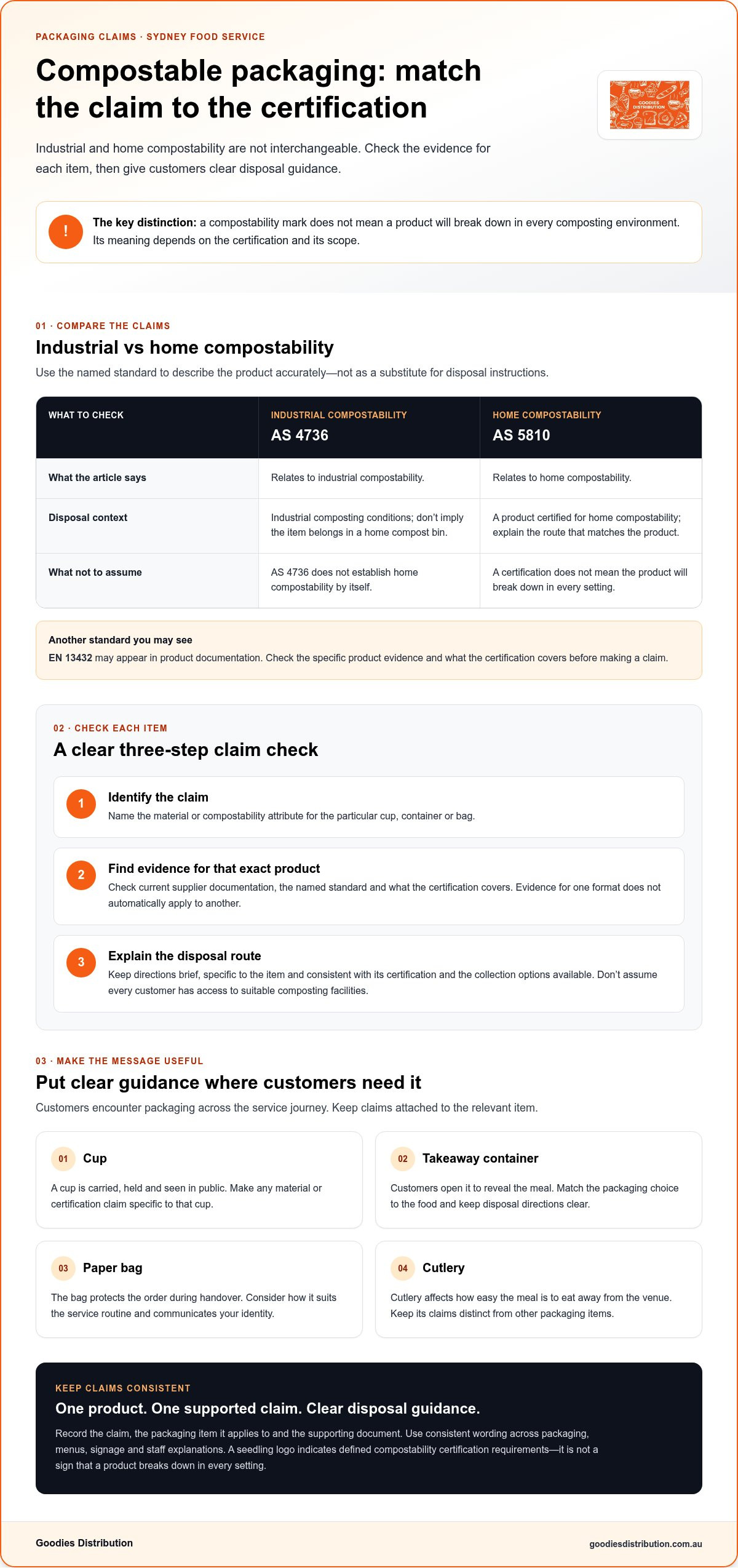
Each format shapes a different moment. A cup is carried, held and seen in public; a takeaway container is opened to reveal the meal; a paper bag protects the order during handover; and cutlery affects how easy it is to eat away from the venue. Customers encounter these items together, so coordinated presentation can make the service feel more considered.
Function matters as much as appearance. A lid that doesn’t suit the drink, a bag that makes an order awkward to carry or a container that doesn’t suit the food can undermine a positive interaction. Choose formats around your menu and service routine, then consider how colour, print and material communicate your identity. Custom branding can make your packaging recognisable while leaving room for clear, accurate disposal guidance.
What makes an environmental message credible?
Specific information gives customers something they can understand. Naming a material or identifying a relevant certification is more informative than broad wording such as “green” or “planet-friendly”. Tie each claim to the particular packaging item and make disposal instructions easy to find. Don’t imply that every item in a range has the same material, certification or end-of-life pathway.
A seedling logo is a certification mark linked to defined compostability requirements, not a sign that a product will break down in every setting. AS 4736, for example, relates to industrial compostability. It doesn’t establish home compostability by itself. Compostable packaging needs the right processing conditions, and the appropriate disposal route depends on the product’s certification and local facilities. Clear, accurate guidance helps customers understand what to do and shows that your sustainability message is based on evidence, not appearance alone.
How to communicate compostability and sustainability claims with confidence
Start environmental claims with the product, not the marketing phrase. For each cup, container or bag, follow three steps: identify the claim, find evidence for that exact product, then explain how it should be disposed of. This keeps your packaging messages useful to customers and within the scope of the product documentation.
How to check the evidence behind a packaging claim
Match each packaging item to current supplier documentation and its certification details. Don’t assume evidence for one format applies to another, even when both belong to the same range. Check which standard is named and what the certification covers before using a claim in menus, signage, staff scripts or custom branding.
Use only the standard supported by the product evidence. AS 4736 relates to industrial compostability, while AS 5810 relates to home compostability. EN 13432 is another standard that may appear in product documentation. These claims aren’t interchangeable. A seedling logo indicates that a product has met defined compostability certification requirements within the certification’s scope. It doesn’t mean the product will break down in every composting environment.
Keep a short record of the claim, the product it applies to and the supporting document. This helps a cafe or takeaway team keep packaging labels, online descriptions and staff explanations consistent. The Compostable packaging certifications and standards resource offers broader background, but Australian product claims should be based on the relevant evidence and standards for the specific item.
How to make disposal instructions easy to understand
Once you’ve checked the claim, turn it into a clear next step. “Industrially compostable” describes packaging certified for industrial composting conditions. It doesn’t mean the item belongs in a home compost bin. “Home compostable” refers to a product certified for home compostability. In either case, give disposal guidance that reflects the product’s certification and the collection options available. Don’t suggest that every customer has access to suitable composting facilities.
Place disposal directions close to the relevant claim or packaging mark so customers don’t have to guess. Keep the wording brief and specific to the item. Don’t pair an industrial compostability claim with instructions that imply home composting, or use a certification mark instead of explaining the intended disposal route.
For broader material context, the Australian wholesale guide to eco-friendly packaging can help inform your choices. Apply the same claim-checking process across your range, then use the approved wording in menus, staff briefings and custom branding. Consistency can support attracting eco-conscious customers with packaging by making your sustainability message easier to understand and trust. Explore compostable packaging options with Goodies Distribution as you shape that message.
Compare packaging choices by customer trust, food fit and service needs
The right format depends on what you serve and how customers receive it. A takeaway coffee cup has different requirements from a meal container or catering tray. Compare options on three fronts: practical performance, evidence behind any environmental claim, and clear disposal guidance. This makes attracting eco-conscious customers with packaging part of a considered service choice, rather than a decision based on appearance alone.
| Material or format | Food or drink use | Verified claim to look for | Disposal guidance |
|---|---|---|---|
| BioPak compostable paper cups | Hot or cold takeaway drinks, according to the selected cup format | Check the specific cup’s documentation for its certification. Applicable BioPak products include cups certified to AS 4736; FSC certification relates to paper sourcing, not compostability. | Follow the cup’s certification and product-specific disposal instructions. Don’t infer home compostability from an industrial compostability claim. |
| Bagasse containers, trays and bowls | Takeaway meals or food presentation, selected to suit the menu and service | Confirm the claim for the exact item. Bagasse describes the material; it doesn’t by itself establish compostability certification. | Use the disposal route stated for that product and its certification. |
| Paper bags | Carrying takeaway orders and grouping items for handover | Check the material and any sourcing or environmental claim against product information. | Give disposal guidance that matches the bag’s material and local collection options. |
Match packaging material to the menu and service
Consider temperature, moisture, portability and how long food may sit in its packaging, including during delivery. A container for a sauced meal needs a different assessment from a tray used for serving or display. Assess bagasse containers, trays and bowls against the food, portion and handover routine. Test the selected format with actual menu items: check how it handles moisture, whether it’s comfortable to carry and whether the food arrives as intended.
Moisture can soften some food and packaging, contributing to “soggy bottom syndrome”. That’s a service-performance issue, not evidence of a product’s environmental impact. Material, certification and disposal route are separate considerations, so assess each on its own merits.
Make branding support the message, not replace the evidence
Keep your logo visible without crowding out readable material or certification information. A well-presented pack can connect your brand to a verified claim, but design alone can’t substantiate it. On paper packaging, colour limitations may shape the print approach, while absorption rates affect how ink appears on the surface. Allow space for legible wording and review artwork against the packaging format before approving it.
For more product context, the BioPak sustainable packaging wholesale guide can help inform your selection. Match the pack to the menu first, then align the branding with claims supported by that item’s documentation.
A practical Sydney food-business plan for packaging customers can trust
A packaging change is easier to manage as an operational project, not just a new look. For Sydney cafes, restaurants and takeaway venues, the right choice needs to suit the menu, storage space, delivery handover and conditions of use. This five-step rollout can help make attracting eco-conscious customers with packaging part of a consistent, practical customer experience.
- Audit what you use. List the cups, containers, trays, bags and cutlery used for dine-in, takeaway and delivery orders. Note which items are used most often, where they’re stored and any service issues, such as damaged packs or difficult assembly.
- Match formats to the menu. Consider temperature, moisture, portion size and travel time for each food or drink. A coffee cup, a container for a sauced meal and a catering tray serve different purposes. Include the delivery journey and how items are grouped for handover.
- Check claims and guidance. Match environmental wording to documentation for the exact product. Keep material descriptions, certification details and disposal instructions accurate. If you’re making policy statements, review the current wording of the Australian Sustainable Packaging Guidelines and National Packaging Targets rather than relying on outdated summaries.
- Test the packaging in service. Use representative menu items and observe how packs perform during preparation, collection and delivery. Include Sydney conditions such as high humidity in your assessment, especially for packaging that will hold food before it’s eaten.
- Brief the team. Give staff a short explanation of the selected packaging, its verified claims and disposal guidance. Make sure they can answer common customer questions consistently, without extending claims beyond the product evidence.
Test packaging in real service conditions
Trial each format with actual portions, not an empty pack on a bench. Check for leaks, changes in food presentation, ease of carrying and how the order looks at handover. Ask staff whether storage, assembly and packing fit the service routine, then record customer questions about material, certification or disposal. These observations can show what needs adjusting before the choice becomes routine.
Keep supply and staff communication consistent
Plan just-in-time inventory around real ordering patterns and available storage. Leave enough room for different packaging formats without crowding preparation areas. Goodies Distribution’s Sydney-local warehouse and Sydney-wide delivery support local hospitality businesses with supply planning. Keep the same approved product information available to managers and front-of-house staff so printed claims and spoken explanations stay aligned.
Ready to put your plan into practice? Explore sustainable packaging options for your food-service needs.
How Goodies Distribution helps businesses put sustainable packaging into practice
Putting a packaging plan into everyday service means bringing material, performance, evidence and presentation together. Goodies Distribution is an authorised BioPak wholesale distributor, with a range that includes BioPak Compostable Cups, paper bags, bagasse containers, trays and bowls, and biodegradable cutlery. For Sydney cafes, restaurants and takeaway operators, these categories offer practical starting points for reviewing how each order is packed and handed over.
Consider product claims item by item. Applicable BioPak products include certifications to AS 4736, AS 5810 and EN 13432, but not every product has the same certification or disposal pathway. Match the selected format to the menu and service routine, then use its relevant product information to describe environmental attributes accurately. This keeps packaging choices useful in practice and your sustainability message supportable.
Choose packaging categories around your customer experience
For cafe and beverage service, consider BioPak Compostable Cups as part of the cup, lid and customer handover experience. For meals, assess bagasse containers, trays and bowls against the menu, portion and delivery journey. Paper bags can carry packed orders, while biodegradable cutlery may suit meals eaten away from the venue. Choosing compatible formats across these moments can create a more consistent experience, without assuming that every item has identical performance or environmental credentials.
Goodies Distribution’s directors bring more than 40 years of combined hospitality experience, informing a practical understanding of food-service operations. That perspective supports weighing packaging decisions alongside the demands of a busy cafe, restaurant or takeaway counter. The aim is a considered fit for your service, not a one-size-fits-all claim.
Bring brand identity into the packaging conversation
In-house custom branding services can connect packaging presentation with your business identity. A clear logo, considered design and readable environmental message can work together, provided each material or compostability claim is supported by relevant product evidence. Keep wording specific and disposal guidance easy to understand, so the visual message reinforces what the packaging can substantiate.
Consistency across cups, bags and food containers can make the handover feel recognisably yours. Choose formats that suit your menu, then align the branding with verified product information and your service style.
Packaging that works in service and communicates accurately can support attracting eco-conscious customers with packaging as part of a trustworthy customer experience. Explore wholesale packaging and branding solutions for your venue, or Shop Now.
Make your next packaging choice a considered one
Packaging can continue to express your values after a customer leaves the counter. Treat it as an ongoing part of your hospitality experience: notice which formats customers find easy to use, listen for disposal questions and update your messaging when product information changes. Small adjustments can keep sustainability communication relevant without making claims beyond the evidence.
For your next step, choose one packaging touchpoint that could better reflect your business, whether it’s how an order is presented or how its environmental information is explained. A clear, consistent approach can make attracting eco-conscious customers with packaging part of the experience you create while keeping service needs in view.
Goodies Distribution helps Sydney food businesses explore wholesale packaging and custom branding options suited to their goals. Explore sustainable packaging options and take the next step towards packaging that feels considered, practical and true to your brand.
Frequently Asked Questions
Does sustainable packaging automatically attract eco-conscious customers?
No. Packaging isn’t a standalone reason to choose a cafe, and it can’t make up for a poor experience. To understand its contribution, gather feedback at the point of sale or through a short customer survey. Ask whether the pack was easy to carry and whether its environmental information was useful. This can show how attracting eco-conscious customers with packaging fits alongside other parts of your hospitality offer.
Is compostable packaging always better for the environment?
No single packaging attribute answers that question on its own. For a balanced assessment, consider the whole use case: what the item is made from, how much packaging the order needs, whether it protects the food and what happens after use. A pack that fails during delivery can lead to a poor customer experience or wasted food. Compare options against your actual service rather than treating “compostable” as a complete environmental assessment.
How can a café explain compostable packaging to customers?
Give staff a brief response for the counter and make a more detailed explanation available for customers who want it. For example, a team member can point to the wording printed on the item and explain where the venue’s disposal instructions are displayed. Review customer questions during staff briefings and update the response when packaging or venue procedures change. This keeps conversations helpful and consistent without asking staff to improvise technical claims.
What does a seedling logo mean on food packaging?
It identifies a compostability certification. Connect the mark to the exact product and its supporting documentation. For purchasing records, note the packaging item, the certification shown and the approved artwork displaying the logo. This helps prevent a mark intended for one format from being copied onto another item during a menu update, packaging change or design refresh.
Can custom-branded packaging still communicate environmental responsibility?
Yes. Plan artwork so your brand remains recognisable and practical information stays easy to read. Before approving a design, review the print proof at its intended size and check that small text, logos and disposal directions are legible on the chosen surface. Keep a record of the approved wording alongside the artwork so future reprints are easier to review for accuracy and consistency.
Which sustainable packaging should a Sydney takeaway business choose first?
Start with a format you use often that creates a clear service challenge, such as keeping a meal presentable during delivery or making an order easy to carry. Track practical measures during a trial: packing time, storage space, customer handling and staff feedback. Reviewing one format first helps a Sydney takeaway team learn from the change before updating other parts of its packaging system.