


Switching to sustainable takeaway shouldn't mean watching a signature curry or dressed salad soften a container before it reaches the customer. For busy Sydney cafes, restaurants, and caterers, sourcing bio plates, bowls and trays often feels like a constant compromise between environmental ideals and real kitchen performance. You shouldn't have to worry about lids popping off during transit, soggy bottom syndrome mid-service, or misleading greenwashing labels that risk regulatory penalties.
Discover how to select certified compostable bio tableware that handles demanding menu items whilst meeting Australian sustainability standards. This 2026 buying guide shows you how to match moisture and thermal loads to high-performing materials like bagasse, verify official AS 4736 and AS 5810 compostability marks under current single-use plastic bans, and streamline wholesale ordering through a dependable Sydney warehouse that keeps your doors open.
Key Takeaways
- Prevent structural breakdown and oil seepage by matching menu heat and grease levels directly to sugarcane bagasse fibres.
- Verify genuine AS 4736 and AS 5810 seedling logos on bio plates, bowls and trays to ensure full compliance with Australian single-use plastic bans.
- Pair purpose-built packaging formats with your service model to protect food presentation and prevent lid failures during transport.
- Protect plant-fibre packaging from high humidity and kitchen steam in storage to avoid soggy bottom syndrome before plating.
- Secure dependable wholesale supply through an established Sydney warehouse to eliminate inventory gaps during peak commercial trade.
Key Performance Criteria for Bio Plates, Bowls and Trays
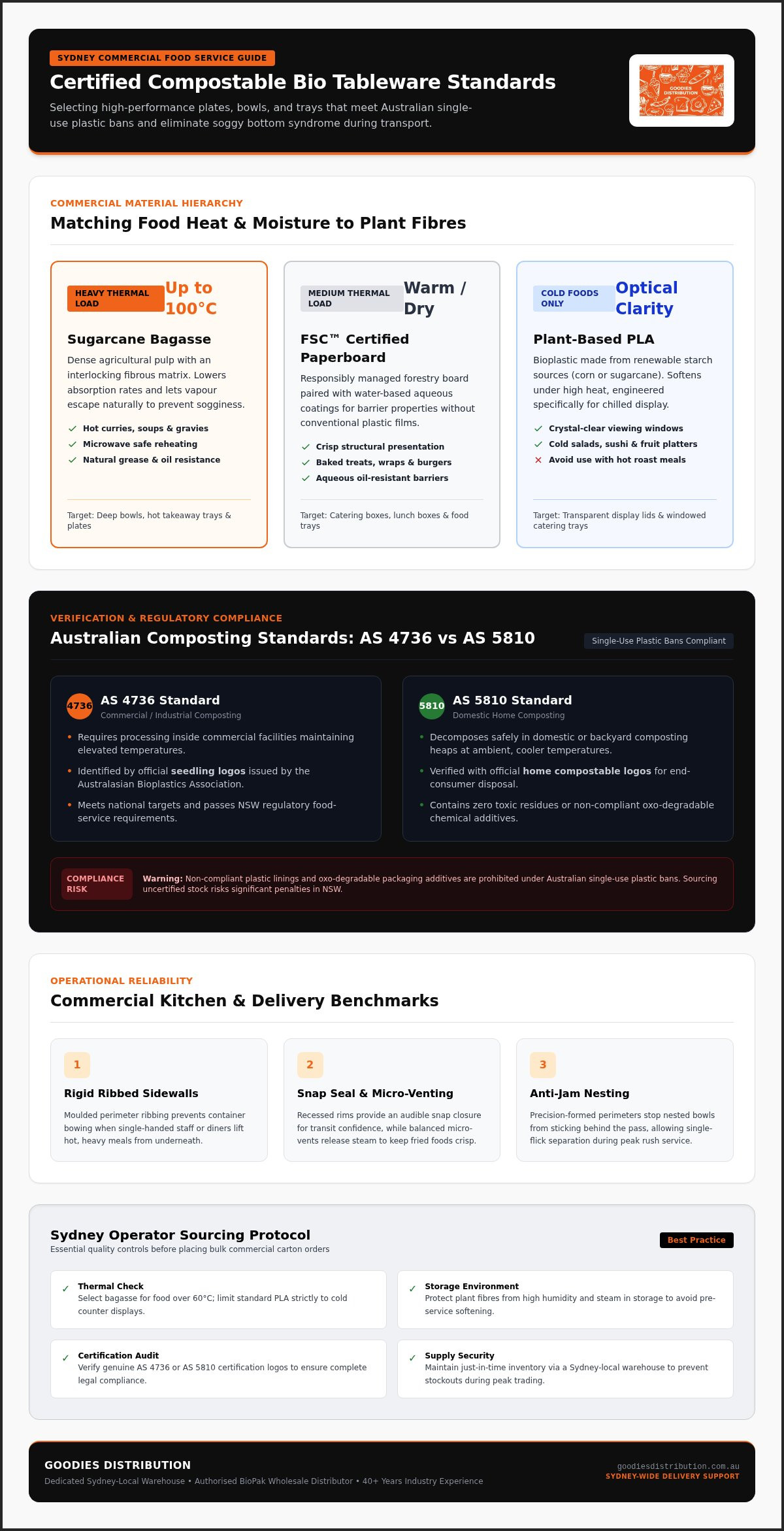
Serving hot, oily meals tests the physical limits of takeaway packaging. In fast-paced commercial kitchens, tableware must handle extreme heat without softening, buckling, or leaking onto diners. While standard uncoated paperboard rapidly collapses when exposed to boiling broths or heavy gravies, dense sugarcane pulp (bagasse) creates an interlocking fibrous matrix. This structural network lowers absorption rates and prevents soggy bottom syndrome by allowing vapour to release naturally rather than condensing into pooling moisture. When assessing bio plates, bowls and trays for commercial food service, venues must evaluate how natural fibres hold up against fats, marinades, and acidic dressings during active service.
Thermal and Oil Resistance Under Commercial Conditions
Plant fibres interact with boiling liquids and cooking oils in very specific ways. Sugarcane bagasse naturally withstands food temperatures up to 100°C, making it suitable for piping hot soups, roast carveries, and fried sides. Unlike standard unlined paper that absorbs grease almost instantly, dense moulded fibres and certified bioplastic materials maintain structural integrity in commercial warming cabinets. They also support short microwave reheating cycles without releasing chemical taints into delicate food profiles.
Structural Rigidity and Stacking for Busy Kitchens
Kitchen efficiency relies heavily on dependable tableware geometry. Plates and bowls engineered with moulded ribbing along the sidewalls resist bowing when staff or patrons lift loaded meals with a single hand. Precision-formed rim perimeters also stop nested containers from sticking together behind the pass. Staff can grab and separate individual pieces with a single flick during peak rush periods, protecting workflow speed without crushing cartons.
Lid Compatibility and Spill Prevention for Delivery
Off-premise dining demands secure closures to prevent transit disasters across Sydney transport routes. High-performance bio plates, bowls and trays feature recessed, uniform rims designed to match leak-resistant compostable lids. An audible snap seal gives packing staff immediate confirmation of a tight closure. Along with this secure fit, balanced micro-venting allows excess steam to escape safely, keeping battered and fried items crisp while preventing liquid contents from sloshing over the edges.
Material Standards and Australian Composting Certifications Explained
Australian single-use plastic bans have removed conventional plastics and non-compliant coated containers from commercial service. In New South Wales, supplying uncertified plastic-lined paper items risks substantial penalties, making verifiable eco-credentials essential for every food operator. Sourcing compliant bio plates, bowls and trays means you don't have to rely on vague supplier marketing. Aligning your purchasing with the Australian Sustainable Packaging Guidelines and avoiding illegal oxo-degradable additives protects your business reputation while supporting genuine resource recovery.
Sugarcane Bagasse vs FSC Certified Paperboard
Sugarcane bagasse repurposes the dense fibrous pulp remaining after agricultural sugar extraction, turning harvest waste into sturdy serviceware. FSC certified paperboard draws from responsibly managed forestry to produce crisp, rigid catering boxes and takeaway bases. While smooth paperboard excels at displaying baked treats and dry wraps, textured bagasse provides superior natural rigidity against heavy gravies and acidic dressings without requiring separate polymer films.
AS 4736 vs AS 5810 Verification Standards
Authentic environmental claims depend on distinct testing frameworks. As established across Australian composting certifications, items certified to AS 4736 must break down inside commercial processing facilities that maintain elevated temperatures. By contrast, AS 5810 standards verify true home compostability within cooler residential compost heaps. Always look for verified seedling logos and home compostable logos issued by the Australasian Bioplastics Association to ensure your stock passes local council checks.
Plant-Based PLA Linings and Clear Viewing Windows
Displaying cold catering requires optical clarity. Plant-based PLA creates crystal-clear viewing panels and display lids from renewable plant starches. Because standard PLA softens when exposed to high heat, it works best for cold salads, sushi, and fruit platters rather than hot roast meals. For steaming dishes, modern water-based aqueous coatings provide oil resistance directly on paperboard surfaces without conventional plastic coatings. If you want verified peace of mind for your counter service, you can partner with Goodies Distribution to supply fully certified lines directly to your door.
Matching Bio Tableware Formats to Your Service Model
Mismatched tableware leads to portion creep, messy transit spills, and operational bottlenecks. Selecting suitable bio plates, bowls and trays requires balancing plate presentation with back-of-house speed. Aligning container choices with operational frameworks highlighted in the National Compostable Packaging Strategy ensures your packaging workflow supports commercial efficiency while remaining environmentally sound. Choosing formats tailored to specific kitchen operations directly protects customer satisfaction and margins.
Cafe and Fast-Casual Dining Solutions
Shallow bagasse bowls provide a wide staging area that makes grain salads, noodle dishes, and acai bowls look generous without accidental overfilling. For mixed orders, divided compartment plates keep crisp elements like chips or fried chicken separate from moist sides and dipping sauces. Because bench space in bustling Sydney cafes is often limited, tightly nesting bases with compact footprints help counter teams plate up swiftly without cluttering prep stations.
Corporate Catering and Event Grazing Trays
Executive catering demands clean lines and immaculate presentation. FSC-certified BioBoard catering trays, ranging from extra small to extra large formats, offer a rigid base for sandwich platters, cold finger foods, and grazing spreads. Pairing these sturdy kraft catering trays with clear PLA windowed lids protects pastries and charcuterie during transit while putting fresh culinary styling on full display before boardroom guests.
Street Food and Event Operations
Mobile trucks and festival stalls present unique dining hurdles where customers eat standing up or outdoors. Deep sugarcane bowls contain loaded fries, saucy pastas, and curries without splashing over the rim. Molded bagasse plates carry enough density to stay firm under heavy carving station roasts, providing the necessary weight to keep empty tableware from blowing away in windy outdoor dining precincts.
Common Tableware Sourcing Mistakes to Avoid in Commercial Kitchens
Procuring wholesale packaging without a clear operational plan leads to costly kitchen headaches. When sourcing bio plates, bowls and trays, hospitality venues frequently encounter supply mismatches, damaged stock, or unexpected regulatory fines. Choosing certified lines and implementing sensible storage protocols keeps your kitchen humming during Friday lunch trade.
Regulatory Non-Compliance and Reputational Exposure
Overlooking local compliance is an expensive oversight. With the NSW single-use plastic bans prohibiting uncertified items and conventional plastic linings, importing unverified stock from overseas brokers creates serious compliance liabilities. Never assume unlabelled packaging satisfies council regulations or municipal organics streams. Diners also notice when substandard containers fail under heat, and flimsy packaging instantly tarnishes hard-earned brand presentation.
Storage Pitfalls in Sydney's Coastal Climate
Natural plant fibres react dynamically to surrounding air conditions. Coastal Sydney experiences frequent high humidity, which can soften unwrapped cartons stored near dishwashing pits or open kitchen doors. Follow these core storage practices to protect your stock:
- Maintain sensible stacking heights to avoid crushing bottom cartons and warping container rim profiles.
- Seal partially used sleeves inside plastic liners to prevent ambient moisture from elevating absorption rates before plating.
- Practise strict FIFO (first in, first out) stock rotation so cartons do not sit idle in humid storage corners.
Wholesale Supply Planning
Stockouts during peak catering bookings disrupt service immediately. Operating on a just-in-time inventory model requires an experienced local distributor rather than distant suppliers with unpredictable freight schedules. Review the eco-friendly packaging guide to coordinate complementary takeout supplies, or consult the BioPak sustainable packaging wholesale guide to confirm brand certifications. To protect your commercial kitchen against unexpected carton shortages, explore food packaging online bulk ordering for dependable deliveries straight from a dedicated local facility. When you are ready to secure compliant bio plates, bowls and trays for your venue, shop now with Goodies Distribution for dependable dispatch across Sydney.
Top Certified Bio Plates, Bowls and Trays for Food Service
Selecting purposeful formats streamlines preparation behind the line while refining the customer dining experience. Commercial kitchens need packaging that presents beautifully without sagging under hot gravies or greasy dressings. Whether you run a bustling inner-city cafe or an event catering operation, exploring high-grade bio plates, bowls and trays guarantees your food arrives exactly as intended.
Sugarcane Bagasse Bowls and Food Trays
Certified compostable bagasse bowls offer exceptional depth and heat retention for daily lunch service. Moulded from reclaimed sugarcane fibres, these round bowls and compartmentalised food trays handle laksa broths, saucy curries, and dressed grain salads with ease. Their smooth, rounded edges make eating directly from the bowl comfortable for diners, while the natural unbleached finish quietly reinforces your venue's environmental commitment.
FSC Certified BioBoard Catering Trays and Display Lids
Event catering calls for presentation-ready structural strength. BioBoard Catering Trays, available in extra small to extra large sizes, provide a sturdy base that won't flex under heavy finger food spreads. Pairing these kraft trays with matching BioBoard Catering Tray PLA Windowed Lids keeps moisture balanced while giving clients clear view of your culinary work. Reinforced corners support multi-tiered stacking, so you can transport loaded platters without crushing lower tiers.
Wholesale Sydney Supply and Local Warehouse Dispatch
Sourcing your packaging locally takes the stress out of weekly stock management. Goodies Distribution operates a dedicated Sydney-local warehouse, backing food operators with over 40 years of industry experience. Rapid dispatch across Sydney ensures you can bundle certified bio plates, bowls and trays with matching paper bags and biodegradable cutlery in single wholesale orders. Ready to elevate your table service? Shop certified bio plates, bowls and trays today to secure compliant, kitchen-tested packaging for your venue.
Build a Resilient, Sustainable Tableware Setup for 2026
Elevating your takeaway and catering operations comes down to choosing serviceware that performs under commercial kitchen pressure. Matching menu moisture and thermal loads to dense plant fibres stops messy collapses before meals reach the table. Simultaneously, verifying genuine AS 4736 industrial and AS 5810 home compostable certifications keeps your business fully compliant with Australian single-use plastic regulations without the risk of greenwashing penalties.
Goodies Distribution brings over 40 years of hospitality packaging experience straight to your pass. As an authorised BioPak wholesale distributor operating a dedicated Sydney warehouse, our team provides rapid local dispatch so you never face unexpected stockouts during peak service. Upgrading to high-performing bio plates, bowls and trays protects your brand presentation, simplifies front-of-house workflow, and gives your customers total confidence in your environmental standards.
Ready to strengthen your packaging inventory with certified solutions? Connect with our Sydney team and shop certified bio plates, bowls and trays to keep your kitchen running smoothly every day of the week.
Frequently Asked Questions
Are bio plates, bowls and trays fully certified under Australian composting standards?
Yes, reputable bio plates, bowls and trays are independently certified under Australian standards. Quality commercial packaging holds AS 4736 industrial compostability or AS 5810 home compostability verification through the Australasian Bioplastics Association. When stocking serviceware for your venue, look for the recognised seedling logo and valid licence numbers stamped directly on the carton or base to ensure complete regulatory authenticity.
Can certified sugarcane bagasse tableware hold hot soups and greasy curries without leaking?
Yes, sugarcane bagasse tableware naturally repels hot liquids and heavy fats without needing conventional synthetic liners. The interwoven plant fibres create a dense structural matrix that resists temperatures up to 100°C. Curries, gravies, and dressed salads won't cause the base to soften or sweat onto surfaces, ensuring food presentation stays crisp and secure from kitchen plating right through to the customer's table.
Are PLA windowed lids suitable for hot catering food trays?
No, standard PLA windowed lids are engineered exclusively for cold and warm presentation. Because plant-based PLA softens at temperatures above 40°C to 50°C, hot catering platters can cause clear viewing windows to warp or fog up with steam. For warm or hot food transport, pair your catering bases with matching unlined bagasse lids or ventilated kraft board covers to preserve structural stability.
How do bio plates and trays comply with single-use plastic bans across Australia?
Certified compostable tableware complies with state bans because it replaces petroleum plastics with genuine plant-based materials. In New South Wales, single-use regulations explicitly prohibit conventional plastic and uncertified coated foodware. By stocking certified bio plates, bowls and trays that carry AS 4736 or AS 5810 credentials, commercial operators satisfy NSW EPA requirements and avoid penalties linked to unverified green claims or prohibited synthetic linings.
Can I reheat food in a bagasse bowl using a commercial microwave?
Yes, sugarcane bagasse bowls are fully microwave safe for reheating food in commercial kitchens. Unlike traditional plastic or metal-lined takeout containers, pure moulded sugarcane fibre doesn't melt, deform, or leach harmful chemical compounds into food under standard microwave cycles. They provide cafes and takeaway venues with a quick, practical method for reheating prepared meal components safely before handover.
What is the difference between AS 4736 industrial and AS 5810 home compostable tableware?
The core distinction lies in the environmental conditions required for breakdown. AS 4736 certified tableware requires commercial composting facilities, which use sustained high heat, moisture, and microbial activity to disintegrate items within 12 weeks. AS 5810 certified products break down safely in lower-temperature home compost bins within 180 to 365 days, offering an accessible disposal route for patrons without municipal organic collection access.
How quickly can Sydney cafes and caterers receive wholesale tableware orders?
Local venues can secure rapid dispatch directly from Goodies Distribution's dedicated Sydney warehouse. Operating with over 40 years of combined hospitality experience, the team understands the pace of Sydney food service and coordinates dependable delivery across the metropolitan area. This local warehousing setup prevents costly stockouts and helps venues maintain lean, just-in-time inventory throughout the busiest weeks of commercial trade.