

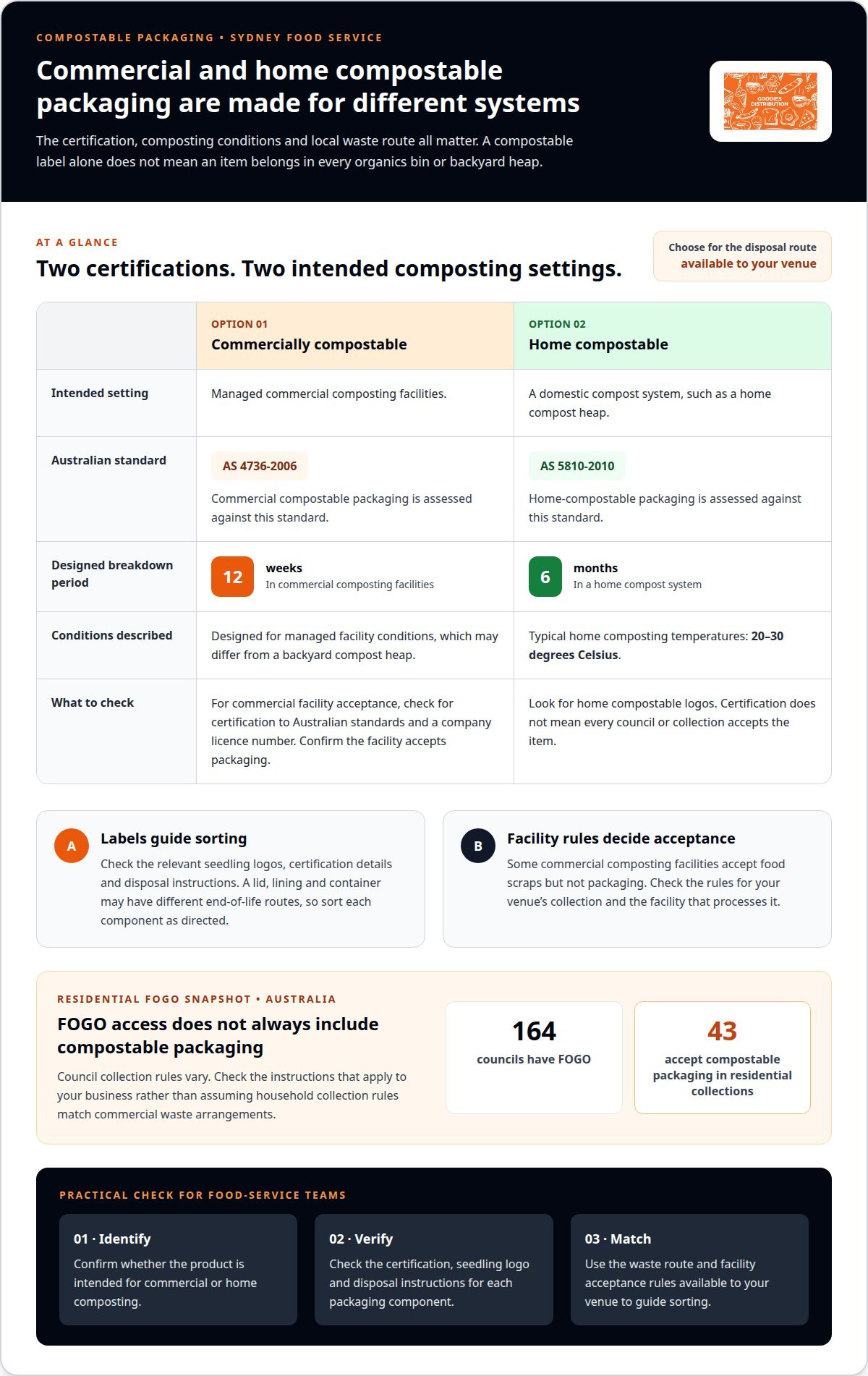
A compostable label doesn’t automatically mean packaging belongs in a backyard compost heap. In Australia, commercial compostable packaging solutions are designed for commercial composting and assessed against AS 4736-2006; home-compostable packaging is assessed against AS 5810-2010. Commercially compostable packaging is designed to break down in commercial composting facilities within 12 weeks.
For Sydney cafés, restaurants and takeaway businesses, that distinction matters when choosing packaging and planning what happens after a meal. Home-compostable packaging is intended to break down in a home compost system within 6 months, at typical home composting temperatures of 20-30 degrees celsius. The right option depends not only on the packaging, but also on the waste collection and composting system available.
Food scraps are often the priority in composting, while packaging may be accepted only by some facilities. This guide explains how commercial and home composting differ, what disposal labels mean and how to choose commercial compostable packaging solutions that fit your venue’s needs and waste stream.
Key Takeaways
- Learn what Australian compostability certifications and seedling logos can tell you about packaging.
- Understand why packaging designed for a commercial facility may not suit a home compost system.
- Match disposal choices to local collection rules and the facilities that accept packaging.
- See how packaging decisions can support food-waste management in your venue.
What Is Compostable Packaging?
Compostable packaging is designed to break down under composting conditions into water, carbon dioxide and biomass, without toxic residue. For Sydney food businesses, product certification and the local waste system help determine whether packaging suits its intended disposal route.
Australian Compostability Standards and Logos
Australian compostability standards set conditions packaging must meet to earn certification. Commercially compostable packaging is assessed against AS 4736-2006, while home-compostable packaging is assessed against AS 5810-2010. Check the relevant seedling logos and certification details instead of relying on a broad environmental claim. For commercial facility acceptance, the product must be certified to Australian standards and display a company licence number. These identifiers help staff distinguish packaging intended for different composting settings.
Packaging Labels and Disposal Instructions
Packaging labels can explain certification and disposal instructions, helping staff sort items into the intended waste stream. The Australian Recycling Label, managed by the Australian Packaging Covenant Organisation (APCO), provides disposal guidance for packaging components. Follow the directions for each part: a lid, lining and container may have different end-of-life routes. A compostable mark alone does not mean every collection accepts the item.
Residential FOGO rules vary across Australia. In Australia, 164 councils have FOGO, but 43 accept compostable packaging in residential collections. The NSW Environment Protection Authority released its Position Statement on acceptable inputs for residential FOGO in July 2022. Sydney businesses need to distinguish council household collections from their own commercial waste arrangements, then organise staff sorting around the collection instructions that apply to their venue.
The environmental impact of recyclable, reusable and compostable packaging depends on the material, how the item is used and whether the relevant recovery system can process it. Reuse relies on return and washing systems; recycling depends on suitable collection and processing. Compostability is useful when the packaging and an accepting composting route align. These practical conditions help food-service operators compare packaging options against day-to-day service needs.
But What About “Home Compostable”?
Home-compostable packaging is designed for a different setting from commercially compostable items. When choosing packaging for Australian food service, consider its certification, material and intended disposal route.
Home-Compostable Packaging Certification
Home-compostable certification indicates packaging is designed to break down in a domestic compost system. In Australia, this packaging is intended to decompose within 6 months at typical home composting temperatures of 20-30 degrees Celsius. Look for home compostable logos to distinguish it from products intended for commercial facilities. Certification helps prevent a home-compostable claim being mistaken for proof that every collection accepts the item.
Commercially compostable packaging is designed for managed facility conditions, which may differ from those in a backyard compost heap. Packaging options in Australia include cups, takeaway containers, paper bags, bagasse trays and bowls, and biodegradable cutlery. Choose the format for the food it will hold: hot drinks, saucy meals and takeaway salads place different demands on packaging.
Plant-Fibre and FSC-Certified Materials
Plant-fibre packaging uses materials such as paper or bagasse, while FSC certification concerns the sourcing of paper. These labels answer different questions: compostability relates to end-of-life conditions, while FSC certification relates to the paper material. Neither label alone confirms that a local compost collection accepts the finished item. For a café, separating material choice from disposal planning makes the decision clearer.
B Corp certification is distinct from product compostability certification. A business-level credential and a packaging certification describe different things, so one is not proof of the other. For food-service use, identify the intended waste route first, then look for the relevant product certification and disposal label.
Trial packaging with representative menu items and service conditions before choosing it. Check fit, closure, heat and moisture performance, transport, and how the food looks on arrival. For example, test a container with a saucy takeaway meal, not just an empty sample. Then match its certification and disposal instructions to the organics, recycling or general-waste route available to your business.
Disposal options for compostable packaging
A compostable logo does not automatically make an item suitable for every organics bin. Commercial composting facilities set their own acceptance rules, and many do not accept packaging. For a Sydney food business, distinguish between a facility that processes food scraps and one that also accepts certified packaging. Without an appropriate route, a compostable item may end up in landfill.
PLA and other bioplastics are often rejected by composting facilities because their intended composting conditions may not match the systems available locally. A plant-based material or compostability claim is not permission to place packaging in any green bin. Practical disposal depends on collection rules and facility acceptance, not the material name alone.
Contamination can change the outcome. Packaging suspected of contamination is often sent to landfill, even when it carries a compostability mark. Food residue, other packaging and incorrect sorting can make a load harder to process. For example, a compostable cup placed with recycling may contaminate that stream, while a recyclable item in organics can disrupt compost processing. Clear sorting instructions help staff keep materials separate.
Build disposal into service routines. Set up separate, clearly labelled bins for food scraps, accepted compostable packaging, recycling and general waste. Train staff to follow the site’s collection instructions and give customers the same guidance at return points. If a facility does not accept packaging, keep it out of that organics stream. An item labelled “biodegradable” without a specific compostability certification belongs in general waste, not compost or recycling.
For packaging to follow its intended end-of-life route, the product, label and local collection system must align. Review accepted items with the collection operator and keep the guidance accessible to kitchen and front-of-house teams. This simple operational step helps prevent avoidable contamination and reduces the chance of certified packaging entering the wrong stream.
Compostable packaging and food waste
Compostable packaging works best alongside a food-waste collection system. Composters typically prioritise food scraps over packaging, so packaging should not distract from capturing organic waste. For a Sydney café, start by finding out whether its collection accepts food scraps, packaging or both. The answer informs bin placement, staff instructions and the packaging choices that can work day to day.
Where organics collection is established, certified compostable packaging may be included in a shared waste stream if the receiving facility accepts it. Closed-loop systems can also suit venues with high food-waste volumes and carefully managed sorting. They work best when staff consistently separate scraps and accepted packaging, rather than treating every biodegradable item as compostable. Certification describes a product; it does not guarantee that a collection accepts it.
Packaging does not replace food-waste reduction. A takeaway container can help deliver a meal, but it does not prevent uneaten food from being discarded. Hospitality teams should consider both how much food is wasted and whether packaging can enter the venue’s organics system. Food recovery and packaging disposal are related, but distinct, operational decisions.
The National Waste Policy Action Plan set a target for all packaging to be recyclable or compostable by 2025. For a business, that target highlights why end-of-life planning matters alongside material choice. A biodegradable claim alone doesn’t establish the right disposal route; packaging designed to break down under composting conditions won’t deliver that pathway if it goes into the wrong stream. Keep collection guidance visible where staff and customers sort waste.
Review your menu, packaging formats and organics collection together. That gives your team a clearer basis for selecting commercial compostable packaging solutions that fit actual service and waste-handling conditions. Explore compostable packaging options for food-service use.
Goodies Distribution: Custom Branding Services
Goodies Distribution offers Custom Branding Services for food-service businesses that want branded packaging. Once you have matched packaging materials and disposal routes to your venue’s needs, custom branding can help create a consistent look for customer-facing packaging.
Takeaway Containers and Paper Bags help serve and carry meals, while Biodegradable Cutlery can complete the takeaway experience. Custom branding can give these practical items a recognisable look across customer orders. Choose formats to suit your menu, service style and packaging needs, and consider how each performs during preparation, transport and handover.
Planning branded packaging for your food business? Contact Goodies Distribution or visit goodiesdistribution.com.au.
Make your next packaging choice count
Turn sustainability intentions into a practical decision your team can follow. Set a clear packaging standard that reflects your food-service needs, customer experience and brand identity. The best commercial compostable packaging solutions are those your business can use confidently and manage responsibly through its chosen waste system.
Goodies Distribution supplies certified compostable cups and takeaway containers, and offers custom branding services. These options can help cafés and takeaway venues bring serving needs and brand presentation together. Consider which formats suit your menu and how branded details can create a consistent customer handover.
Ready to plan packaging for your venue? Contact Goodies Distribution to explore options for your business. Thoughtful choices can give your team a clear path towards packaging that fits both daily service and your brand.
Frequently Asked Questions
How do I know what materials are compostable?
Assess the finished item, not just its main material. A paper container may include a lining, adhesive or separate lid, and each part can affect its end-of-life route. For a menu trial, list every component and compare it with the product’s compostability information. Then test the packaging with the food it will hold, including how it performs during preparation and takeaway service.
Which Australian suppliers offer commercial compostable packaging solutions?
Goodies Distribution supplies compostable food packaging to hospitality and food-service businesses, including in Sydney. The company serves wholesale buyers and offers Custom Branding Services to help venues align packaging with their identity. When choosing packaging for your operation, consider whether the available product categories suit your menu and whether custom branding supports the customer experience you want to create.
What Australian standards certify compostable packaging, including AS 4736 and AS 5810?
AS 4736 applies to commercial compostability, while AS 5810 applies to home compostability. These standard identifiers help buyers distinguish the intended composting setting. For purchasing records, keep product documentation alongside the packaging specification and ensure staff can identify the relevant mark. This makes it easier to connect the item ordered with the disposal instructions used in your venue.
What is the difference between industrially compostable and home-compostable packaging?
The difference is the composting setting each product is designed for. A venue with managed organics collection needs packaging suited to the receiving system; a household user needs an item intended for domestic composting. Do not choose takeaway packaging solely because it carries a compostability claim. Consider where customers are likely to dispose of it and which collection route is available.
Which Australian councils and commercial composting facilities accept compostable packaging?
Acceptance depends on the collection and receiving facility. For household bins, follow the council’s FOGO instructions; for business collections, use the service’s accepted-items information. Keep these guidance lists separate for staff, since residential and commercial arrangements can differ. Clear labels above kitchen sorting stations help teams follow the right local instructions during busy service periods.
What are the risks of contamination, misleading claims, and greenwashing with compostable packaging in Australia?
Broad claims can leave staff and customers unsure what a package is made for or how to dispose of it. Look for specific product information, and do not apply a claim about one component to the whole pack. For example, a marked container and an unmarked accessory may need different handling. Consistent wording on packaging, menus and bin signs keeps environmental messages clear and credible.