


A compostable label doesn’t tell you where packaging belongs. Compostable packaging samples help food-service businesses assess how packaging works with their products, but disposal depends on its compostability certification and whether local collection accepts it.
It’s easy to assume that anything labelled compostable can go into a food organics and garden organics (FOGO) bin. In NSW, the Environment Protection Authority’s July 2022 Position Statement on acceptable inputs for residential FOGO did not include compostable packaging, so a compostable claim alone doesn’t mean an item is accepted in Sydney’s kerbside organics collection.
This guide explains what compostable packaging means, how home and industrial composting differ, and what to consider when choosing packaging for a cafe, restaurant or takeaway business. You’ll also learn how Australian compostability standards relate to disposal, why packaging components may need separate handling, and how samples can help you assess fit and function before deciding.
Key Takeaways
- Match packaging material and format to the food you serve, including the strength and moisture resistance your service needs.
- Choose a disposal route that fits the packaging’s compostability certification and the local organics collection rules.
- Use samples to assess practical fit and presentation before settling on packaging for your cafe, restaurant or takeaway service.
- Learn how AS 4736 and AS 5810 certifications distinguish industrial compostability from home compostability.
What Is Compostable Packaging?
Compostable packaging is designed to break down in composting conditions, while recyclable packaging is processed into material for reuse. In Australia, PET plastic marked with Plastic Identification Code 1 can go in a kerbside recycling bin, but compostable packaging shouldn’t go there unless it specifically says it can be recycled.
Packaging Materials and Benefits
Compostable packaging can be made from materials such as plant fibres and bioplastics, including bagasse and PLA. For cafes and takeaway businesses, material choice affects how packaging performs during service and which disposal route is appropriate.
Bagasse is fibre left after sugarcane processing and can be formed into takeaway containers, trays and bowls. These formats give food businesses alternatives to conventional plastic containers. Paper-based packaging is also used for bags and cups, while PLA is used in some packaging applications.
Material choice matters at the counter and in transit. A container needs to hold its shape with food inside, and a cup must suit the drink it carries. Check the product specifications and test samples with your menu to assess packaging performance and compostability requirements.
Use compostable packaging samples to assess how a format suits your menu, from a bagasse bowl for a meal to a paper bag for takeaway. Material alone doesn’t determine the right choice. Shape, food type and the intended disposal system all matter.
Compostable and Biodegradable Materials
Biodegradable means microorganisms can break a material down, but the word alone doesn’t specify the conditions or timeframe. Compostable packaging is intended to break down in a composting system, so its certification and disposal directions help clarify where it belongs.
This distinction matters when communicating with staff and customers. A biodegradable claim alone doesn’t tell a Sydney cafe whether packaging suits home composting or an industrial facility. Compostability claims should identify the relevant system, rather than imply that every item breaks down in every environment.
Conventional packaging may be designed for recycling or disposal rather than composting. For example, PET plastic with Plastic Identification Code 1 can be placed in kerbside recycling. Compostable packaging belongs in that bin only when its packaging specifically says it can be recycled. Separating these pathways helps avoid treating biodegradable, compostable and recyclable as interchangeable terms.
Disposal in home and industrial composting systems
For Sydney businesses, compostable packaging belongs in a FOGO bin only if that collection accepts it. If it doesn’t, follow the packaging’s disposal directions and keep it out of the organics stream. This helps prevent contamination and avoids directing customers to a disposal route their collection doesn’t support.
Build disposal into your service setup, not just your purchasing decision. At a takeaway counter, place clear signs beside bins and show staff where packaging with food residue goes. If a package has separate parts, such as a base and lid, make the sorting instructions clear for each component.
Use a sample trial to assess more than the package itself. Observe what customers and staff are likely to do after eating: separate a lid, scrape out leftovers or discard the whole item. These actions can affect whether packaging enters the intended stream or becomes contamination. A simple trial can show where instructions need to be clearer.
Keep the product’s disposal claim and your bin signage aligned. The word “compostable” alone doesn’t explain the collection pathway. If packaging specifies a particular composting system, name that system in your instructions rather than suggesting every compostable item belongs in every organics bin.
When changing your menu, review packaging and disposal instructions together. A cafe introducing a new takeaway container can update staff guidance and customer-facing signs at the same time. Make instructions specific to the item, including any separate lid or lining, and don’t place compostable packaging in kerbside recycling unless its label says it can be recycled.
How can I request and order compostable packaging samples from Australian suppliers?
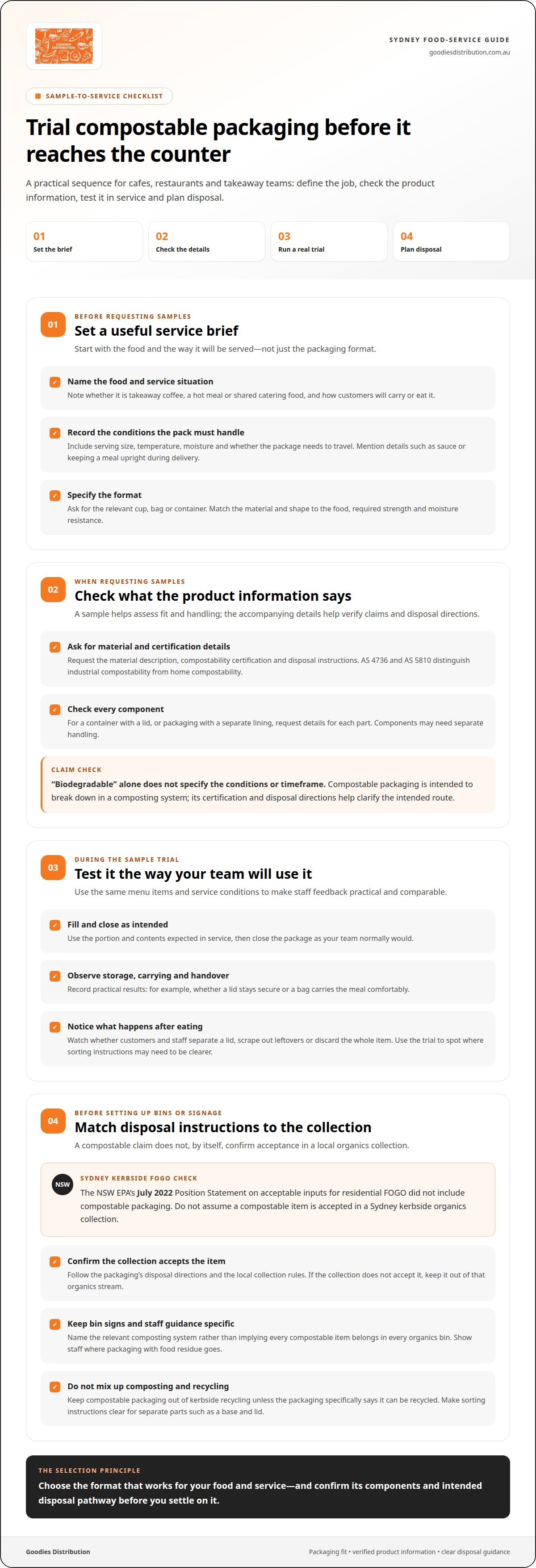
Start with the food and service situation the packaging needs to suit. A cafe serving takeaway coffee has different requirements from a restaurant packing hot meals or a caterer preparing shared platters. Specify the format you need, such as a cup, bag or container, and explain how customers will carry or consume the food.
Before requesting samples, prepare a short brief for the supplier. Include the food type, serving size, temperature, moisture and whether the package needs to travel. For example, note whether a takeaway meal contains sauce or needs to stay upright during delivery. These details help narrow sample choices to formats you can assess in your own service conditions.
Request the specific sample format alongside relevant product information. Ask for the item’s material description, compostability certification and disposal instructions. If a package has separate components, such as a container and lid, request details for each. A sample lets your team assess fit and handling; accompanying information helps distinguish appearance from verified environmental claims.
When samples arrive, assess them with a repeatable trial. Fill each package as you would during service, close it as intended, and observe how it handles storage, carrying and handover. Record practical results, such as whether the lid stays secure or the bag carries the meal comfortably. Keep staff feedback focused on the same menu items and service conditions.
Choose the format that best meets your operational needs and intended disposal pathway. Confirm product format, components and required quantities before ordering. For bag samples, Australian supplier arrangements can include dispatch by regular Australia Post without tracking. Allow for untracked delivery when planning a sample review, and don’t rely on tracking updates to schedule your trial.
Are samples certified to AS 4736 or AS 5810 standards?
Some compostable packaging samples are certified to Australian compostability standards, but certification applies to a specific product. AS 4736 relates to industrial compostability, while AS 5810 relates to home compostability. These standards help distinguish packaging designed for processing in different composting systems.
Packaging bearing a home compost or industrial compost symbol has been tested and certified against the relevant Australian Standard as 100% compostable. Look for the symbol and standard on the sample or its product information. A general biodegradable claim does not identify either certification or tell you which composting system is intended.
Read certification details alongside the item’s disposal instructions. An industrial composting mark doesn’t mean a product is suitable for a backyard compost heap. Home-compostable logos indicate a different disposal pathway. Matching certification to your available system helps prevent misleading disposal directions for staff and customers.
Check every part of the sample separately. A takeaway container, lid and lining may not share the same material or certification. For example, a bag’s lining can carry home compostability certification to AS 5810, while another component may have different disposal instructions. Don’t assume the whole package has one certification because a symbol appears on one part.
For a useful comparison, record the sample’s product name, certification standard, logo and component details. Compare these with the supplier’s product information and your intended disposal route. If you’re assessing a cup or food container, test its fit and function with the drinks or meals you serve. Certification describes compostability; it doesn’t replace a practical service trial.
Choose wording for customer-facing signs that reflects the exact certified pathway. Avoid describing an industrially compostable item as home compostable. Explore certified compostable packaging options as you assess suitable formats for your food service.
Goodies Distribution
Goodies Distribution helps food businesses turn packaging requirements into practical choices for takeaway service and brand presentation. After assessing compostable packaging samples, use what you learned about fit, handling and disposal to guide decisions about containers, bags and cutlery.
Goodies Distribution supplies takeaway containers, paper bags, cutlery made from verified materials and custom branding services. These options can support a consistent customer experience, from how a meal is packed to how your brand appears on packaging. Consider the food you serve, your service style and the disposal pathway when choosing formats and communicating environmental claims.
If you’re ready to discuss packaging choices for your food business, contact Goodies Distribution.
Make your next packaging choice with confidence
Turn your sample review into a clear brief for the packaging your team needs. Note what staff learned during service and which details matter most for the next decision. Compostable packaging samples can help you build a practical evaluation process for your business.
Use that brief to keep future packaging decisions consistent as your menu or service changes. Clear criteria help your team weigh customer experience, daily handling and disposal instructions together, rather than choosing a format on appearance alone.
Ready to discuss your packaging plans? Contact Goodies Distribution and take the next step towards packaging that suits your food service.
Frequently Asked Questions
What else should I know?
Before moving from evaluation to stock planning, note the wholesale ordering requirements. Goodies Distribution requires a registered account and Australian Business Number (ABN) for purchases. Standard stock orders have a four-carton minimum; cutlery, straws and napkins each count as half a carton. This helps cafes and caterers plan an order once they’ve chosen formats that suit their service.
What types of compostable packaging samples are available in Australia?
Australian food-service businesses can enquire about sample formats such as cups, takeaway containers, paper bags and biodegradable cutlery. Goodies Distribution’s sample request form or sales team can help with an enquiry. Compostable packaging samples are most useful when they reflect your actual service, such as a cup for takeaway drinks or a container for a regularly served menu item.
What materials are used in compostable packaging, such as PLA, bagasse, and paper?
Compostable packaging can use PLA, bagasse fibre and paper, with materials suited to the product’s intended format. PLA is a plant-based bioplastic commonly made from renewable starch sources such as corn or sugarcane. Bagasse is fibre from sugarcane processing. Use compostable packaging samples to compare formats for your menu, remembering that linings and coatings can also affect the finished item.
What is the difference between home-compostable and commercially compostable packaging in Australia?
Home-compostable packaging is intended for a domestic composting environment, while commercially compostable packaging is designed for processing in an industrial composting facility. This distinction helps Australian businesses communicate a realistic disposal pathway. For example, a business without a suitable commercial organics collection shouldn’t imply that industrially compostable packaging belongs in a customer’s backyard compost. Match customer instructions to the product’s certified composting system.
Which Australian suppliers offer compostable packaging samples?
Goodies Distribution offers bag samples, shipped by regular Australia Post without tracking.