


A compostable label doesn’t tell the whole story. Compostable takeaway coffee cups can have different linings, and whether a cup breaks down depends on the composting conditions it’s designed for and the way it’s collected after use.
For cafés and takeaway venues, choosing a cup means balancing performance with clear disposal guidance. The cup needs to suit your hot drinks and service, while its compostability claim must match the waste options available to customers. A cup designed for industrial composting is not automatically suitable for home composting.
This guide explains how PLA and aqueous coatings affect cup disposal, what home-compostable options offer, and how Australian certification and rules fit into the decision. You’ll also learn why certification marks and local collection arrangements matter when assessing environmental claims, so you can choose packaging that works for your service and gives customers clearer end-of-life guidance.
Key Takeaways
- Choose a cup lining to suit both hot-drink service and the composting pathway available to your customers.
- Learn what AS 4736 and AS 5810 certification can tell you about a product’s compostability.
- Consider how cup lids and other takeaway packaging fit into a practical, clearly labelled waste system.
- Explore how coordinated cups, bags and food containers can support your venue’s day-to-day needs and brand presentation.
Are compostable takeaway coffee cups better for the environment?
Compostable takeaway coffee cups can be a practical alternative to conventional plastic-lined cups, but their benefit depends on certification and suitable composting access.
Australian compostability standards
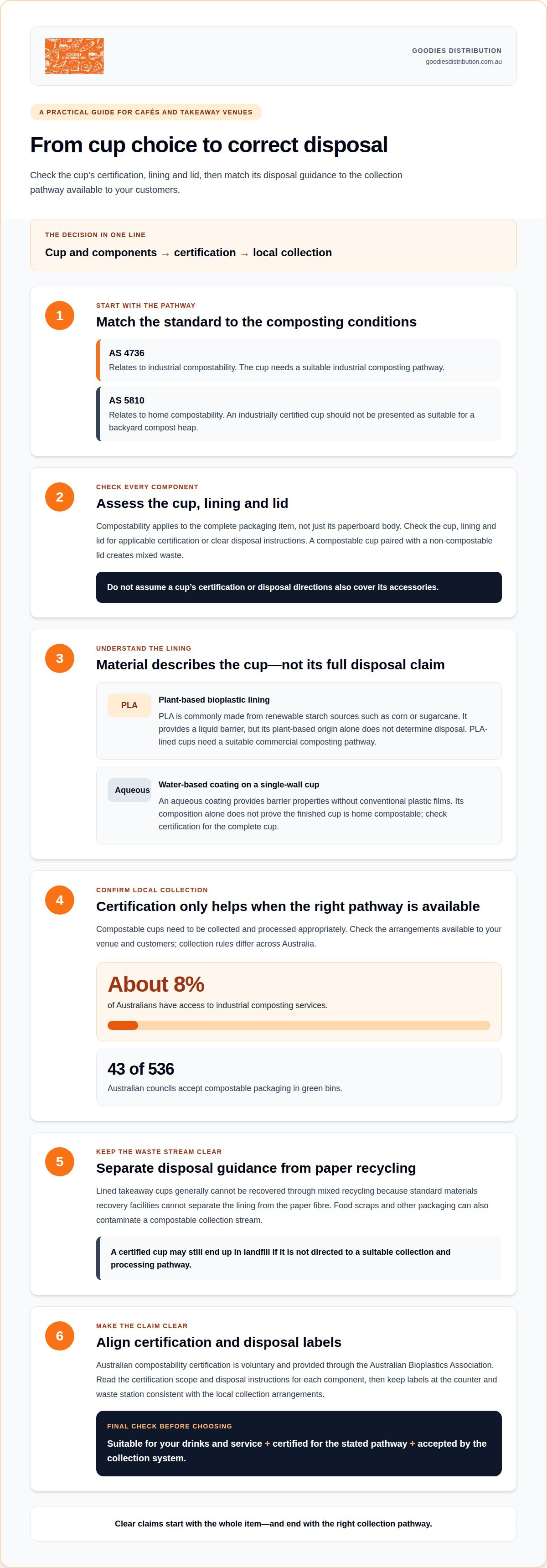
In Australia, a cup’s compostability claim should match a recognised standard and its tested composting conditions. AS 4736 covers industrial compostability, while AS 5810 covers home compostability. These standards assess whether materials break down under the relevant conditions and meet requirements for compostable products. That distinction matters: a cup certified for industrial composting shouldn’t be presented as suitable for a backyard compost heap.
Checking cup, lid and lining claims
Compostability applies to the complete packaging item, not just its paperboard body. Check that the cup, lining and lid each carry an applicable certification or clear disposal instructions; a compostable cup paired with a non-compostable lid creates mixed waste. Australian suppliers sell certified options in sizes from 4oz to 16oz, but sizes and claims vary between products. Compare the certification and disposal guidance for every component before choosing a cup for service.
Contamination and limited composting access
Compostable cups only have a useful end-of-life pathway when collected and processed appropriately. Food scraps and other packaging can contaminate a collection stream, while cups sent to general paper recycling may not be separated from their lining. Access is also limited: industrial composting services are available to about 8% of Australians, and 43 of 536 Australian councils accept compostable packaging in green bins. Without suitable collection, a certified cup may still end up in landfill.
Compostable cups and PLA linings
Paperboard cups use a lining to contain hot drinks. For compostable takeaway coffee cups, the lining is one factor that determines the appropriate disposal pathway.
Paperboard cup construction
A paperboard cup combines a formed fibre body with a lining that holds liquid. This construction suits café service, where cups need to contain drinks through preparation and handover. Paperboard alone does not establish whether the finished cup is compostable; the lining is part of the packaging and its end-of-life assessment.
Lined takeaway cups generally cannot be recovered through mixed recycling because standard materials recovery facilities cannot separate the lining from the paper fibre. Keep their disposal instructions distinct from those for unlined paper packaging.
Plant-based PLA lining
PLA is a plant-based bioplastic commonly made from renewable starch sources such as corn or sugarcane. Used as a cup lining, it provides a liquid barrier. Its plant-based origin alone does not determine how the complete cup should be disposed of, so check the product’s certification and disposal directions.
PLA-lined cups need a suitable commercial composting pathway. Before choosing compostable takeaway coffee cups, consider whether your venue can keep used cups separate and direct them to that pathway. Check lids separately, too, because the cup’s material and disposal guidance do not automatically apply to its accessories.
Home-compostable aqueous-coated single-wall cups
A single-wall cup has one paperboard layer, with an aqueous coating helping contain liquid. Unlike a PLA lining, this water-based coating provides barrier properties without conventional plastic films. The distinction matters for cafés comparing cup materials and disposal pathways. A home-compostable claim describes a product designed to break down in a domestic composting environment, rather than only in commercial facilities.
A home-compostable claim may suit customers who have access to backyard composting, but the coating’s water-based composition alone does not prove the finished cup is home compostable. Check for certification information that covers the complete cup. The paperboard and coating must be assessed together, so a claim about one component should not be assumed to apply to the whole item.
Breakdown time depends on the product and composting conditions, including moisture, airflow and suitable material balance; an under-24-week timeframe should not be assumed for every cup. For service, a single-wall format uses less material than a double-wall construction, while the cup’s structure still needs to suit your drinks and handling. Consider how customers will dispose of used cups, too. Home compostability offers a potential pathway where household composting is available, but it doesn’t mean every customer has that option. Clear disposal instructions help set realistic expectations and support correct sorting.
Australian compostability certification and regulation
Australian compostability certification is voluntary and provided through the Australian Bioplastics Association. For café operators, a compostability claim should have relevant certification, not just wording such as “plant-based”. AS 4736 relates to industrial composting, while AS 5810 relates to home compostability. The standard identifies the tested pathway, so match it to your collection arrangements.
Collection rules differ across Australia. South Australia is the only state with a statewide system allowing compostable packaging in green FOGO bins. South Australian legislation requiring clear compostability labelling became effective on 1 March 2026. Accurate disposal labels are especially relevant for venues there; a certification mark alone doesn’t tell customers which local bin accepts the item.
Review the cup, lining and lid as separate components. Read the certification scope and disposal instructions for each, then make the labels at your counter and waste station consistent with them. Goodies Distribution notes that South Australia does not treat PLA products as compliant compostable alternatives. If your café operates across state borders, do not assume one state’s FOGO acceptance applies elsewhere. Confirm the standard, component coverage and local collection pathway before describing a compostable takeaway coffee cup as compostable.
Choosing BioPak cups and packaging for your business
Goodies Distribution supplies BioPak Compostable Cups and takeaway packaging for cafés. Start by considering the drinks you serve, how staff hand over orders, and what customers carry away. These practical details help narrow your options while keeping presentation in mind.
For hot drinks, the range includes single-wall cups and double-wall 8oz cups. A single-wall cup has one paperboard layer; a double-wall cup has two. BioPak Art Series cups offer another visual option for cafés looking to bring more personality to the counter. Check product information and disposal guidance for the specific cup you choose, as formats can differ.
Goodies Distribution also supplies cup lids and other takeaway packaging components. Match each lid to the cup and the way customers drink on the go, and check its disposal guidance separately. A coordinated set can make the handover feel considered, but the cup and its accessories should be assessed individually.
Goodies Distribution also supplies paper bags and takeaway containers for food orders alongside coffee. A café serving pastries with takeaway drinks, for example, can consider how bags and containers fit its packing routine and presentation. Think about what your team uses most, how items are stored, and how the packaging looks together at handover. This gives your choices a clear operational purpose as well as a consistent appearance.
Bespoke packaging and branding support in Sydney
Goodies Distribution supports Sydney hospitality businesses with custom packaging and branding consultation. Start with your service needs: how staff hand over takeaway orders, which packaging formats you use regularly, and where a consistent brand identity matters most.
Custom Branding Services can help carry your identity across packaging. For example, a café can coordinate BioPak Compostable Cups with paper bags and takeaway containers for a recognisable handover. Choose packaging that also suits daily handling, storage and the way orders are packed during busy service.
Discussing your operation and brand together helps shape practical packaging choices. A cup needs to suit the drinks you serve; a takeaway container needs to suit the food and packing process. Branding should complement those needs, not make packaging harder for staff to use. Goodies Distribution’s consultation brings these considerations together for Sydney cafés, restaurants and takeaway venues.
Environmental claims need the same care as design choices. Compostability wording should reflect the packaging’s certification and disposal pathway, while branding should leave room for clear customer instructions. This helps your packaging represent your business without overstating what happens after use. Contact Goodies Distribution to discuss custom packaging and branding for your Sydney business.
Frequently Asked Questions
Is compostable material better for the environment in landfill?
Not necessarily. A compostable claim describes a product’s intended composting pathway, not what happens in landfill. For café waste planning, consider the material and the collection option separately. If cups are likely to go into general rubbish, compostability alone does not show that they will be composted. Clear disposal instructions help customers and staff sort packaging as intended.
Single or Double Wall Coffee Cups?
Choose based on the drink, handling routine and customer experience you want. A double-wall 8oz cup may suit a venue serving hot takeaway drinks where customers hold the cup while travelling. A single-wall format may fit other service needs. Consider how cups stack at the coffee station, how staff manage busy handovers, and whether the cup works with your chosen lid.
What is compostable packaging?
Compostable packaging is designed and assessed to break down under specified composting conditions. For businesses, the key question is whether the claim applies to the whole item customers dispose of. A takeaway order might include a cup, lid and bag, each with separate material claims. Clear product information helps staff describe each component accurately instead of treating the whole order as one material.
Are compostable coffee cups accepted in Australian council food-waste or FOGO bins?
Acceptance varies by council, so compostable cups are not automatically suitable for every Australian food-waste or FOGO bin. For a Sydney venue, follow the accepted-items guidance for the council service that collects your waste. Make your bin labels match those instructions and brief staff on the same sorting process. Consistent guidance helps prevent confusion for customers.
Do compostable coffee cups need commercial composting, or can they break down at home?
Some cups are designed for commercial composting, while others are certified for home composting. The product’s claim and disposal directions determine the appropriate route. Use the product’s own label when explaining disposal to customers rather than assuming all compostable cups share one pathway. You can also display the relevant information where customers return used cups.
Which Australian standards and certifications apply to compostable coffee cups, such as AS 4736 and AS 5810?
AS 4736 and AS 5810 are relevant Australian compostability standards, and certification information helps identify the product’s assessed claim. When reviewing packaging, look at the wording and certification mark together, including what component they cover. A cup’s claim shouldn’t be applied automatically to its lid or other accessories. This distinction helps cafés communicate environmental claims accurately across the complete takeaway order.