


A compostable label doesn’t make a plastic straw or fork acceptable under NSW’s single-use plastic ban. From 1 November 2022, the state banned plastic straws, stirrers, cutlery, plates, bowls and expanded polystyrene food-service items, including compostable plastic versions.
For Sydney cafés, restaurants and takeaway venues, finding NSW single-use plastic ban alternatives means balancing compliance with how customers eat and drink on the go. Reusable metal, ceramic or silicone items can work where practical. When reusables aren’t suitable, options include uncoated paper, wood or bamboo. Some exemptions apply, including for people who rely on single-use plastics because of disability or health needs. This guide explains which products are covered, where exemptions apply and how to choose practical straw and cutlery alternatives for your service.
Key Takeaways
- Learn how NSW’s rules fit within the wider Australian approach to single-use plastics, and which disposable items the state bans.
- Understand when lidded bowls, certain compostable bags and disability or health needs may fall under exemptions.
- Explore practical reusable and uncoated paper, wood or bamboo options for replacing plastic straws and cutlery.
- Consider how choosing suitable takeaway packaging and cutlery can support smooth service and a consistent customer experience.
What is the single-use plastic ban?
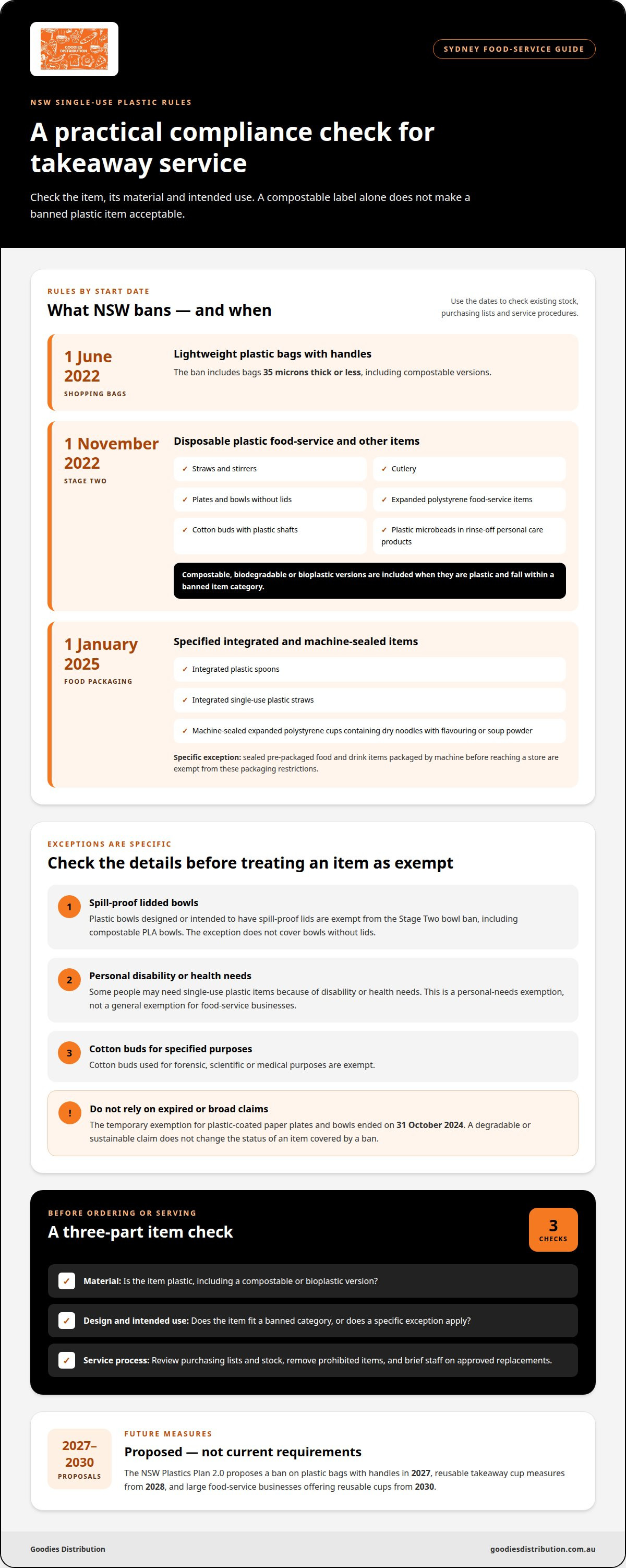
A single-use plastic ban prohibits specified disposable plastic items. In NSW, the Plastic Reduction and Circular Economy Act 2021 provides the legal framework. From 1 November 2022, NSW banned plastic straws, stirrers, cutlery, plates, bowls without lids and expanded polystyrene food-service items. Compostable plastic versions are included, so compostability alone doesn’t make a banned plastic item acceptable.
Australian state and territory bans are rules restricting particular disposable plastic products. Their lists and start dates differ. Queensland’s first ban commenced on 1 September 2021, followed by South Australia on 1 March 2021. The ACT began its first ban on 1 July 2022, while Victoria’s started on 1 February 2023. Rules for disposable plastic items can vary between jurisdictions, so businesses should check which products are covered. These dates show why businesses serving customers across borders need to consider each jurisdiction’s rules.
NSW also restricts some plastic packaging sold with food or drinks. From 1 January 2025, the ban covers integrated plastic spoons, integrated single-use plastic straws and machine-sealed expanded polystyrene cups containing dry noodles with flavouring or soup powder. Sealed pre-packaged food and drink items packaged by machine before reaching a store are exempt. The packaging’s role and how it is assembled affect whether this exemption applies.
Future NSW plastic bans are proposed measures, not current requirements. The NSW Plastics Plan 2.0, released in November 2025, sets out a roadmap for regulations intended for 2026-2030. It proposes a ban on plastic bags with handles in 2027. It also proposes reusable takeaway cup measures from 2028, with large food-service businesses offering reusable cups from 2030. Plastic foodware and plastic or coated drinkware have also been discussed as possible future restrictions.
For local recycling or composting options, start with your council’s waste and recycling information. Check which materials its collections or drop-off services accept, and whether they accept compostable packaging.
Exemptions for lidded bowls and compostable bags
An exemption is a specific exception to a ban, not a general permission. In NSW, plastic bowls designed or intended to have spill-proof lids are exempt from the Stage Two ban, including compostable PLA bowls. This exemption applies from 1 November 2022. A takeaway bowl’s lid function matters; compostable material alone doesn’t establish an exemption. Businesses should distinguish lidded bowls from banned bowls without lids when choosing food containers.
A compostable bag is designed to break down through composting. Under NSW’s shopping bag ban, compostable bags are accepted when they aren’t used to carry goods, such as bin liners and dog-waste bags. This exception doesn’t make a compostable shopping bag suitable for customers’ purchases. NSW banned lightweight shopping bags with handles, including compostable versions, so the bag’s use is central to the distinction.
Some bans may allow exceptions for people with disability or health needs. Some people may have disability- or health-related needs that make single-use plastic items necessary. This is a personal-needs exemption, not a general exemption for food-service businesses. Some people may have personal needs that make single-use plastic items necessary, even when those items are not used in ordinary service.
Other exemptions are narrow and item-specific. The temporary NSW exemption for plastic-coated paper plates and bowls ended on 31 October 2024. It shouldn’t be treated as a current exemption. Expanded polystyrene food-service packaging is also not exempt simply because it contains food. Nor does a degradable or sustainable claim change an item’s status when the ban includes that plastic product. For compostable packaging beyond these exceptions, consider how disposal options work locally and explore compostable products for suitable applications. Clear product use and disposal instructions help staff apply the right rule at service.
NSW banned single-use plastic products
A banned item is a specified disposable plastic product that NSW law prohibits supplying. From 1 November 2022, NSW banned plastic straws, stirrers, cutlery, plates and bowls without lids. The same date covered expanded polystyrene food-service items and cotton buds with plastic shafts. Plastic microbeads in rinse-off personal care products are also banned. From 1 January 2025, restrictions added integrated plastic spoons, integrated single-use plastic straws and certain machine-sealed expanded polystyrene noodle cups.
Single-use plastic foodware is disposable plastic designed or used for food service. Compostable, biodegradable or bioplastic versions are included if they are made from plastic and fall within a banned item category. Plastic-coated paper plates and bowls are also banned. Cotton buds used for forensic, scientific or medical purposes are exempt. These distinctions depend on an item’s material, design and intended use.
A bowl alternative replaces a banned bowl while meeting the meal’s serving needs. For dine-in service, reusable bowls can reduce reliance on disposable foodware. For takeaway, consider uncoated paper, wood or bamboo options where suitable. A bowl designed or intended to have a spill-proof lid is exempt from the Stage Two ban, but this exception doesn’t cover bowls without lids. Match the container to the food’s temperature, moisture and transport requirements.
NSW banned lightweight plastic shopping bags with handles from 1 June 2022, including bags 35 microns thick or less and compostable versions. To distinguish reusable bags, consider ordinary use, washability and how the bag is marketed. For a venue’s compliance process, review purchasing lists and stock, remove prohibited items, and brief staff on approved replacements. Keep ordering decisions and service procedures aligned, so banned products aren’t accidentally brought back into use.
Alternatives to plastic cutlery and straws
A compliant alternative avoids the plastic materials covered by NSW’s ban. Reusable metal, ceramic or silicone cutlery suits dine-in service, staff meals and customers who bring their own. For takeaway orders, uncoated paper, wood or bamboo can replace disposable plastic cutlery when reusables aren’t practical. Choose based on the meal, handling and customer convenience. These are practical NSW single-use plastic ban alternatives for food-service businesses.
A straw alternative lets customers drink without a banned plastic straw. Reusable metal or silicone straws can suit customers who can clean and carry one. For single-use service, consider non-plastic options such as paper or bamboo. A compostable plastic straw is still plastic, so compostable claims don’t make it compliant in NSW. Plastic microbeads are a separate banned item, not a straw material or alternative.
For beverages, decide whether each order needs a straw. Offer one on request where suitable, and keep an accessible option for customers who need one. Consider the drink’s thickness and temperature, along with how long it will be in takeaway packaging. Test how the material feels and performs during typical service before changing your workflow. This makes choosing NSW single-use plastic ban alternatives a practical service decision.
To transition, review cutlery and straw use, then source alternatives made from non-plastic materials. Test them with representative meals and beverages, including takeaway orders. Train staff to recognise prohibited plastic items, explain new options clearly and offer straws appropriately. Keep purchasing instructions and service procedures aligned so replacement stock doesn’t reintroduce banned items.
The practical takeaway: remove banned plastic cutlery and straws, then select reusable or non-plastic alternatives that suit each service. For a food-service option, explore cutlery for takeaway orders.
Goodies Distribution
Goodies Distribution supplies food-service businesses with practical alternatives for everyday service. If your Sydney café, restaurant or takeaway venue is replacing banned plastic cutlery, food-service cutlery and takeaway containers can support your packaging choices, alongside suitable paper bags. The right combination depends on the food, how customers carry it and how the packaging presents your brand.
For a consistent customer experience, Goodies Distribution’s Custom Branding Services can tailor packaging to your business identity. Consider branded packaging as part of a broader shift away from prohibited single-use plastics, choosing products to suit your menu and service style.
Contact Goodies Distribution to discuss packaging options for your business.
Make your next packaging decision count
Use your next packaging review to build compliance into everyday service rather than treat it as a last-minute change. Map what customers need for dine-in and takeaway, then choose materials and formats that suit your menu, handling routines and brand presentation. The best NSW single-use plastic ban alternatives are practical for staff and clear for customers, with environmental claims that accurately reflect the product.
Goodies Distribution offers certified compostable cups, takeaway containers and custom branding services to support food-service packaging decisions. These options can help you consider how cups, food containers and branded packaging work together across the customer experience. Choose for function first, then make the presentation consistent with your business.
Ready to plan a packaging change for your venue? Contact Goodies Distribution to discuss your requirements. A thoughtful next step can help you put your packaging choices into practice.
Frequently Asked Questions
What’s banned?
NSW bans specified disposable plastic products, including shopping bags, straws, stirrers, cutlery, plates, bowls without lids, expanded polystyrene food-service items, plastic-shaft cotton buds and rinse-off personal-care products containing plastic microbeads. From 1 January 2025, restrictions also cover certain integrated plastic items and machine-sealed expanded polystyrene noodle cups. The exact rule depends on the item’s material, design and use.
Who does it affect?
The restrictions affect businesses and organisations supplying banned items in NSW, including cafés, restaurants, takeaway venues and retailers. They also shape what customers can be given with food, drinks and purchases. Exemptions apply in defined circumstances, including for people who rely on single-use plastics because of disability or health needs. Products distributed outside NSW are exempt from the state’s bans, but other jurisdictions have their own rules.
Will my plastic-packaged products be affected by further regulations?
Some may be affected, depending on the packaging type and how it is integrated with the product. NSW’s Plastics Plan 2.0 sets out a regulatory roadmap for 2026-2030, including proposed measures for plastic bags and reusable takeaway cups. Possible future restrictions on plastic foodware and plastic or coated drinkware have also been discussed. Treat proposals as a reason to review packaging plans, not as current bans.
What reusable alternatives can NSW businesses use instead of banned plastic bags, straws, cutlery and containers?
For repeated use, businesses can consider cloth shopping bags, metal or silicone straws, and metal or durable reusable cutlery. Reusable food containers can suit dine-in service or customer bring-your-own arrangements. Match choices to cleaning routines, storage space and how food is served. Where a reusable item isn’t practical, choose a non-plastic single-use alternative suited to the product and its intended use.
What compostable or paper alternatives are allowed under NSW rules, and what standards must they meet?
No compostability standard makes a plastic item exempt when NSW bans that item category. Compostable plastic versions of listed straws, cutlery and other foodware are included in the bans. Non-plastic paper alternatives may suit some uses, depending on the food and service needs. A certification claim should describe the product accurately, but it doesn’t override NSW restrictions on a banned plastic item.