


A compostable label alone doesn’t tell you whether takeaway packaging suits your business or how it should be disposed of. The most useful plastic free takeaway solutions combine food-service performance with clear compostability certification and disposal guidance. For plant-fibre packaging, PFAS-free information is another practical detail to consider.
Choose packaging that protects food, works smoothly during busy service and supports your environmental goals. Compare what each material and certification actually means instead of relying on broad eco-friendly claims. This guide explains how to assess compostability, when reusable or compostable cutlery may be appropriate, and what to look for in PFAS-free plant-fibre products, so you can make a more informed choice for your café, restaurant or takeaway venue.
Key Takeaways
- Match compostability certification to the disposal pathway available to your customers, rather than relying on a compostable label alone.
- Reduce unnecessary disposable utensils by making them request-only, while keeping accessibility needs in mind.
- When assessing plant-fibre packaging, look for clear information about PFAS and consider how the pack performs with your menu.
- Compare packaging options by material, format and operational fit to understand what will shape your overall purchasing needs.
1. Compostability standards and certification
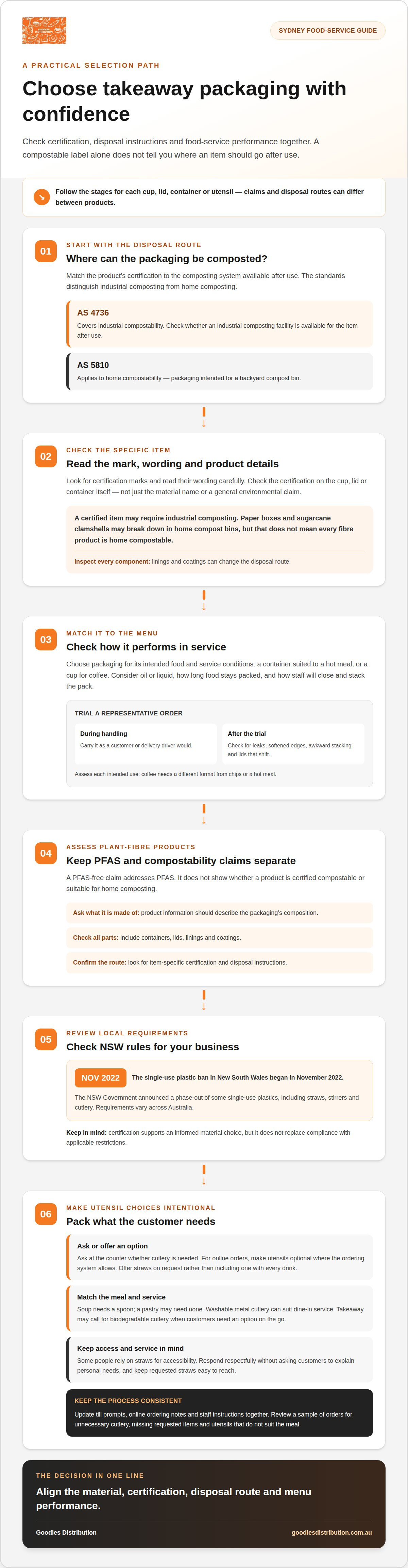
For takeaway packaging, match certification to the composting system available after use. AS 4736 covers industrial compostability, while AS 5810 applies to home compostability. These standards help distinguish packaging designed for commercial composting from products intended for a backyard compost bin. Check the certification on the specific item, not just the material name or a general environmental claim.
Look for certification marks and read their wording carefully. A certified compostable cup, lid or food container may require an industrial composting facility, where conditions differ from home composting. Some paper boxes and sugarcane clamshells may break down in home compost bins, but that doesn’t mean every fibre product is home compostable. Linings and coatings can change the disposal route.
In New South Wales, the single-use plastic ban began in November 2022. The NSW Government announced a phase-out of some single-use plastics, including straws, stirrers and cutlery. Requirements vary across Australia, so Sydney businesses should consider the NSW rules when reviewing takeaway packaging. Certification supports an informed material choice, but it does not replace compliance with applicable restrictions.
What food-safety rules apply to takeaway packaging in Australia? Choose packaging designed for its intended food and service conditions, such as a container suited to a hot meal or a cup for coffee. Make sure it protects food during handling and transport, and follow safe food-handling practices at your venue.
Which Australian suppliers sell plastic-free takeaway cups, containers and cutlery? Food-service packaging wholesalers supply paper cups, fibre-based food containers and biodegradable cutlery. Compare each product’s material, certification and disposal instructions rather than assuming every item in a range has the same compostability claims.
How can cafes switch to reusable takeaway container schemes? Choose reusable containers and establish a clear return and cleaning process. Train staff to accept, handle and store returned items, then explain the scheme at ordering points.
How can customers find plastic-free takeaway options near them in Australia? Check a café’s menu and packaging information, or ask whether its cups, containers and cutlery are reusable or certified compostable. In Sydney, customers can also bring a clean reusable cup or container and ask the venue if it accepts them.
2. Declining disposable straws and cutlery
Review how utensils are added to orders before changing your packaging setup. At the counter, ask customers whether they need cutlery instead of including it automatically. For online orders, make utensils an optional selection where the ordering system allows. This reduces unnecessary items in takeaway bags and gives customers a clear choice.
Match utensils to the meal. Soup needs a spoon, while a pastry may need none. A short menu guide can help staff pack the right utensil without slowing service. For meals eaten in your venue, washable metal cutlery can be part of the dine-in setup. Takeaway service may call for biodegradable cutlery when customers need an option for eating on the go.
Straws also need thoughtful handling. Offer them on request rather than including one with every drink. Some people rely on straws for accessibility, so staff should respond respectfully without asking customers to explain personal needs. Keep requested straws easy to reach, but don’t pack them into drinks by default.
Make the process consistent across shifts. Update till prompts, online ordering notes and staff instructions together, then place requested utensils where packers can add them easily. During a service review, check a sample of takeaway orders for unnecessary cutlery, missing requested items and utensils that don’t suit the meal. Use the feedback to refine instructions without adding extra steps.
For takeaway dining, choose cutlery that feels practical for the food being served. A fork needs to handle the meal comfortably, while a spoon should suit foods with liquid or sauce. Goodies Distribution offers biodegradable cutlery for food-service businesses considering alternatives for takeaway orders. Keep the choice connected to customer need, menu fit and the way orders are packed.
3. PFAS-free plant-fibre products
Plant-fibre packaging can suit takeaway meals, but the material name alone doesn’t explain its treatments or disposal options. A PFAS-free claim addresses PFAS, while product information should describe the packaging’s composition. Choosing plastic free takeaway solutions means weighing those details alongside how well the packaging suits your menu, rather than relying on one label to answer every question.
Assess every component, including containers, lids and coatings. A bagasse tray for a saucy meal, for example, needs to hold its shape and contain the food during transport. Consider how long the meal stays packed, whether it contains oil or liquid, and how staff will close and stack the packaging. These practical needs help narrow down suitable formats.
Trial a potential option before changing your packaging. Pack a representative meal and carry it as a customer or delivery driver would, then inspect the container and food. Check for leaks, softened edges, awkward stacking and lids that shift during handling. Coffee needs a different format from chips or a hot meal, so assess each intended use.
Keep PFAS and compostability claims separate. A PFAS-free claim doesn’t show whether a product is certified compostable or suitable for home composting. Look for item-specific certification and disposal instructions, including details about any lining or coating. This helps staff give customers accurate guidance instead of treating all plant-fibre packaging alike.
For cafés and takeaway venues, packaging works best when material, food performance and disposal instructions align. Compare alternatives across the whole order, from takeaway containers to coffee cups and straws. Consider what your menu needs, how the items travel and which disposal route customers can access. Clear product details support informed decisions and precise environmental claims.
4. How much does plastic-free takeaway packaging cost in Australia?
For Australian food businesses, the right packaging mix starts with the menu and service model. A café serving takeaway coffee has different needs from a restaurant packing several types of meal. Match each menu category to a packaging format, then note the lids, bags or utensils needed to complete an order. This gives your team a clear product brief before selecting formats.
Consider how packaging moves through your venue. A busy counter may need cups, lids and bags within easy reach, while a kitchen may need containers grouped by meal type. Clear storage labels and a simple staff reference can help prevent mix-ups during service. Choose formats that fit your workflow instead of adding items customers rarely need.
Consider presentation as well as function. A consistent look across a takeaway container and paper bag can make an order feel considered and help customers recognise your business. If you’re planning branded packaging, decide which surfaces should carry your logo and keep the design legible at the size customers see during handover.
For Sydney venues, review your packaging list whenever the menu or ordering process changes. Seasonal specials, new delivery options or updated service routines can affect which formats staff use. Record the packaging linked to each menu item so changes are easier to communicate across the team and reflect in ordering routines.
A focused product list makes it easier to compare options against your venue’s needs. Explore takeaway packaging options as part of that review, considering how each format supports your menu, service flow and presentation. A well-organised approach helps your team make consistent choices as your business evolves.
Goodies Distribution: Custom Branding Services
Goodies Distribution helps hospitality businesses bring packaging choices and brand presentation together with custom branding services. If you’re updating takeaway packaging, consider how your logo and visual identity will appear across containers and paper bags to create a consistent experience from kitchen to customer.
Goodies Distribution also supplies takeaway containers, including bagasse containers, trays and bowls, alongside biodegradable cutlery. These options can help cafés and restaurants build a practical packaging mix around their menu and service needs. Share your packaging priorities and branding direction to shape an approach that reflects your business.
For branded takeaway packaging suited to your venue, contact Goodies Distribution or visit goodiesdistribution.com.au.
Make your next packaging change count
Start with a focused packaging trial: choose one popular menu item, assess how it travels and gather staff feedback before changing more of your setup. This helps balance customer experience, brand presentation and practical service needs as you move towards plastic free takeaway solutions.
Goodies Distribution supplies compostable cups and takeaway containers, and offers custom branding services to help hospitality businesses shape packaging around their menu and identity. Branded packaging can create a consistent look for takeaway orders, while the right format supports the way your team serves food and drinks.
Ready to explore options for your venue? Contact Goodies Distribution to discuss your packaging needs. A thoughtful change, made one step at a time, can set your business on a more considered path.
Frequently Asked Questions
What About ‘Eco-Friendly Takeaway Containers’?
“Eco-friendly” is a broad description, not a material or certification. For a Sydney takeaway venue, assess the container’s composition, food performance and disposal route separately. A paper pack with a lining, for example, may have different end-of-life options from an unlined fibre container. Look for clear product information, and don’t rely on appearance or general environmental wording alone.
What plastic-free takeaway packaging options are available in Australia?
Australian food businesses can choose from paper cups and bags, fibre-based containers, bagasse trays and bowls, and biodegradable cutlery. Reusable cups and containers are another option for venues able to manage returns and cleaning. Build a mix around your menu: a café might need coffee cups and lids, while a takeaway kitchen may prioritise meal containers and collection bags.
Which takeaway containers are compostable, recyclable, or reusable?
Assess the whole item, including its lid, lining and coating. Certified compostable packaging is designed for the composting conditions stated by its certification. Paper packaging may be recyclable when local collection rules accept it and food residue doesn’t prevent sorting. Reusable containers are designed for repeated use and washing. These categories aren’t interchangeable, so sort each item according to its instructions.
Are compostable takeaway containers accepted in Australian council food-waste or composting services?
Acceptance depends on the council collection program and the composting facility processing the material. A compostable claim alone doesn’t mean a container belongs in a household food-waste bin. For a café, separate packaging from food scraps unless the local service accepts that item. Clear bin labels can help staff and customers avoid sending packaging into an unsuitable waste stream.
How do plastic-free packaging options compare on durability, leak resistance, and heat safety?
Performance depends on construction and intended use, not simply whether packaging is paper, bagasse or another fibre. Match the pack to the food: soup needs a secure closure and liquid resistance, while chips need room for steam to escape. Check product information for temperature and food-contact suitability, then trial the packaging with real menu items during normal packing and delivery.
What are the environmental impacts and risks of paper, bagasse, bamboo, and compostable packaging?
Each material has impacts from sourcing, manufacturing, transport and disposal. Paper and bamboo depend on fibre sourcing and processing; bagasse uses plant fibre, while compostable packaging needs the right end-of-life pathway. Linings, coatings and mixed materials can complicate sorting. Compare product-specific claims and consider whether your customers or waste service can manage the intended disposal route.