


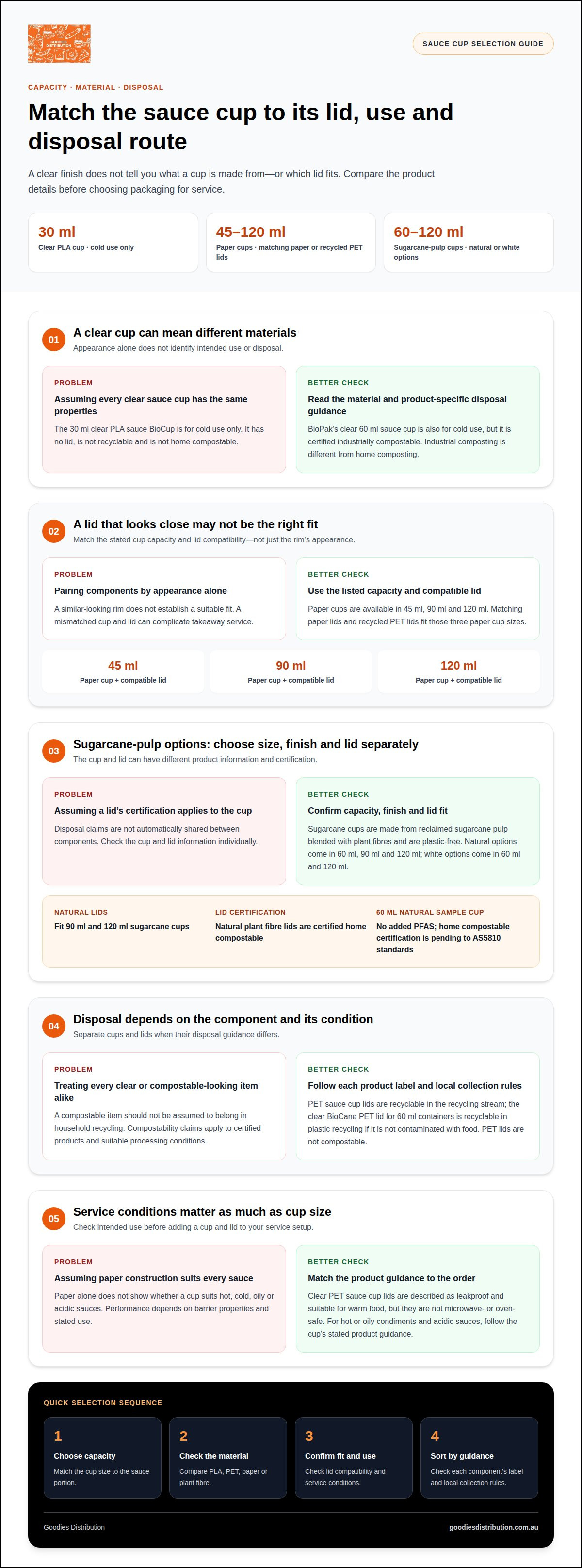
A clear lid doesn’t automatically fit every sauce cup. Paper cups in 45 ml, 90 ml and 120 ml sizes take matching paper or recycled-material PET lids, while the 30 ml clear PLA sauce BioCup is for cold use only and has no lid. Sugarcane-pulp options include 60 ml, 90 ml and 120 ml cups, so choosing sauce BioCups and lids in clear, BioCane and paper options starts with matching the lid to the cup’s material and capacity.
For busy Sydney cafés, restaurants and takeaway venues, choosing sauce BioCups and lids in clear, BioCane or paper helps keep sauces practical to serve and packaging consistent with your brand. This guide compares the materials, lid fit and selection factors to consider for your menu and service needs.
Key Takeaways
- Match a lid to the cup’s capacity and material to help achieve a practical fit for takeaway service.
- Compare paper, clear and sugarcane-pulp options by their material, appearance and intended use.
- Choose a cup size that suits your sauce portions, then consider the lid and disposal pathway as part of the packaging decision.
- Compare top and base measurements, depth and weight to understand how cups may fit your service and storage needs.
Paper sauce cups and compatible paper or PET lids
Paper sauce cups come in 45 ml, 90 ml and 120 ml capacities. Matching paper lids fit those three cup sizes. Recycled PET lids also fit these 45 ml, 90 ml and 120 ml paper cups. Match the cup’s stated capacity and the lid’s compatibility, not just their appearance. A similar-looking rim doesn’t establish a suitable fit.
For takeaway, catering and food delivery, choose a cup and lid listed as compatible. Select a capacity that suits the sauce portion, then consider the lid material and how the order will be handled. Clear PET sauce cup lids are described as leakproof and suitable for warm food, but they aren’t microwave- or oven-safe. Use these details to match the pairing to your service conditions.
Check the intended disposal route for each component. PET sauce cup lids are recyclable in the recycling stream, while paper cups and lids may have different disposal instructions. Compostability claims apply to certified products and suitable processing conditions. Follow the packaging labels and your local collection service’s acceptance rules. Don’t assume a compostable item belongs in household recycling.
Paper construction alone doesn’t show whether a cup suits hot, cold, oily or acidic sauces. Performance depends on the cup’s barrier properties and stated use. For hot or oily condiments, choose a cup specified for that food use. For acidic sauces, follow the product guidance rather than assuming every paper cup performs alike.
Australian food-service packaging wholesalers, such as Goodies Distribution, supply sauce cups and compatible lids, often in carton quantities. Minimum order quantities depend on the product and pack configuration, so compare the cup and lid carton counts before planning stock. A 30 ml clear PLA sauce BioCup, for example, is packed as 5,000 cups per carton, across 20 sleeves of 250 cups each. That example illustrates why pack details matter.
Before ordering, note your sauce portions, serving temperatures and delivery needs. Match these to the cup capacity, lid material and disposal pathway. For paper cups, confirm the lid is intended for the same capacity. For PET lids, consider their stated use and recycling information. This comparison helps prevent mismatched components during service.
Material and colour
Clear packaging can use different materials, so appearance alone doesn’t identify its disposal route. The 30 ml clear sauce BioCup is made from PLA, a plant-based bioplastic. It’s intended for cold use, isn’t recyclable, and isn’t home compostable. A clear cup shouldn’t be assumed to share another clear product’s properties.
BioPak’s clear 60 ml sauce cups have different end-of-life information. They’re certified industrially compostable and intended for cold use. Industrial compostability means they’re designed for processing in an industrial composting system, not a home compost bin. Use the product’s certification details to guide disposal, alongside local collection arrangements.
Clear lids can also be plastic. The BioPak BioCane PET sauce cup lid is made from PET and has product code 3445720. It’s specified for a 60-millilitre sauce cup. The clear BioCane lid for 60 ml containers is recyclable in plastic recycling if it isn’t contaminated with food. It isn’t home or industrially compostable.
So, are clear sauce cups recyclable or compostable in Australia? It depends on the material and product. The 30 ml PLA cup isn’t recyclable or home compostable; the 60 ml clear cup is certified industrially compostable. PET lids have separate recycling guidance and shouldn’t be treated as compostable.
Colour can help distinguish products during service. Clear cups show the sauce, while sugarcane-pulp options come in natural and white finishes. BioPak sugarcane cups are plastic-free and made from reclaimed sugarcane pulp blended with plant fibres. Choose a finish that suits your presentation, then assess the material and disposal pathway separately.
For a practical comparison, sort options by material first: PLA, PET or plant fibre. Next, note the cup’s colour, intended use and certification. Finally, separate lids from cups when disposal guidance differs. Explore sauce cups and lid options with those distinctions in mind.
Plant fibre and sugarcane pulp sauce cups
BioPak sugarcane sauce cups are made from reclaimed sugarcane pulp blended with plant fibres. They’re plastic-free, with natural and white options for food-service presentation. Capacities include 60 ml, 90 ml and 120 ml in natural, and 60 ml and 120 ml in white. Select a size that suits the portion, then match its lid.
Plant fibre lids are available for specific cup sizes. BioPak’s natural plant fibre lid fits its 90 ml and 120 ml sugarcane cups. These lids are certified home compostable. That certification applies to the lid, so consider the cup’s own product information separately when planning disposal.
Are BioCane sauce cups and lids home compostable or commercially compostable? BioPak’s natural plant fibre sauce cup lids are certified home compostable. The 60 ml natural plant fibre sample cup is pending home compostable certification to AS5810 standards; the cup and lid claims shouldn’t be treated as interchangeable.
For Australia’s takeaway and catering operators, sugarcane pulp offers an alternative to clear cups. Natural fibre gives a pared-back appearance, while white cups create a brighter presentation. The material also helps distinguish sauce portions from clear containers on a service counter or within a takeaway order.
Before choosing, compare these details:
- Capacity: choose 60 ml, 90 ml or 120 ml to suit the sauce portion.
- Colour: select natural or white to complement your presentation.
- Lid fit: natural plant fibre lids fit the 90 ml and 120 ml cups.
- Disposal: check the cup and lid information separately, including certification.
The 60 ml natural plant fibre sample cup has no added PFAS. Its home compostable certification is pending to AS5810 standards. For the 90 ml and 120 ml cups, use the matching lid and follow the disposal information supplied for each component. This keeps material choice, portion size and waste sorting aligned.
Product dimensions and weight
Dimensions help compare fit, storage and handling. The 30 ml Clear PLA Sauce BioCup measures 45 × 45 mm across the top. Its base measures 48.5 × 48.5 mm. The listed product depth is 6.2, and its thickness is 0.25. Keep each measurement attached to its label when comparing sauce BioCups and lids in clear, BioCane and paper options.
Weight adds another useful comparison. Each 30 ml clear cup weighs 0.6 g. Its carton gross weight is 3.8 kg, with carton dimensions of 49.5 × 49.5 × 20.2 cm. Carton size helps estimate shelf space, while gross weight gives a fuller picture of a packed carton than cup weight alone.
The BioPak BioCane PET sauce cup lid has a diameter of 70 millimetres. A separate clear BioCane sauce-container lid weighs 1.8 g and measures 70 mm across the top, 60 mm at the base and 6 mm deep. Compare the relevant lid and cup measurements, not just the diameter, when assessing compatibility.
Use a consistent comparison process before ordering:
- Capacity: record the cup’s stated millilitres, such as 30 ml.
- Opening: compare the top measurement with the lid specification.
- Footprint: note base dimensions for storage and packing.
- Weight: distinguish single-item weight from carton gross weight.
- Certification: assess compostability separately from size and weight.
Measurements support planning, but don’t replace stated cup-and-lid compatibility. A 70 mm lid measurement alone doesn’t identify every suitable cup. Keep product codes and specifications together in ordering records. This helps staff select the intended pairing during busy service and makes repeat purchasing clearer.
Compare sauce BioCups and lids in clear, BioCane and paper options by capacity, dimensions and weight to find a combination suited to your storage and service setup. Explore sauce cup and lid options.
Goodies Distribution: BioPak Compostable Cups
Goodies Distribution supplies BioPak Compostable Cups for food-service businesses. When comparing clear, paper or sugarcane-pulp sauce cups, consider each product’s capacity, compatible lid and disposal information before planning your wholesale order.
For a coordinated takeaway presentation, pair your cup choices with suitable Takeaway Containers or Paper Bags. Hospitality businesses can also use Goodies Distribution’s Custom Branding Services to align their packaging presentation with their brand identity.
Goodies Distribution supplies compostable packaging to hospitality businesses in Sydney and across Australia. Visit goodiesdistribution.com.au to explore the range or contact Goodies Distribution about your wholesale packaging needs.
Make your next packaging choice count
Turn your preferred cup and lid pairing into a simple purchasing standard. Record the product description, intended sauce portion, matching lid and disposal guidance together. This gives your team a clear reference for repeat orders and helps keep service consistent across shifts.
Consider the full customer experience, too. A sauce cup is a small part of a takeaway order, but its material, appearance and fit all contribute to the presentation. Goodies Distribution supplies BioPak Compostable Cups and Takeaway Containers, and offers Custom Branding Services to help hospitality businesses align packaging choices with their menu and brand.
As you refine your approach to sauce BioCups and lids in clear, BioCane and paper options, choose a pairing that suits both daily operations and your packaging priorities. Explore the range and take the next step with Shop sauce cups and lids. Thoughtful choices can help your packaging work harder for your business and your customers.
Frequently Asked Questions
What is the difference between clear, BioCane and paper sauce cups?
These options differ mainly in material, appearance and disposal pathway. Clear cups can be PLA, while BioCane cups use reclaimed sugarcane pulp blended with plant fibres. Paper cups provide another option. For instance, a café serving contrasting sauces might choose clear cups for visibility and natural-finish BioCane cups for a fibre-based presentation. Check each product’s stated use and certification before selecting it.
Which lids fit clear, BioCane and paper sauce cups?
Fit depends on both cup material and capacity. Paper cups in 45 ml, 90 ml and 120 ml sizes have compatible paper or recycled-material PET lids. Natural plant fibre lids fit BioCane cups in 90 ml and 120 ml sizes. BioPak also lists a 30 ml RPET lid for its 30 ml sugarcane cups. Keep cup and lid specifications together in ordering records to avoid mix-ups.