


The most sustainable packaging choice isn’t simply the one labelled compostable. It’s the option that protects your food and has a suitable end-of-life pathway. A sustainable packaging transition plan for cafes starts by matching materials to your menu, disposal options and existing stock.
It’s understandable to weigh the practical impact of changing cups, containers and carry bags, especially when packaging needs to perform during a busy service. This guide explains how to compare options without overlooking food protection, customer experience or environmental responsibility. You’ll learn how bagasse, paper and PLA differ, what AS 4736 and AS 5810 compostability certifications indicate, and how to phase in new formats as existing stock runs down. The aim is a thoughtful transition that suits your café’s day-to-day needs, rather than a rushed switch that leaves usable packaging behind.
Key Takeaways
- Match packaging materials to the food, temperature and takeaway journey, then consider how customers can dispose of them locally.
- Phase changes format by format, using existing stock before bringing in new packaging to keep the transition practical.
- Compare bagasse, paper, PLA and other options by function and compostability, not just by material name or appearance.
- Choose cups, bags and branded packaging that support service needs while making your café’s sustainability choices clear to customers.
What Packaging Should Cafés Use to Reduce Plastic Waste?
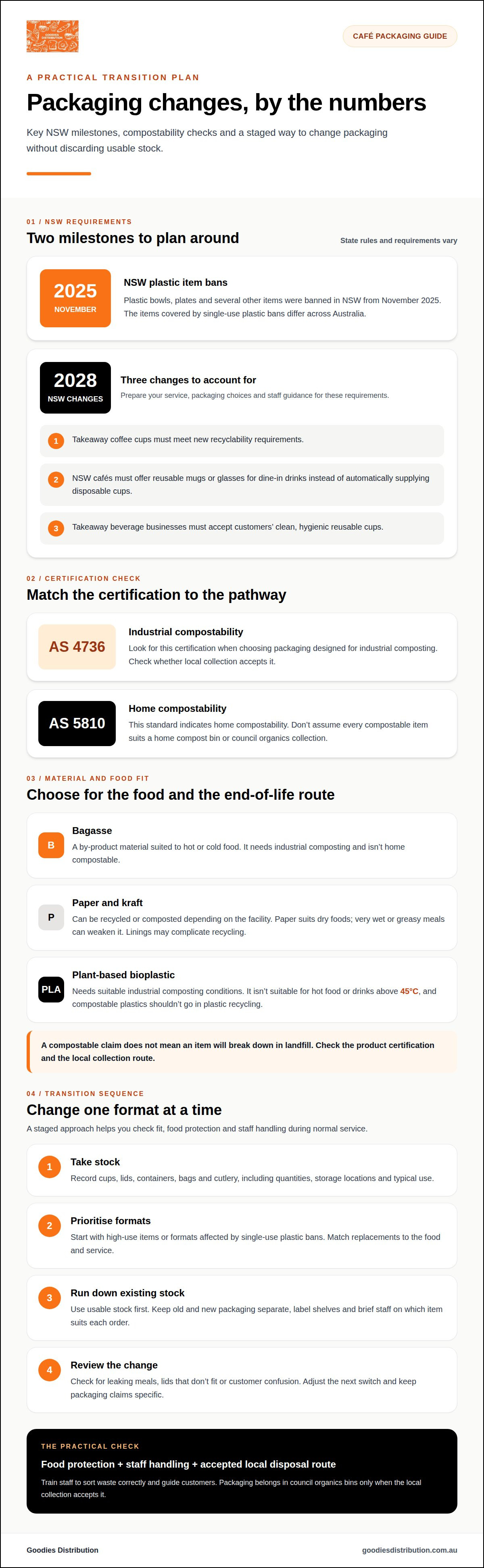
Across Australia, every state and territory has enacted single-use plastic bans, though the items covered vary. In NSW, plastic bowls, plates and several other items were banned from November 2025. From 2028, takeaway coffee cups must meet new recyclability requirements. Also from 2028, NSW cafés must offer reusable mugs or glasses for dine-in drinks instead of automatically supplying disposable cups, and takeaway beverage businesses must accept customers’ clean, hygienic reusable cups.
Start with high-use takeaway items: coffee cups and lids, food containers, cutlery and napkins. Match each material to the food and service; bagasse suits food containers, while paper or bamboo may suit other needs. Look for AS 4736 certification for industrial compostability or AS 5810 for home compostability.
Make changes clear at the counter. Use specific wording such as “no plastic lid” or “water-based coating” rather than broad claims like “eco-friendly”. Add accurate disposal instructions so customers know what to do with packaging after eating.
For council organics bins, explain that packaging belongs there only if the local collection accepts it. Train staff to identify accepted items, sort waste correctly and guide customers without implying every compostable item belongs in the same bin.
Include reusable cups in staff training. Show the team how to accept clean cups hygienically and serve coffee without automatically reaching for a disposable cup. A clear counter sign and consistent guidance make the change easier to follow.
Phased Packaging Changes and Stock Run-Down
A sustainable packaging transition plan for cafes starts with a stocktake of cups, lids, containers, bags and cutlery. Record current quantities, storage locations and typical use, then identify formats needing an alternative. Prioritise items used often or affected by single-use plastic bans. Choose a replacement with relevant certification, such as AS 4736 for industrial compostability.
Switch one packaging format at a time. For example, introduce a suitable takeaway container before changing cups and bags. This staged approach lets you assess fit, food protection and staff handling during normal service. Use existing stock while it remains usable instead of discarding it to speed up the transition.
Set a clear run-down rule for each item: use existing stock first, then reorder its replacement as supplies approach their planned finish. Store old and new packaging separately, label shelves and brief staff on which item suits each order. A simple stock sheet can track remaining items and flag when the new format becomes standard.
Review the transition after each change. Note issues such as leaking takeaway meals, lids that don’t fit or customer confusion, then adjust the next switch. Keep certified packaging claims specific in menus and signs. For a planned change involving branded containers, explore packaging options for cafés as part of your next stock review.
Bagasse, Paper and Other Packaging Materials
Choose containers by food type and disposal route, not material label alone. Bagasse is made from a by-product and suits hot or cold food, but it needs industrial composting and isn’t home compostable. AS 4736 certification identifies packaging designed for industrial composting; local collection access still matters.
Clean, uncoated paper and kraft packaging can be recycled or composted, depending on the facility. Paper works well for dry foods, but very wet or greasy meals can weaken it. Coatings may help contain moisture, yet plastic or PLA linings can complicate recycling. Match the barrier to the food, and avoid excess packaging.
PLA is a plant-based bioplastic, but it needs the right industrial composting conditions. It isn’t suitable for hot food or drinks above 45°C, and compostable plastics shouldn’t go in plastic recycling. A compostable claim doesn’t mean an item will break down in landfill or a home compost bin.
Bamboo and wooden cutlery can replace conventional disposable utensils, while reusable packaging can reduce single-use items when customers return and wash it. Each choice has trade-offs: reusables need washing and return systems; compostables need suitable collection; recyclable paper depends on clean, accepted material. Ask suppliers for product-specific certification, then choose a responsible option that performs for your menu and has a practical local end-of-life pathway.
Carry Bags for Cafés and Takeaway Businesses
Choose carry bags for the orders customers actually take away. A coffee-and-pastry order needs a different fit from several takeaway containers or a catering collection. Select a paper bag size that holds each order securely without leaving items loose or requiring an unnecessarily large bag.
Test the full handover, not just the empty bag. Put a filled container inside, add any drinks, then check whether the order stays upright when carried. Keep hot items separate from cold drinks where possible, and avoid stacking food in ways that risk spills or damage presentation. A well-matched bag supports smooth service and a better handover.
Make bag use purposeful. Ask whether the customer needs one, especially for a single item, and train staff to choose a suitable size for multi-item orders. A sustainable packaging transition plan for cafes can include offering bags only when useful, alongside changes to other takeaway formats. Store bags near the packing area so staff can reach the right option during busy service.
For branded bags, keep artwork legible and consistent with your café’s takeaway containers. The bag should carry the order securely and present your brand without obscuring accurate disposal information. Balance capacity, order protection, easy handling and a considered customer handover.
BioPak Compostable Cups and Accessories
For hot takeaway coffee, choose a cup format that suits your serving style and how customers carry their drinks. Single-wall cups offer a straightforward option for everyday service, while double-wall 8oz cups provide another format to consider for hot drinks. Check how each cup feels in hand and fits your usual takeaway routine before making it your standard.
Compostable cups include options with AS 4736 industrial compostability certification. The range also includes products certified to AS 5810 for home compostability. These standards describe different composting environments, so choose cups with claims that match the intended disposal pathway. Compostable cups still need suitable collection and processing.
For a distinctive counter presentation, printed artwork cups add visual appeal to the customer’s coffee moment. Pair cups with compatible lids and stirrers, considering drink type, takeaway handling and how accessories are offered. Staff can offer a stirrer when needed instead of automatically adding one to every order.
Before changing formats, test the cup, lid and serving process together. Confirm the lid sits securely and that staff can prepare orders smoothly during a busy shift. Clear disposal instructions help customers understand what to do after use. Explore sustainable packaging transition plan for cafes options through Goodies Distribution to find formats for your café’s coffee service.
Bespoke Packaging and Branding Support from Goodies Distribution
Goodies Distribution helps Sydney hospitality businesses connect packaging choices with takeaway service and brand presentation. Its Custom Branding Services, Takeaway Containers, Paper Bags and Biodegradable Cutlery can support a considered packaging mix for packed meals and other takeaway orders.
When planning a change, consider which formats your café uses most, what each order needs to travel safely and how the packaging will look at handover. Share your logo, brand colours and intended uses when discussing custom branding. Clear, accurate material and disposal messages can help customers understand what to do with packaging after use.
Goodies Distribution is an official BioPak distributor, giving hospitality businesses access to BioPak Compostable Cups alongside other packaging options. The BioPak range includes products with AS 4736 and AS 5810 compostability certifications. These relate to different composting settings, so match any product claim and customer guidance to its specific certification and local disposal pathway.
For food orders, choose Takeaway Containers around the menu and the journey from counter to customer. Paper Bags can complete the handover, while Biodegradable Cutlery suits orders where utensils are needed. Sydney-wide delivery supports local hospitality businesses as they plan packaging requirements and phase in new formats.
If you’re ready to discuss packaging and branding for your café, contact Goodies Distribution.
Make Your Next Packaging Choice Count
A sustainable packaging transition plan for cafes can evolve as the menu, takeaway mix and customer expectations change. Treat each new packaging decision as a chance to balance reliable service, clear disposal guidance and a thoughtful brand experience.
Goodies Distribution offers BioPak Compostable Cups, Takeaway Containers and Custom Branding Services to support Sydney hospitality businesses with packaging choices. Consider how these options fit your next menu update or packaging review, with materials and presentation suited to your café’s service.
When you’re ready to discuss a practical next step for your packaging, contact Goodies Distribution today. A considered change can help your café move forward with confidence and care.
Frequently Asked Questions
Packaging Performance: How Can Cafés Choose the Right Option?
Choose packaging to suit your menu, service style and storage space. Compare items by capacity, food protection, handling and how well they perform during takeaway delivery. Track discarded packaging, damaged takeaway orders and unused accessories too. Offering cutlery only when needed can reduce unnecessary use, while a staged change helps avoid replacing usable stock prematurely.
How Can Packaging Choices Support Food Quality and Customer Experience?
Choose packaging that protects food, travels well and suits the way customers receive their orders. A container that leaks or fails to protect food can lead to complaints, so test it with actual menu items before wider adoption. Check that packaging is easy to carry, open and dispose of, then adjust the formats and quantities you keep on hand to reduce avoidable waste.
What sustainable packaging options are available for Australian cafes?
Australian cafés can consider paper bags, paper cups, bagasse containers, trays and bowls, wooden or bamboo cutlery, and certified compostable products. Reusable cups and dine-in serviceware are another option where the café can manage returns and washing. The best fit depends on the menu, how customers receive orders and whether local recycling or composting facilities accept the packaging.
How Should Cafés Choose Between Compostable, Recyclable and Reusable Packaging?
Consider the packaging format, food type and local disposal options when comparing materials. Reusable items require a system for washing, handling and returns, while disposable packaging needs to protect food and fit your service routine. Check storage requirements and food protection needs, and confirm that local recycling or composting services accept the packaging. This helps you select suitable formats and explain disposal options clearly to customers.
Which packaging materials are accepted in Australian kerbside recycling and commercial composting?
Acceptance depends on local council collection and commercial composting services, so material alone doesn’t determine the right bin. Clean paper and kraft packaging may be recyclable where accepted; certified compostable packaging needs a suitable composting pathway. Keep compostable plastics out of plastic recycling, where they aren’t processed like conventional recyclable plastics. Use disposal labels that reflect local collection options.