

A soggy, collapsed container can ruin even the most carefully prepared meal before it reaches your customer's door. For Sydney hospitality operators, the pressure to find packaging that balances structural integrity with strict environmental compliance has never been higher. You've likely dealt with the frustration of food losing its crispness during delivery or felt the confusion of navigating various eco-certifications and state-based single-use plastic bans. It's a balancing act where your brand's reputation and the planet's health are both on the line.
This guide is designed to help you master the transition to sugarcane-based packaging with expert advice on selecting, sourcing, and branding the bagasse food containers Australia venues need to thrive in 2026. We'll show you how to identify genuine home compostable logos and seedling logos to ensure your business stays ahead of National Packaging Targets. From solving "soggy bottom syndrome" with breathable natural fibres to utilizing our Sydney-local warehouse for just-in-time inventory, you'll discover how to turn sustainable choices into a seamless operational advantage. We're here to help you bridge the gap between commercial requirements and environmental stewardship with practical, reliable solutions.
Key Takeaways
- Understand how bagasse transforms sugarcane agricultural waste into a high-performance, circular packaging solution for your venue.
- Learn to eliminate "soggy bottom syndrome" by using the natural breathability and superior heat retention of bagasse food containers Australia hospitality businesses use for delivery.
- Master the functional differences between bagasse and PLA-lined paper to choose the right material for high-temperature menu items.
- Optimise your storage space and cash flow by implementing a just-in-time inventory strategy through a reliable Sydney-local wholesale partner.
- Ensure your packaging remains compliant with 2026 single-use plastic bans while enhancing customer experience through better lid compatibility and portion sizing.
Understanding Bagasse: Why Sugarcane Pulp is the Future of Australian Takeaway
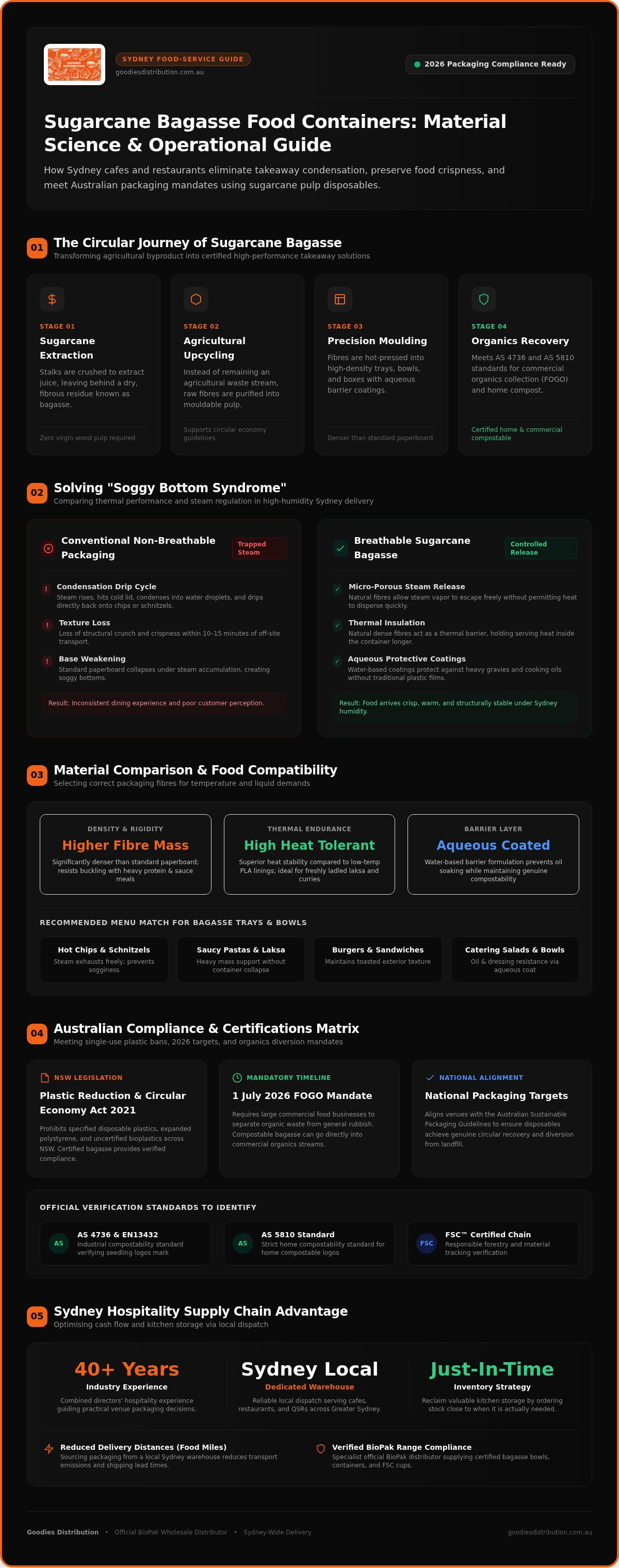
Every great meal deserves a container that works as hard as the kitchen that produced it. Bagasse is the dry, fibrous residue that remains after stalks are crushed for juice extraction. Instead of treating this sugarcane bagasse as a waste product, it is repurposed into high-value food service disposables. This transition from agricultural byproduct to premium packaging is a cornerstone of a circular economy. It reduces reliance on virgin wood pulp and petrochemical-based plastics while supporting the 2026 Australian Sustainable Packaging Guidelines. For Sydney cafes and restaurants, this material represents a shift toward intentional consumption that doesn't sacrifice performance for the sake of the planet.
The Material Science of Sugarcane Pulp
The journey from field to fork involves a sophisticated pulping and moulding process. Unlike traditional plastic or PLA-lined paper, bagasse is naturally breathable. This characteristic is vital for Sydney venues serving hot, crispy dishes like chips or schnitzels. It allows steam to escape while retaining heat, effectively preventing the "soggy bottom syndrome" that plagues many delivery orders. For dishes with high moisture or oil content, many modern designs incorporate aqueous coatings. These water-based barriers provide excellent protection without compromising the material's ability to meet home compostability standards. This material science ensures that your brand presentation remains as fresh as your ingredients, maintaining structural integrity even under high humidity.
Meeting Australia’s Single-Use Plastic Bans
Sydney hospitality operators are currently navigating some of the strictest environmental regulations in the country. Under the Plastic Reduction and Circular Economy Act 2021, NSW has already prohibited a wide range of single-use plastics, including expanded polystyrene and certain uncertified bioplastics. By choosing bagasse food containers Australia venues can ensure full compliance with these laws while preparing for the 1 July 2026 FOGO mandate. This upcoming regulation requires large commercial food businesses to separate organic waste from general rubbish. Because certified bagasse items are designed for commercial organics collection or home composting, they fit perfectly into this new regulatory landscape. Switching to sugarcane-based solutions isn't just about following rules; it's about future-proofing your business against evolving National Packaging Targets. It's a proactive step that aligns your venue with the expectations of a modern, eco-conscious Sydney customer base while streamlining your waste management processes.
Performance Features: Solving "Soggy Bottom Syndrome" and Heat Retention
Delivery is the ultimate test for any hospitality business. In Sydney's often high humidity, traditional packaging often fails, leaving customers with tepid, unappealing meals. Choosing high-quality bagasse food containers Australia venues rely on ensures that your food arrives exactly as the chef intended. Sugarcane fibre is naturally insulating, keeping hot food at the correct temperature for longer while allowing excess steam to escape. This thermal efficiency is a game-changer for businesses that prioritise the quality of their off-site dining experience.
Combatting Soggy Bottom Syndrome
The most common complaint in takeaway is texture loss. When hot food is placed in a non-breathable plastic container, steam hits the cold lid, turns into condensation, and drips back onto the food. Bagasse solves this through its natural micro-porous structure. It regulates moisture without letting the container become soft. Sydney cafes can further optimise presentation by ensuring containers aren't over-stacked in delivery bags, allowing the material to breathe as designed. This preservation of texture is what separates a one-time order from a loyal, repeat customer.
Structural Integrity for Heavy Meals
Bagasse is significantly denser than standard paperboard. This density makes bagasse trays and bowls the superior choice for saucy pastas, laksa, or heavy protein dishes. While a paper bowl might buckle under the weight of a liquid-heavy meal, bagasse maintains its shape. Many Sydney burger bars have made the switch because these boxes handle the weight of a loaded burger and a side of hot chips without the base collapsing. The material's rigidity provides a premium feel that reinforces your brand's commitment to quality.
Beyond delivery, these containers offer immense versatility for modern kitchens. They are microwave and freezer safe, withstanding temperatures up to 220°C. This makes them ideal for meal-prep businesses or catering venues that need to reheat portions quickly. This performance doesn't come at an environmental cost. Transitioning to these materials helps your business align with the National Packaging Targets, which aim for all packaging to be reusable, recyclable, or compostable. It's a practical way to meet government standards while improving your operational output.
Managing absorption rates is equally vital. Sugarcane fibres are naturally resistant to oil and grease, ensuring that sauces stay in the dish rather than soaking through the bottom. If you're looking to upgrade your customer experience, you can explore our range of high-performance takeaway containers designed specifically for the Australian market. By matching the right container to your menu, you ensure every meal is a testament to your culinary standards.
Comparing Sustainable Materials: Bagasse vs. PLA and Paper
Choosing the right material for your takeaway service involves more than just checking a sustainability box. It requires matching the physical properties of the container to the specific heat and moisture levels of your menu. While several options exist for bagasse food containers Australia, understanding how they stack up against PLA and traditional paper is essential for consistent operational success. Each material has its place, but the differences in performance can be the deciding factor in whether a meal arrives in perfect condition or compromised by heat.
Bagasse vs. PLA-Lined Cardboard
The primary differentiator between these materials is their reaction to extreme temperatures. PLA, or polylactic acid, is a plant-based bioplastic often used as a waterproof lining in paper bowls. While it performs beautifully for cold salads or room-temperature snacks, it begins to soften and lose its structural integrity at temperatures between 40°C and 45°C. In contrast, bagasse is incredibly heat-tolerant, comfortably handling temperatures up to 120°C for hot food service. If you’re serving a steaming hot laksa, a rich curry, or a heavy pasta, sugarcane pulp is the safer, more reliable choice for your kitchen.
Using bagasse also helps your venue navigate the complexities of the NSW single-use plastics bans. These regulations are strict about which materials can be used for specific items, and since bagasse is a natural fibre, it often meets the criteria for home compostability that synthetic-lined products might struggle to achieve. Both materials can be part of a carbon neutral supply chain, especially when sourcing through an authorised BioPak distributor, but their application should be dictated by your kitchen’s thermal requirements. Choosing the right fit ensures you aren't over-engineering a salad container or under-supporting a hot meal.
Aesthetic and Brand Perception
Your packaging is a silent ambassador for your brand. The organic, textured finish of bagasse sends an immediate signal of environmental responsibility to your customers. It feels premium and earthy, providing a tactile experience that smooth, bleached paper simply cannot replicate. In a competitive market like Sydney, these small details build trust and brand loyalty. When customers hold a sturdy, natural-fibre bowl, they perceive a higher level of care and quality in the food itself.
This aesthetic alignment is a vital part of your broader eco-friendly packaging strategy. By choosing materials that look and feel sustainable, you reinforce your commitment to the planet without saying a word. These visual cues are particularly effective for venues targeting the growing demographic of eco-conscious diners who actively look for seedling logos and home compostable logos on their takeaway ware. It’s a partnership between your culinary skills and your choice of presentation, ensuring the customer's first impression is one of integrity and quality.
Selection Criteria: Finding the Right Bagasse Containers for Your Menu
Choosing the right gear for your kitchen isn't just about picking a box; it's about operational efficiency. When sourcing bagasse food containers Australia venues need to think about how each piece fits into their specific workflow. From the way they stack in a cramped Sydney coolroom to how they hold up in a delivery driver's backpack, every detail counts. Matching the container to your portion sizes and menu style is the first step toward reducing waste and improving your bottom line.
Sizing and Lid Compatibility
Sizing is about more than just volume; it's about cost efficiency and portion control. Standard 500ml, 750ml, and 1000ml options cover most bases, but the shape of the container dictates the customer experience. Rectangular containers are often better for protein-heavy mains or bento-style meals, while round bowls are the classic choice for salads, poké, and grain bowls. The real key to a mess-free delivery is finding the right lids for containers. You can choose between matching bagasse lids for a uniform, earthy look or clear PLA lids if you want customers to see the dish before they open it. For Sydney cafes with limited shelf space, look for high-stackability designs that won't topple over during a busy lunch rush. This helps you organise your prep station without cluttering your valuable counter space.
Understanding AS4736 and AS5810 Certifications
Navigating the alphabet soup of eco-labels can be tricky, but understanding the basics is essential for compliance. In Australia, two primary standards lead the way: AS4736 and AS5810. AS4736 verifies industrial compostability, meaning the item will break down in a commercial facility. AS5810 is for home compostability, proving the container can safely decompose in a backyard bin. For many Sydney venues, providing home-compostable options is a massive win, as it gives customers a simple way to dispose of their packaging responsibly.
The seedling logo is the most recognised mark of quality in the industry. It tells your customers that your packaging meets rigorous Australian testing for biodegradation and non-toxicity. Sharing this information on your menu or social media builds real trust. It shows you've done the work to verify your environmental claims rather than just using vague buzzwords. By choosing certified products, you're not just following the rules; you're showing your community that your business takes its environmental responsibility seriously. Explore our full range of certified sugarcane containers to find the perfect fit for your menu today.
Wholesale Bagasse Solutions: Streamlining Your Sydney Supply Chain
Supply chain reliability is the heartbeat of a thriving hospitality business. When you source bagasse food containers Australia venues rely on, you're looking for more than just a product; you're seeking a partnership that guarantees consistency. With over 40 years of industry experience, our directors understand the high-stakes environment of a Sydney lunch rush. We've built our operations around a Sydney-local warehouse to ensure that your venue never faces the stress of an empty stockroom. This local presence allows us to offer rapid Sydney-wide delivery, keeping your kitchen moving without the need for excessive on-site storage.
Local Dispatch and Sydney-Wide Delivery
Operating a venue in the city often means every square metre of floor space is precious. Implementing a just-in-time inventory strategy allows you to use that space for seating or prep instead of bulky packaging cartons. By sourcing from a local hub, you also lower the food miles associated with your supplies, aligning your operational choices with your environmental goals. Our role as an official BioPak wholesale distributor ensures you have access to a reliable stream of certified compostable products. This partnership provides the peace of mind that your stock meets all required performance standards and regulatory requirements.
Custom Branding and Bespoke Solutions
Bespoke packaging is one of the most effective ways to build brand recognition. While the organic aesthetic of sugarcane is already a strong signal of sustainability, custom printing allows you to tell your unique story. We use soy-based inks for our custom prints, ensuring the container remains safe for composting while looking sharp. It's true that printing on natural fibres comes with certain colour limitations, but these often enhance the earthy and authentic feel that Sydney customers value.
Starting a tailored branding consultation with us is a straightforward process designed to help you find the perfect balance between aesthetics and eco-responsibility. We help you navigate the technical side of absorption rates and ink types so your logo looks crisp and professional. This isn't just about putting a name on a box; it's about creating a premium customer experience that begins the moment the bag is handed over. By choosing a partner with deep roots in the Sydney hospitality scene, you ensure your supply chain is a source of strength rather than a bottleneck.
Future-Proof Your Sydney Venue with Sugarcane Packaging
Transitioning to sustainable materials is no longer just a choice; it's a strategic move to protect your brand's reputation and operational success. By choosing the high-quality bagasse food containers Australia venues rely on, you can effectively solve delivery pains like texture loss while ensuring full compliance with evolving state-based plastic bans. These natural fibre solutions manage heat and humidity far better than traditional alternatives, providing a premium experience that builds genuine customer loyalty through quality and integrity.
Success in the 2026 landscape relies on having a partner who understands the unique pressures of the Sydney market. With over 40 years of hospitality experience and a dedicated Sydney-local warehouse, we provide the reliability and rapid dispatch you need to maintain a just-in-time inventory. As an official BioPak distributor, we're here to help you navigate certifications like AS4736 and AS5810 with total confidence. It's time to elevate your brand presentation and protect our planet with packaging that truly performs for your kitchen and your customers.
Explore our full range of Bagasse Food Containers and Shop Now
Frequently Asked Questions
Is bagasse better than plastic for hot food delivery?
Bagasse is superior for hot food delivery because its natural fibres are breathable, allowing excess steam to escape while retaining heat. Unlike traditional plastic, which traps moisture and leads to texture loss, these containers help maintain the crispness of fried items. This makes bagasse food containers Australia venues prefer a more reliable choice for preserving food quality during long transits across Sydney's busy delivery routes.
Can bagasse containers be composted at home in Australia?
Many bagasse products are certified for home composting under the Australian AS5810 standard. This means they can be safely disposed of in a backyard compost bin where they'll break down into organic matter. It's essential to look for verified home compostable logos to ensure the material doesn't require the higher temperatures of an industrial facility. This provides a convenient, eco-friendly disposal pathway for your customers' takeaway waste.
Are BioPak bagasse products certified to Australian standards?
Yes, BioPak bagasse items are rigorously tested and certified to meet Australian standards for compostability. They typically carry the AS4736 certification for industrial composting and often meet the AS5810 standard for home composting. As an official BioPak distributor, we ensure that all stock meets these verified environmental claims. These certifications provide your business with the compliance needed to meet National Packaging Targets and state-based single-use plastic bans.
What is the difference between bagasse and sugarcane pulp?
There's no functional difference between the two; bagasse is simply the technical term for the fibrous pulp left over after sugarcane stalks are crushed for juice. This agricultural byproduct is then processed and moulded into durable food service disposables. Using this material repurposes a waste stream into high-value packaging, making it a sustainable alternative to wood-pulp paper or fossil-fuel plastics in the Australian hospitality market.
Can I put bagasse food containers in the microwave?
Bagasse containers are microwave-safe and can withstand temperatures up to 220°C. This high heat tolerance makes them incredibly versatile for Sydney cafes that offer pre-prepared meals or catering services requiring quick reheating. Unlike some bioplastics that soften or warp when heated, sugarcane fibre maintains its structural integrity. They're also freezer-safe, providing a robust solution for the entire lifecycle of your food products from storage to consumption.
How do I avoid "soggy bottom syndrome" with takeaway containers?
To avoid soggy bottom syndrome, you should switch to breathable bagasse containers that allow steam to escape rather than turning into condensation. Plastic-lined alternatives often trap humidity, which ruins the texture of hot food. For the best results, avoid overstacking containers in delivery bags, as this can block the natural airflow of the fibres. Choosing the right size for your portion also prevents excess steam buildup within the container itself.
Does Goodies Distribution offer custom printing on bagasse containers?
Yes, we provide professional in-house custom branding services for our range of bagasse bowls and containers. We use soy-based inks to ensure that your bespoke packaging remains environmentally responsible and compliant with compostability standards. While there are some colour limitations due to the natural texture of the sugarcane fibre, our team helps you create a premium, earthy look that effectively communicates your brand’s commitment to sustainability to your Sydney customers.
What is the lead time for bagasse wholesale orders in Sydney?
We offer rapid Sydney-wide delivery thanks to our dedicated Sydney-local warehouse. Because we maintain a significant volume of stock locally, we can support just-in-time inventory management for hospitality venues with limited storage space. Most orders are dispatched quickly, ensuring you never run out of essential packaging during busy periods. Our 40 years of industry experience allows us to manage supply chains efficiently, providing a reliable partnership for your venue.