


A cleaner cafe waste system starts before anything reaches the bin. For Sydney cafes, a practical way to reduce waste is to separate coffee grounds, recyclables and general rubbish at the source, using clear, well-placed signs to make the right choice easy during a busy service. That’s how to reduce cafe waste in Sydney without adding extra steps for staff.
When waste streams are mixed, recyclable materials can be harder to recover and organic scraps can become contaminated. A simple sorting system helps staff move quickly, keeps coffee grounds separate from packaging and gives customers clear cues at front-of-house bins.
This guide explains how to sort coffee grounds, recycling and rubbish, reduce contamination and make signage work across your cafe. It also covers how thoughtful takeaway packaging choices can support a clearer waste routine and help your team build better habits with each service.
Key Takeaways
- Set up separate bins for coffee grounds, recyclables and general rubbish so staff can sort waste as they work.
- Keep food scraps free from packaging and other non-organic materials to reduce contamination.
- Use clear, consistent signs at each bin to show what belongs there and make sorting easier during a busy service.
- Explore the food-waste collection and composting options available to Sydney businesses before choosing how to manage organic waste.
Coffee grounds, recycling and general rubbish
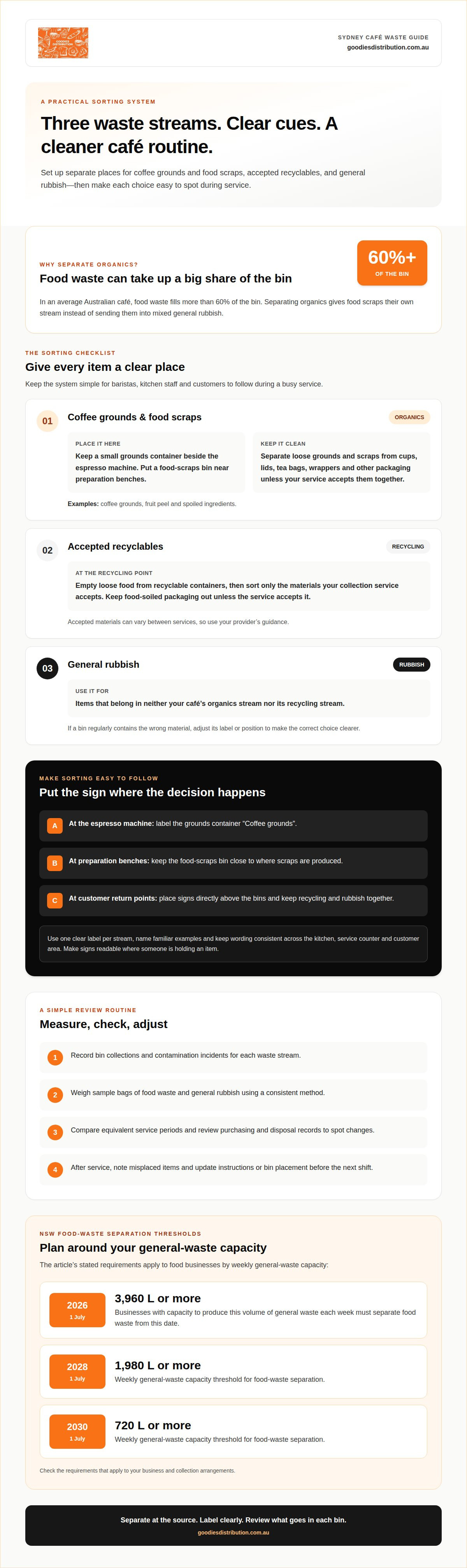
Start with three clearly separated streams: coffee grounds and food scraps, accepted recyclables, and general rubbish. In an average Australian café, food waste fills more than 60% of the bin, so separating organics can make a noticeable difference to what goes into general waste. Keep the system simple enough for baristas, kitchen staff and customers to follow during a busy service.
Place a small, clearly labelled container beside the espresso machine for spent grounds. Empty it into the designated organics bin during regular cleaning, rather than leaving grounds beside the machine or tipping them into mixed rubbish. Keep grounds separate from takeaway cups, lids, tea bags and other packaging unless your collection service accepts those items in the same stream.
At the dish area and food-preparation bench, separate unavoidable scraps, such as fruit peel, coffee grounds and spoiled ingredients, from packaging. Empty loose food from recyclable containers before placing them in the recycling bin. Follow your collection service’s accepted-material guidance, as recycling and organics rules can vary between services.
A practical answer to how to reduce cafe waste in Sydney is to make every stream easy to identify. Use general rubbish for items that don’t belong in your cafe’s recycling or organics streams. Food-soiled packaging can contaminate other materials, so keep it out of recycling unless your service accepts it. If a bin regularly contains the wrong material, move its label or position closer to where that item is discarded.
- Coffee station: Collect loose grounds in a dedicated container.
- Food preparation: Keep scraps separate from wrappers and packaging.
- Recycling point: Empty containers and sort only accepted materials.
- General rubbish: Use it for items that fit neither of the other streams.
Review the bins during a quiet moment after service. Misplaced grounds, cups or food scraps can show where staff need clearer instructions or a better-positioned bin. This gives Sydney cafe teams a practical way to reduce waste without slowing service. Note recurring sorting mistakes, then adjust the setup before the next shift.
Reducing contamination through waste measurement
Keep food waste separate from packaging and other non-organic materials so it can be recycled. NSW food businesses with capacity to produce 3,960 L or more of general waste each week must separate food waste from 1 July 2026; later phases cover lower capacities.
Track contamination and bin collections alongside purchasing and disposal records to identify changes over time. A consistent record of waste-management practices can help staff spot where separation needs attention.
Reusable Cup and Container Programs
Sydney cafes can offer a bring-your-own-cup option or set up a return-and-reuse system for cups and takeaway containers. A cafe-run return system needs a clear process for collecting, washing, storing and returning items to service. Decide how customers return reusables, where staff store them and how the system fits into service.
Keep the choice clear when customers order: explain whether they can bring a clean reusable cup or container, and show staff how to handle it. Review participation and operational snags before extending the program to more packaging types.
Waste Measurement
Measure each waste stream separately. Record bin collections, note contamination incidents and weigh sample bags of food waste and general rubbish using a consistent method. Compare equivalent service periods, then check purchasing and disposal records for changes. This helps distinguish a real reduction from normal shifts in trade.
Use a consistent method to record waste streams and review the results regularly. For example, compare general-waste collections after separating food scraps, while tracking any change in organics service arrangements. This can help identify which changes are working and where staff may need clearer guidance.
Use the NSW separation thresholds to plan ahead: businesses with capacity to produce 1,980 L or more of general waste each week must separate food waste from 1 July 2028, while the 720 L threshold applies from 1 July 2030. A simple measurement routine can show where contamination is occurring and guide practical equipment choices.
Waste-stream signage and source separation
Put each sign where the waste decision happens, not beside a distant storeroom door. Label the container beside the espresso machine “Coffee grounds”. At the customer return point, place signs directly above the bins. Staff and customers can then sort items without carrying them across the cafe or guessing which stream applies.
Use one clear label for each stream and name familiar items as examples. A food-scraps sign might show fruit peel and leftover food; a recycling sign could name accepted containers. A rubbish sign should clarify that it is for items that belong in neither of the other streams. Follow your collection service’s accepted-material guidance, since services may take different items.
- Organics: Show examples such as coffee grounds and food scraps.
- Recycling: Name the containers your service accepts.
- General rubbish: Identify common items that fit neither stream.
Keep signs readable from the position where someone holds an item. Pair a short heading with a simple image or colour cue, and use the same wording across the kitchen, service counter and customer area. For example, don’t label one bin “food waste” and another “organics” if both accept the same material. Consistent language helps new team members follow the system.
Set bins beside the relevant workstations. Place a grounds container beside the espresso machine and a food-scraps bin near preparation benches. At a customer station, put the recycling and rubbish bins together, with a separate label above each opening. A consistent layout makes the choice clearer during busy service.
Introduce the signs during staff induction and point out each stream during shift handover. If grounds appear in general rubbish, move the grounds label closer to the espresso machine or make its example more visible. Review bin contents after service, then update signs when accepted materials or collection arrangements change. Small, specific adjustments keep sorting instructions aligned with daily cafe routines.
Does the City of Sydney offer food waste collection or composting services for businesses?
A Sydney cafe’s access to food-waste collection or composting depends on the waste arrangements for its premises. Don’t assume every business receives the same service directly from the City of Sydney. In a shared commercial building, the property manager may organise waste services for several tenants; a standalone cafe may have a separate arrangement.
Start by identifying who manages your site’s bins. Ask the building manager or waste contractor whether food scraps are collected separately, where the organics bin is kept and which materials it accepts. For example, confirm whether coffee grounds and preparation scraps are suitable and whether they need to be free of packaging.
Check how the service works before changing your routine. Find out where staff should take scraps during service, how the bin is secured and what to do if it is full. A cafe in a shared building may need to use the site’s designated storage area and collection schedule, rather than placing a new bin beside its own entrance.
If your current arrangements don’t include food-scrap collection, ask the property manager or existing waste contractor about organics options for the premises. Consider available storage space, collection access and how scraps will be handled between services. These practical details help determine whether a collection or composting arrangement fits your cafe’s operations.
Keep the final instructions specific to your site. Record accepted materials and bin locations where staff can refer to them, and include the process in shift handovers. If the collection arrangement changes, update the instructions before the next service. This helps Sydney cafe teams manage food scraps consistently without assuming the same City of Sydney arrangement applies to every business.
Goodies Distribution
Goodies Distribution supplies cafes with takeaway packaging to support a practical waste-sorting approach. Its range includes Takeaway Containers, Paper Bags and Cutlery. Custom Branding Services can help your packaging reflect your cafe’s identity. Clear packaging choices and consistent customer-facing messages can reinforce sorting instructions across your venue.
Consider how each item performs during service and what happens after use. Packaging needs to suit the food, takeaway routine and waste streams available to your business. Compostability and disposal depend on the product and the collection facilities that accept it, so don’t assume all packaging belongs in the same bin.
If you’re reviewing packaging as part of your cafe waste plan, contact Goodies Distribution to discuss your requirements.
Make your next packaging choice count
A practical next step in how to reduce cafe waste in Sydney is to include disposal arrangements in every packaging decision. Consider what the packaging needs to hold, how it performs during service and which local waste stream can accept it. This gives your team a clear basis for choosing packaging and explaining disposal to customers.
Goodies Distribution supplies Takeaway Containers and provides Custom Branding Services. Thoughtful packaging choices can support your cafe’s presentation and help customers recognise what they’re taking away. Match disposal instructions to the collection facilities available to your business, rather than assuming every material belongs in the same bin.
When you’re ready to consider packaging as part of your waste plan, contact Goodies Distribution about cafe waste. A considered choice can make the next step clearer for staff and customers alike.
Frequently Asked Questions
What are the biggest sources of waste in Sydney cafes?
Food preparation and unsold food are major sources of cafe waste. These include vegetable trimmings, over-prepared ingredients and cabinet items left at closing. Coffee grounds and packaging from ingredient deliveries add to the total. Track what gets discarded during different shifts, then adjust batch preparation or ordering when the same ingredients regularly go unused. This targets avoidable food waste before you change bin arrangements.
What are Sydney's rules for separating food waste and recycling in commercial premises?
NSW food businesses must separate food waste according to phased general-waste capacity thresholds. Businesses with capacity for 3,960 L or more each week must separate it from 1 July 2026; the threshold becomes 1,980 L or more from 1 July 2028, then 720 L or more from 1 July 2030. These requirements concern food-waste separation; recycling acceptance depends on the collection service.
Where can Sydney cafes recycle coffee grounds, cooking oil, packaging and soft plastics?
Use the organics collection arranged for your premises for coffee grounds if the service accepts them. Cooking oil needs a separate collection or recycling arrangement, not a food-scraps bin. Sort packaging according to your collector’s accepted materials. Soft plastics need a dedicated collection pathway; don’t put them in mixed recycling unless your service expressly accepts them. Keep each stream separate during storage and collection.