


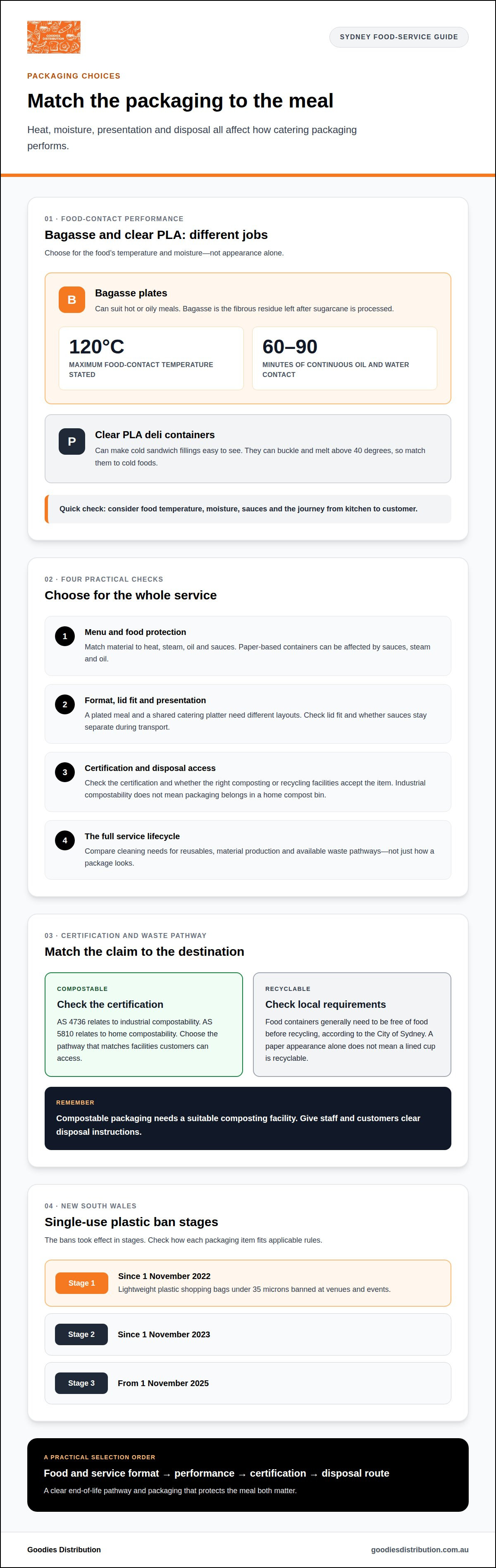
Bagasse can handle hot food: bagasse plates are rated for food-contact temperatures up to 120°C and resist oil and water for 60-90 minutes of continuous contact. For Sydney businesses choosing eco-friendly catering supplies, bagasse can suit hot meals, while the best packaging choice depends on what you serve and how it will be disposed of.
A container needs to do more than look sustainable: it must protect food, perform during service and suit your customers’ experience. Choosing between compostable, recyclable and biodegradable packaging can feel complicated when heat, moisture and disposal options all matter.
This guide explains how to assess bagasse for hot food and choose catering trays, boxes and other packaging for your operation. Learn what compostable, recyclable and biodegradable mean in practice, which material features affect performance, and how to match packaging to your menu and service style.
Key Takeaways
- Match packaging material to your menu, considering how heat, moisture and sauces affect its performance.
- Choose between compostable, recyclable and biodegradable options by understanding their disposal requirements and the facilities available to your customers.
- Assess carry bags, cutlery and sauce containers as part of the full takeaway experience, not as isolated items.
- For catering trays and boxes, prioritise food-contact suitability, lid fit and the way packaging presents your dishes.
What Makes a Container Eco-Friendly?
For Sydney food businesses, packaging choices involve food protection, material performance and disposal. The right container depends on your menu, service style and the waste facilities available to customers.
Packaging Material Choices
Bagasse is the fibrous residue left after sugarcane is processed. It gives restaurants an alternative to conventional plastic for serving meals. Kraft paper and recycled cardboard can suit bags, boxes and some dry foods, but sauces, steam and oil may affect how paper-based containers hold up.
Consider a package’s full lifecycle, not just its appearance. Kraft packaging with a plastic film coating may not be recyclable in the way customers expect. Assess the material, how it protects food and its intended disposal route. Bamboo is another plant-based option, but its natural origin alone doesn’t determine its environmental impact.
Compostable Packaging and Certification
Compostable packaging is designed to break down under suitable composting conditions. Biodegradable describes material breakdown but doesn’t specify the same disposal pathway. When choosing eco friendly catering supplies Sydney, check certification and whether local facilities accept the item. Industrial compostability doesn’t mean packaging belongs in a home compost bin.
Within a quality packaging range, compostability certifications include AS 4736 and AS 5810. Industrial compostability to AS4736 and EN13432 is also available through trusted providers like Goodies Distribution. Certified compostable bagasse bowls are another option. Look for certification details and seedling logos, then match them to disposal facilities customers can access.
Environmental Impact and Disposal
Compostable, recyclable and reusable supplies have different environmental impacts. Reusables require washing and repeated use; single-use options depend on material production and correct disposal. Compare the full service lifecycle, including cleaning needs and available waste pathways, rather than judging by material alone. This helps you choose packaging suited to your operation.
In New South Wales, single-use plastic bans took effect in stages: Stage 1 since 1 November 2022, Stage 2 since 1 November 2023, and Stage 3 from 1 November 2025. Stage 1 bans supplying lightweight plastic shopping bags under 35 microns at venues and events. Consider how each packaging item fits applicable rules.
Plastic can take hundreds of years to decompose. Recycling also depends on correct sorting and acceptance by the relevant collection service. Start with the food and service format, then choose packaging with an end-of-life pathway customers can access.
Compostable, recyclable and biodegradable materials
These labels describe different outcomes, so match each item to its disposal pathway. A compostable cup, recyclable paper sleeve and reusable cutlery don’t belong in the same waste stream.
Before choosing sustainable packaging, check its certification, food-service performance and disposal instructions. For Australian packaging, AS 4736 relates to industrial compostability and AS 5810 to home compostability; the certification should match the facilities customers can access.
Compostable cutlery can suit takeaway meals where commercial composting is available. Wooden cutlery, chopsticks and coffee stirrers made from FSC-certified birch wood offer another alternative. For retail takeaway or cocktail drinks, choose utensils and accessories that suit the food and how customers will use them.
Disposal determines whether a material’s intended benefit can be realised. Put compostable packaging in a commercial compost bin, or a green organics bin where it’s locally accepted. Recycling is different: according to the City of Sydney, food containers generally need to be free of food before recycling. Food residue can make sorting and recycling harder.
Hot-drink cups need to contain liquid safely and suit the available waste pathway. Some paper cups use FSC-certified paper with a thin PLA lining certified for commercial composting. That lining affects disposal, so don’t assume a paper appearance means a cup is recyclable. Give staff and customers clear disposal instructions.
For a practical selection, compare the item’s certification with local disposal options, then assess food contact, heat and fit for service. This helps avoid claims such as “biodegradable” being mistaken for a clear end-of-life instruction. Explore compostable packaging options as you plan supplies for your menu.
Compostable packaging can deliver its intended benefit only when suitable composting facilities accept it. Recyclable items need to meet local recycling requirements and be free of food residue. The costs and environmental impacts of reusable supplies can’t be compared from the available facts.
Cutlery, napkins, sauce containers and carry bags
Build a practical takeaway set around the food, not just the container. Plates, napkins, cutlery, sauce portions and carry bags all shape how a meal travels and feels to customers.
Takeaway and Catering Serveware
For hot or oily meals, bagasse plates can suit food-contact temperatures up to 120°C and resist oil and water for 60-90 minutes of continuous contact. For cold sandwich fillings, clear PLA deli containers offer visibility, but can buckle and melt above 40 degrees. Match the container to the food’s temperature, moisture and journey.
Choose plates, bowls, trays and boxes to suit the serving format: a plated meal needs a different layout from a shared catering platter. Check how well the lid fits and whether sauces stay separate during transport. Carry bags should suit the packed meal’s shape and weight, while napkins and cutlery round out the takeaway experience.
Specialist Container Materials
Palm leaf containers are pressed from fallen leaves, so no trees are cut to make them. Their natural finish can suit catering presentation, while clear PLA deli bowls make cold food easy to see. Reusable customer-supplied containers can reduce single-use waste when washed and used repeatedly.
For reusables, set up a clear handover and cleaning process so containers return ready for service. Keep cold foods in suitable containers, and use bagasse for hot or oily portions when its resistance suits the meal.
Round out the order with biodegradable cutlery, napkins and sauce containers suited to the menu. Wooden cutlery can work for meals that need a sturdier utensil; chopsticks suit dishes designed for them. Sydney food businesses can source these categories through specialist catering-packaging suppliers. Compare material choices, certifications and disposal guidance, then select supplies that fit your operation.
Wholesale catering trays and boxes
For catering orders, trays and boxes need to protect food in transit and present it neatly. Choose a format to suit the menu, from covered lunch boxes to shared platters. Then assess material, strength and lid fit. Sydney caterers can shortlist sustainable packaging that suits both their dishes and event service style.
Bagasse trays use leftover sugarcane fibre and provide a firm base for catering portions. Rectangular formats are available in 320mm × 220mm, 410mm × 270mm and 500mm × 350mm. These dimensions can help organise sandwiches, hot sides or mixed lunch spreads. Choose a tray that keeps portions secure without crowding the presentation.
Cardboard and kraft trays can suit dry or packaged items, such as a coffee-break spread. A windowed lid lets customers see covered food, while a closed box can contain a meal during transport. Check whether a lining affects disposal. A paper appearance alone doesn’t establish that packaging is recyclable.
Before ordering wholesale, consider the food and service conditions. The NSW Food Authority advises that food packaging must be food-grade and shouldn’t risk contaminating its contents. Assess heat tolerance, leak resistance, lid fit and microwave suitability where needed. Supplier documentation helps match each tray or box to its intended use.
Test representative menu items in trays and boxes during service. Include moist dishes and crisp foods. Bagasse containers are described as resisting sogginess from sauce or steam, but the food and format still matter. Choosing different formats for different menu items can avoid forcing every dish into one container.
Choose packaging that balances food protection, presentation and an appropriate disposal pathway. Explore wholesale catering containers and trays when planning supplies for your service.
Goodies Distribution
Goodies Distribution helps Sydney food businesses choose packaging for takeaway and catering. Its range includes takeaway containers, paper bags and biodegradable cutlery, as well as Custom Branding Services for businesses seeking packaging that reflects their brand.
Turn to Goodies Distribution when selecting containers and carry bags for your menu, or planning a consistent look across customer-facing packaging. Pairing practical formats with considered branding can support a smooth service experience, from packing takeaway meals to handing orders to customers.
Contact Goodies Distribution for guidance on packaging options for your food-service needs.
Shape your next packaging choice
Your packaging can adapt as your menu grows. As service changes, review how each item performs in use and whether its disposal pathway still suits your customers. This keeps environmental claims grounded in the materials and the choices available after service.
For food businesses choosing eco-friendly catering supplies in Sydney, Goodies Distribution offers BioPak Compostable Cups, takeaway containers and Custom Branding Services. These options can help align packaging with your drinks, meals and brand presentation while keeping practical service needs in view.
Make your next step a considered one: choose packaging that fits the food, reflects your business and gives customers clear disposal guidance. Contact Goodies Distribution to discuss packaging for your food-service needs.
Frequently Asked Questions
Can bagasse handle hot food?
Yes, bagasse plates are rated for food-contact temperatures up to 120°C. For menu planning, also consider moisture and serving time. They’re oil- and water-resistant for 60-90 minutes of continuous contact, which can suit hot, saucy catering portions. Choose a shape that supports the portion and keeps it stable during service.
What are the most popular options right now?
Popular choices depend on the menu and service style. Cafés may need cups for takeaway drinks, while caterers may need trays for shared meals. Paper bags suit packed orders, and biodegradable cutlery can complete a takeaway set. Start with the order types your business serves most often, then choose formats suited to the food and how customers receive it.
Can catering businesses customise their packaging?
Yes, Goodies Distribution offers Custom Branding Services for businesses looking to personalise their packaging. Branded packaging can help create a consistent customer experience across takeaway orders and catering. Consider which items customers see most, such as bags or containers, and how your brand design will work across those formats. A coordinated approach makes packaging a considered part of your service.
Are compostable food containers accepted in Sydney council food-waste or commercial composting services?
Acceptance depends on the collection service: compostable packaging isn’t automatically suitable for every food-waste or organics bin. Commercial composting services may accept certified items, while acceptance in green organics bins varies locally. According to the City of Sydney, food containers generally need to be free of food before recycling. Follow the disposal instructions for your collection stream.
Do Sydney suppliers offer bulk pricing, delivery or same-day pickup?
Goodies Distribution supplies packaging wholesale and offers Sydney-wide delivery. Purchases require an Australian Business Number (ABN). Ordering cartons can help businesses plan stock around their menu and storage needs. Plan orders around delivery and your business’s replenishment schedule rather than assuming same-day pickup.