


Environmentally friendly packaging is chosen to balance product protection with thoughtful material use and a clear end-of-life pathway. According to the Australian Packaging Covenant Organisation, 6.84 million tonnes of packaging was placed on the Australian market in 2023-24. For a small business, choosing packaging means considering not only what a product is made from, but also how it performs in everyday operations.
That decision can shape the experience customers have with a meal, parcel or takeaway order. Packaging needs to suit the product and how it will be handled, while environmental claims should be specific and easy to understand. A considered choice makes sustainability part of your service without losing sight of practical needs.
This guide explains how packaging choices affect product protection, material impacts and disposal. It also covers practical options for Australian small businesses, including how to assess packaging for different uses and explain its purpose clearly. Use these steps to choose options that suit your operation and your customers.
Key Takeaways
- Choose packaging that protects food during handling and transport, while using only the material needed for the job.
- Match labels and disposal instructions to the packaging material so customers can make informed choices after use.
- Compare packaging options by their performance, end-of-life pathway and suitability for your menu and service style.
- For shipped goods, assess paper padding for the cushioning and protection each product needs before replacing another packing material.
- Explore custom branding alongside practical options such as takeaway containers, paper bags and biodegradable cutlery to create a consistent customer experience.
Packaging’s role in protecting products and reducing food waste
Packaging protects products during storage, handling and transport. For food businesses, a suitable container can help prevent spills, crushing and contamination before an order reaches the customer.
Packaging Choices by Product Type
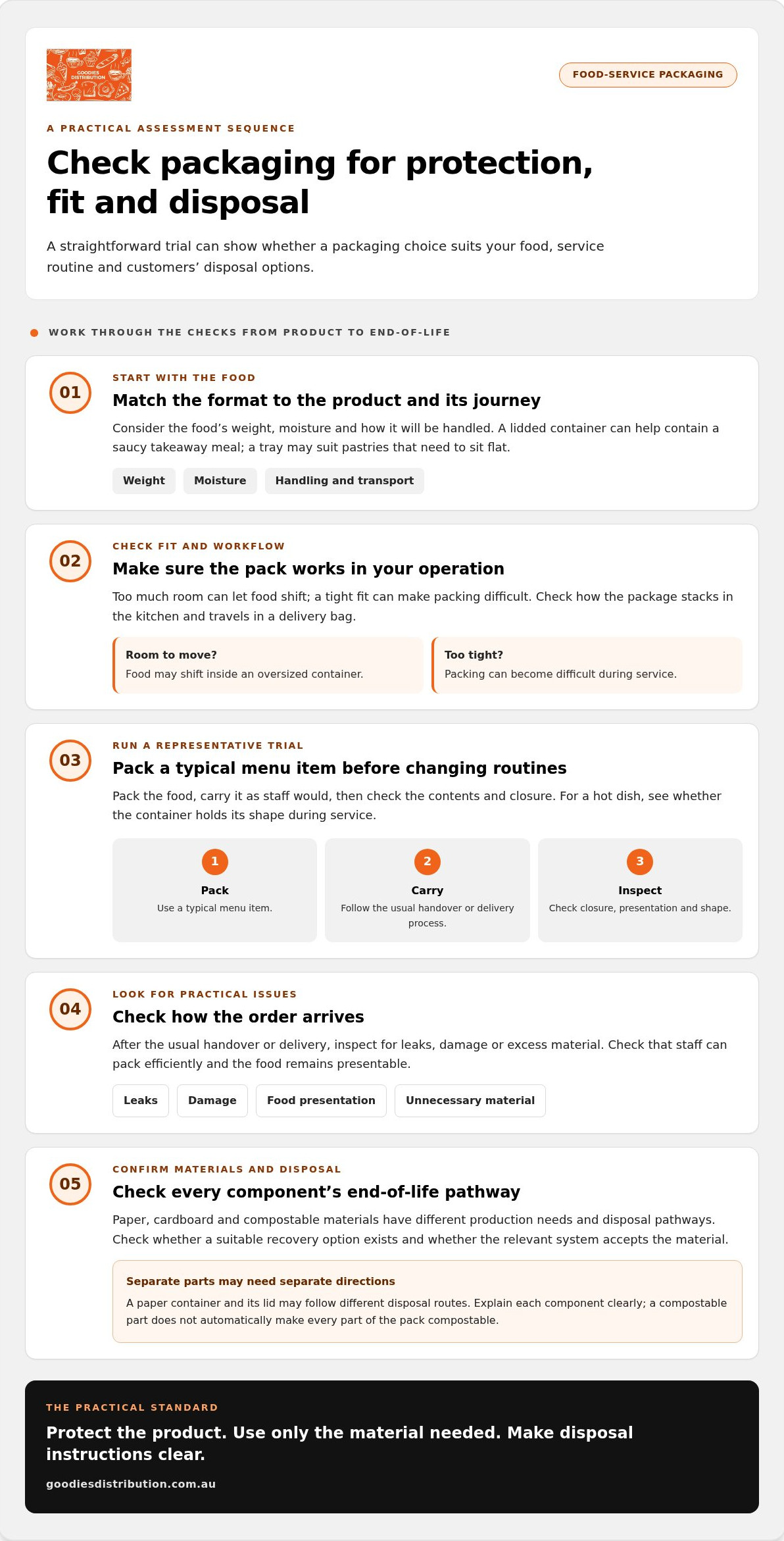
Choose packaging to suit the food’s weight, moisture and service journey. A lidded container can help contain a saucy takeaway meal, while a tray may suit pastries that need to sit flat. Biodegradable food-service products are another option, but the term alone doesn’t explain how to dispose of them. Check the product guidance and the facilities available to customers.
Test packaging with a typical menu item before changing your routine. A Sydney café could pack a takeaway salad, carry it as staff would, then inspect the contents and closure. Check that the lid stays secure, the food remains presentable and staff can pack it efficiently. For hot dishes, see whether the container holds its shape during service. These checks can reveal problems before they affect customer orders.
Fit matters too. A container with too much room can let food shift, while a tight fit can make packing difficult. A sandwich packed beside a drink, for example, needs enough separation to avoid crushing. Consider how packaging stacks in the kitchen and travels in a delivery bag. Practical trials help you choose a format that protects the product without adding unnecessary layers.
Material Impacts Across the Life Cycle
Packaging impacts can arise during material sourcing, manufacture, transport and disposal. Paper, cardboard and compostable materials have different production needs and end-of-life pathways. The outcome depends on the material, how it is used and whether a suitable recovery option exists. For example, recyclable packaging can only enter a recycling pathway when it is collected and accepted by the relevant system.
Biodegradable, compostable and recyclable describe different outcomes. A broad claim such as “planet-friendly” doesn’t tell customers what a package contains or how to dispose of it. Greenwashing risks arise when wording or imagery suggests environmental benefits without explaining the basis for the claim. Use clear descriptions that match the product’s material information and disposal instructions.
For packaging with several parts, identify each component separately. A paper container and its lid may need different disposal directions. Make instructions visible and easy to follow so customers aren’t left guessing. Keep claims precise: a compostable component doesn’t automatically make every part of the pack compostable.
Staff can also assess packaging through a small operational trial. Pack a representative order, move it through the usual handover or delivery process, then check for leaks, damage or excess material. A physical sample can help assess fit and handling where one is available. Record what works, and adjust the selected format to suit the product and service routine.
Plastic-free tape and compostable labels
Compostable packaging belongs in a home compost system or council organics bin only when its certification, product instructions and local service accept it. It generally doesn’t belong in kerbside recycling unless collection guidance explicitly accepts that material. The word “compostable” alone doesn’t establish a disposal route.
Plastic-free tape can make it easier to separate packaging components after use. For example, a business sealing a paper mailer can test whether the tape holds through packing and delivery, then peels away cleanly. Check adhesion on the actual surface, especially if the paper is textured or coated. A closure that fails during handling won’t suit the job, whatever its material.
Compostable labels can communicate disposal information, but their claims need to match the packaging and the label itself. Put instructions where customers can read them before disposal. If a package includes a label, liner and outer container, explain whether each part follows the same route. Avoid broad wording or leaf imagery that implies compostability without supporting product information.
Compostable bio liners and pouches can separate or contain items inside an order. A food business might use a liner to keep a product apart from other contents, or a pouch for a small packaged item. Consider the contents, seal, storage conditions and disposal instructions together. For packages made of several materials, clear directions for each component help customers know what to do.
Home-compostable bags are intended for domestic composting when the product carries relevant certification and instructions. Look for home-compostable logos and read the conditions, rather than relying on words such as “natural” or “plant-based”. Commercial composting takes place in a managed facility, and the materials it accepts can differ from those suitable for home compost. These routes aren’t interchangeable.
Before introducing a compostable item, map the customer’s disposal journey. Identify whether it is intended for home composting, a commercial composting facility or another pathway. Then make the instructions visible at the point of use, such as on a takeaway bag or order label. This helps avoid directing compostable packaging into recycling, where it may not be accepted.
Plastic-free tape and compostable labels work best as part of a consistent pack design. Test the closure, check that the label stays legible, and make sure each component’s material information is accurate. Clear directions support customers and staff, while careful material selection helps businesses avoid claims that go beyond verified product attributes.
Sustainable packaging for small businesses
Small businesses can make sustainable packaging changes one product at a time. A Sydney café might start with takeaway orders, then test a replacement for its most-used container. Check fit, protection, storage and disposal instructions during a normal service period. This keeps the trial relevant to daily operations.
Compare each option across its full use cycle: material sourcing, transport, protection and end-of-life handling. The Australian Sustainable Packaging Guidelines can help businesses assess packaging choices. Ask whether a package is recyclable through systems available to customers, or whether another verified recovery pathway applies. A material’s appearance alone doesn’t show its environmental impact.
For online orders, choose mailers and shipping cartons to suit the item’s size, weight and fragility. A carton with too much empty space can let goods move during delivery. Right-size the box, then test a packed order through your usual dispatch routine. Paper cushioning can protect some products, while a sturdy carton may suit heavier goods.
Keep the full parcel in view. A paper mailer with a non-paper closure or mixed-material insert may need separate disposal steps. Record each component and its disposal guidance, then make the instructions easy for customers to find. Reusing clean cartons for outgoing orders can also extend their useful life when the packaging remains suitable.
Custom-branded sustainable packaging pairs a practical container with a recognisable customer experience. A café can put its logo, menu details or disposal guidance on a bag or cup. Keep the message legible, and avoid claims such as “fully green” unless clear evidence supports them. Brand design should not obscure material information or disposal directions.
Before approving artwork, match the print method and inks to the packaging material and its intended recovery route. Check colour limitations, ink coverage and how the design looks on the finished surface. For example, a bold logo on a paper bag may need a simpler layout than a small label. A physical sample helps assess appearance and legibility before a larger order.
Make the change measurable without complex reporting. Record the package type, order volume and leftover stock for each trial. Compare how often staff need extra wrapping, how much storage space cartons take, and whether customers can follow disposal instructions. These observations help identify an option that suits the business, not just a material that sounds sustainable.
- Start small: trial one item, such as a takeaway container.
- Test function: check closure, stacking, storage and protection.
- Review recovery: document each component’s disposal route.
- Refine branding: keep logos clear and environmental claims specific.
For a Sydney food business, a good packaging decision balances product protection, customer experience and a realistic end-of-life pathway. Review the trial with staff, update packing instructions, and replace existing stock as it is used. A step-by-step approach makes sustainable choices easier to manage and explain.
Australian-based packaging supply and dispatch
Packaging supply decisions affect stock availability, storage and waste across Australia. According to Australian Packaging Covenant Organisation, 41% of packaging placed on the market was disposed of to landfill in 2023-24. That figure makes end-of-life planning relevant alongside purchasing. Businesses can review which packaging materials they order, how staff sort them, and whether customers receive clear disposal directions.
Australian-based supply can help businesses plan local dispatch and replenishment. For a Sydney café, regular stock reviews can prevent a sudden shortage of takeaway containers during a busy service period. A food manufacturer shipping interstate can also consider carton sizes, storage capacity and dispatch schedules. These choices affect how much packaging is held, moved and eventually discarded.
Packaging recycling labels should explain the practical disposal route for each component. In Australia, the Australasian Recycling Label (ARL) provides packaging-specific recycling instructions. Businesses should use it only when its assessment applies to their packaging. Give clear directions for separate parts, such as a paper carton and its lid, rather than presenting the whole pack as one recyclable item.
Landfill remains part of Australia’s packaging challenge, but a label alone cannot change what happens after disposal. Collection services and material acceptance determine whether packaging can be recovered. Businesses can make sorting easier by choosing simpler formats, keeping components identifiable and giving customers plain-language instructions. For example, a takeaway pack with distinct parts can give separate directions for each.
Nationwide shipping plans should account for distance, carton dimensions and how supplies are packed. A business receiving stock across state lines can compare consolidated orders with more frequent deliveries. Consolidating may reduce separate consignments, but it also requires storage space and careful stock rotation. The right approach depends on order patterns, available storage and the risk of holding excess packaging.
Use a practical supply review before changing a packaging order:
- List current supplies: record each item, material and storage location.
- Review dispatch: note delivery frequency and whether cartons arrive protected.
- Check labels: match recycling instructions to each packaging component.
- Track stock: identify unused or damaged packaging during routine counts.
For example, a Sydney takeaway venue can review cup, bag and container stock together. This helps staff spot duplicated formats or packaging that takes up valuable storage space. It also supports consistent ordering and makes it easier to keep disposal guidance aligned with the products customers receive.
Recycled materials may suit some packaging uses, but businesses should also assess protection, suitability and the local recovery pathway. Compare the complete pack, not just its main component. Clear purchasing records and accurate labels give Australian businesses a practical starting point for reducing avoidable packaging waste.
Paper padding as an alternative to bubble wrap
Paper padding can cushion goods in transit without adding a layer of bubble wrap. For a small business sending ceramics, skincare or gifts, folded or crumpled paper can fill empty space inside a cardboard carton. The right choice depends on the item’s weight, shape and fragility, not just how the material looks.
Start with the parcel. Choose a carton that holds the product without excessive empty space, then add enough paper to limit movement. Wrap fragile items individually where needed, and place cushioning around exposed edges. A jar shipped in a carton, for example, needs protection from side impacts as well as movement during handling.
Paper padding isn’t a universal replacement. It may suit lightweight items that need void fill, but heavier or delicate goods need careful testing. Check whether the paper stays in place when the carton is turned and gently shaken. If the product shifts, add or reposition cushioning, or review the carton size. Protecting the contents helps prevent damage and avoidable returns.
Try this practical packing check before changing your dispatch routine:
- Pack a typical order: use the product, carton and paper amount staff would normally choose.
- Inspect the fit: check for gaps around corners, lids and fragile edges.
- Move the carton: tilt it gently and listen or feel for product movement.
- Open and assess: look for scuffs, pressure marks or displaced padding.
Paper and cardboard can be easier to sort when kept clean and separate from other materials. Remove tape or labels where disposal instructions call for separation, and follow local collection guidance. Wet or food-soiled paper may have a different disposal route from clean packing paper. Clear instructions help customers avoid putting unsuitable material into recycling.
Consider storage and packing speed too. A café shipping merchandise from the same storeroom as takeaway supplies needs padding staff can access without disrupting service. Keep paper dry, stack it neatly and set a consistent packing method. That makes orders easier to prepare and helps avoid using more material than each parcel needs.
Paper padding can be part of a packaging plan that values product protection and thoughtful material use. It won’t suit every parcel, so test it against the actual product and delivery routine. For a related paper-based option, explore paper packaging choices for your business.
Goodies Distribution: Custom Branding Services
Goodies Distribution helps hospitality businesses bring their brand to practical packaging through Custom Branding Services. This can suit a café refreshing its takeaway presentation or a growing restaurant seeking a consistent look across orders.
Pair branded packaging with Takeaway Containers, Paper Bags or Biodegradable Cutlery for a recognisable customer experience. Keep artwork legible and environmental claims specific, especially when packaging includes disposal instructions or certification marks. A clear design helps customers identify your business without obscuring useful product information.
Goodies Distribution provides custom branding to help you bring your packaging design to life. Contact Goodies Distribution to discuss a branded packaging project.
Make your next packaging change practical
Your next step doesn’t need to be a full packaging overhaul. Choose one item your team handles every day, then assess how it protects products, fits service routines and communicates disposal guidance. A focused change gives staff a clear process to follow and helps you build an environmentally friendly packaging approach around real business needs.
Goodies Distribution offers premium Compostable Cups, Takeaway Containers and Custom Branding Services for businesses refining their customer-facing packaging. Consider how each format supports your menu and presentation, and keep environmental claims specific to the product and its end-of-life instructions. Thoughtful choices can make packaging part of a consistent experience, from preparation through to takeaway.
Ready to consider the next step for your business? Contact Goodies Distribution today to discuss packaging options. Small, well-planned changes can build a more considered approach over time.
Frequently Asked Questions
What Makes Eco Packaging Different from Regular Packaging?
Eco-friendly packaging considers material sourcing, how much is used and what happens after disposal. For a food business, that means assessing product protection alongside an item’s reuse, recycling or composting pathway. Environmentally friendly packaging isn’t defined by a natural colour or a “green” claim. A paper container still needs to suit the food, perform during service and have clear disposal instructions.
What packaging materials are considered environmentally friendly in Australia?
No material is automatically the best choice for every Australian business. Paper, cardboard, recycled materials, bagasse and certified compostable products may suit different uses and recovery pathways. A café might choose a bagasse bowl for a takeaway meal, while a shipping business uses cardboard for dispatch. Consider performance, certification and local disposal options together, rather than judging by material or appearance alone.
How do recyclable, compostable, biodegradable and reusable packaging compare?
These terms describe different outcomes. Recyclable packaging can be processed into materials for future use through an accepted recycling system. Compostable packaging is designed to break down under specified composting conditions. Biodegradable is broader and doesn’t, by itself, identify a timeframe or disposal route. Reusable packaging is designed for repeated use; its practical value depends on whether customers and staff can return, clean or keep using it.
How much does sustainable packaging cost in Australia compared with conventional packaging?
There’s no single Australian comparison that applies to every packaging choice. Material, carton quantity, printing requirements, storage needs and protection level all affect the purchasing decision. Compare equivalent formats and include operational factors such as damaged goods, unused stock and packing time. For a useful assessment, review the full packaging requirement for a typical order rather than comparing materials by name alone.
How can Australian businesses reduce packaging and choose sustainable suppliers?
Start by reviewing each item in a typical order. Remove unnecessary layers, right-size cartons and consider whether clean packaging can be reused. For suppliers, look for clear material specifications, relevant certification details and practical disposal information. Sydney businesses buying from Goodies Distribution need an Australian Business Number (ABN) to purchase. Match order quantities to storage space and use so stock remains manageable.
What packaging certifications and standards are recognised in Australia?
For compostability, AS 4736 relates to industrial composting, while AS 5810 relates to home compostability. EN 13432 is another industrial compostability certification identified in the BioPak range. FSC certification relates to responsible forestry sourcing for paper products. These marks apply to specific products and outcomes, not every item made from a material. Check that certification details match the product and its intended disposal route.