


Choosing between bioplastic (PLA), pulp and conventional plastic coffee cup lids starts with a practical question: which lid fits your cup and suits the way customers drink on the go? Material matters, but a secure fit and a suitable sipping style matter at the counter, too.
It’s easy to focus first on cup diameter or sustainability claims. A lid also needs to match the cup you use, suit the drink and work with your service routine. A mismatch can mean spills, awkward sipping or stock that doesn’t work at the counter.
This guide compares pulp and PLA options, explains how to match a lid to your cup and outlines what to check before making an environmental claim. You’ll also find practical tips for ordering wholesale cartons and planning storage. Goodies Distribution offers premium pulp and PLA lid options in several diameters and finishes, supported by a Sydney-local warehouse and Sydney-wide delivery.
Key Takeaways
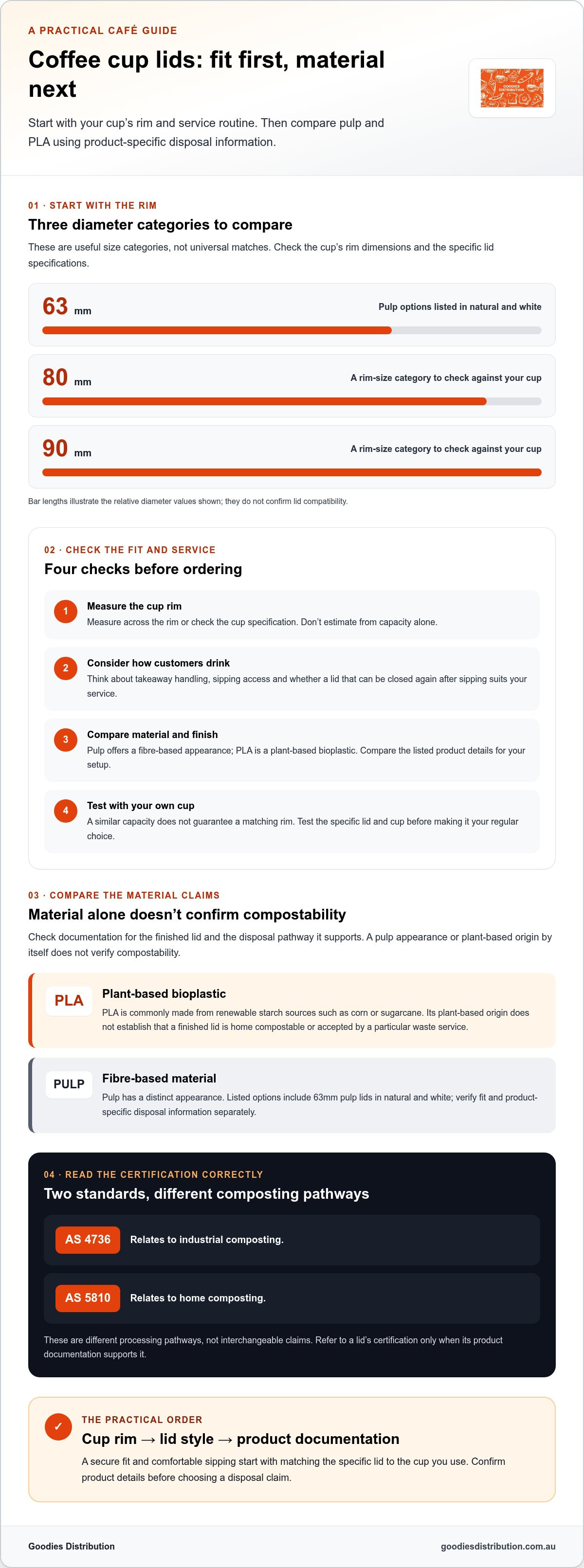
- Start with your cup’s rim diameter. Comparing 63mm, 80mm and 90mm options can help narrow down lids to test for fit.
- Compare pulp and PLA by material, appearance and product-specific end-of-life information. Don’t assume PLA is home compostable.
- Review listed lid options by size, finish and style, including 63mm pulp lids in natural and white.
- Before ordering wholesale cartons, define your service needs, review product documentation and test a lid on the cup you use.
- Use the comparison of bioplastic (PLA), pulp and conventional plastic coffee cup lids to focus on fit, customer use and documented disposal pathways.
Coffee cup lids for cafés: start with cup fit and service needs
A lid needs to sit securely on the cup and suit the way customers drink. When comparing PLA and pulp coffee cup lids, start with the cup you already use. The wrong diameter can make a lid difficult to attach or loose during takeaway handling, and can disrupt service while staff search for a better match.
A well-fitted lid helps make a takeaway drink more comfortable and convenient for the customer. Check the diameter before comparing materials or finishes. Options such as 63mm, 80mm and 90mm are useful size categories, but they aren’t universal matches for every cup with a similar capacity. The rim dimensions and shape matter.
Consider your café’s routine, too. Do most customers take hot drinks to go, or might they carry drinks in a takeaway bag? Do they need a simple sipping opening or a lid that can be closed again after sipping? These details help narrow the style. Compare how each option suits your service, then test it with the cups you use.
How to check coffee cup lid size before ordering
Measure across the cup rim or use the cup specification to identify its diameter. Don’t estimate from capacity alone: cups holding the same volume can have different rim dimensions. Treat 63mm, 80mm and 90mm as examples of available categories, then compare the specific lid and cup specifications before ordering cartons.
Match lid style to the way customers drink
Think about the sipping access customers need, how they carry drinks away and whether a lid that can be closed again after sipping would suit your service. A suitable style can make service smoother, but no lid should be assumed to prevent leaks in every situation. Test it with your café’s cup before making it your regular choice.
Once fit and use are clear, compare materials. PLA is a plant-based bioplastic, and Polylactic acid (PLA) is its full name. Whether a PLA lid suits your café depends on its documented properties and end-of-life information, as well as its fit. Pulp lids offer a different material and appearance to weigh up.
Goodies Distribution is an authorised BioPak wholesale distributor, with pulp and PLA lid options in several sizes and styles. For Sydney cafés, starting with the cup rim and the way drinks are served gives your team a practical basis for comparing options and planning wholesale stock.
PLA and pulp coffee cup lids: understand the material differences
Material affects a lid’s appearance and the environmental claims you can responsibly make about it. For café operators, the useful comparison isn’t simply “plant-based” versus “fibre”. Consider the material, how the lid fits your cup and what its product documentation says about disposal. The broader phrase bioplastic (PLA), pulp and conventional plastic coffee cup lids covers different categories; this guide focuses on comparing pulp and PLA options.
Neither material label alone confirms a composting pathway. Compostability depends on the finished product’s specific certification and the processing conditions it is designed for. This distinction helps your team give customers accurate information and plan packaging choices around the waste services available to your business.
What PLA means for coffee cup lids
PLA is a plant-based bioplastic commonly made from renewable starch sources such as corn or sugarcane. Its plant-based origin describes the material, but doesn’t establish that a finished lid is home compostable or accepted by a particular waste service. Check product-specific documentation for certification and disposal guidance before making an environmental claim.
Certification applies to the specific finished product, not simply to PLA as a raw material. AS 4736 relates to industrial composting, while AS 5810 relates to home composting. These standards cover different processing pathways, so don’t treat them, or a general compostability statement, as interchangeable. Refer to a lid’s certification only when its documentation supports the claim.
What pulp lids offer in café service
Pulp is a fibre-based material with a distinct appearance that can complement a café’s presentation. Listed pulp options include natural and white finishes, including a 63mm option for a smaller-diameter cup setup. These details help you compare appearance and intended fit, but they don’t replace checking the specific lid against your cup.
Research from North Carolina State University discusses molded fibrous pulp lids in the context of coffee-cup materials. For disposal guidance, distinguish between home compostability, which applies to suitable domestic composting conditions, and industrial compostability, which relies on processing in a commercial composting facility. A pulp appearance alone verifies neither pathway.
Compare pulp and PLA by the details that matter to your operation: finish, compatible cup specifications and documented end-of-life information. Goodies Distribution’s pulp and PLA coffee cup lids give cafés material and style options to consider.
Compare coffee cup lid options by diameter, finish and function
Once you’ve identified your cup rim, compare options by size, material, colour and listed features. The table summarises available details to help you build a shortlist. Treat each diameter as a guide to the intended setup, then match the lid to your cup’s specifications.
| Diameter or cup size | Material | Colour or finish | Listed style or detail |
|---|---|---|---|
| 63mm | Pulp | Natural | 63mm pulp coffee lid |
| 63mm | Pulp | White | 63mm pulp coffee lid |
| 80mm | Pulp | Natural | 80mm pulp coffee lid |
| 80mm | Pulp | White | 80mm pulp coffee lid |
| 80mm | Paper | White | 80mm paper lid, “fits all 80mm cups” |
| 80mm | Pulp | Finish not specified | Reclosable style |
| 90mm | Pulp | Finish not specified | Pulp lid for compatible larger-diameter cups |
| 63mm, 4oz | PLA | Opaque or black | 63mm 4oz PLA lid |
| 80mm, 6, 8, 10 and 12oz | PLA | Opaque or black | Small lid listed for these cup sizes |
Standout 63mm and 80mm coffee lid options
The 63mm pulp coffee lid is available in natural or white for smaller-diameter cup setups. At 80mm, compare natural and white pulp lids with the white paper lid, whose listing states it “fits all 80mm cups”. Keep that wording specific to the listed product rather than assuming all 80mm lids are interchangeable. A trial fit is a sensible step before standardising stock.
PLA and reclosable pulp options to compare
The 63mm 4oz PLA lid is listed in opaque and black. The 6 8 10 and 12(80mm)oz PLA small lid is also listed in opaque and black. Colour can shape how the drink looks at hand-off, but the size and cup compatibility still need to suit your setup. For 80mm reclosable pulp lids, consider whether the closing feature suits customers who may pause between sips. It’s a feature to assess, not a guarantee against spills.
For environmental claims, rely on product-specific documentation rather than material or colour alone. A compostable packaging standards guide from Michigan State University offers background, but it addresses a different market and doesn’t establish Australian certification for any lid. Compare product documentation with your disposal pathway before making a claim. Browse the available PLA and pulp lid options, using material and size details as your starting point.
Choose and order coffee cup lids with a practical café checklist
A short process can help prevent a wholesale order that doesn’t suit your cups, service or storage space. Use these checks to compare PLA and pulp coffee cup lids before ordering:
- 1. Confirm cup diameter. Check the rim measurement or cup specification, then compare it with the lid’s stated compatibility.
- 2. Define service needs. Consider the drinks you serve, how customers carry them away and which sipping or reclosable features suit your routine.
- 3. Compare materials. Assess pulp and PLA options by their finish, intended cup fit and suitability for the customer experience you want to provide.
- 4. Review documentation. Check product-specific information for compostability certification and disposal guidance. Don’t assume products made from the same material have identical claims.
- 5. Plan cartons. Compare carton quantities with expected use and available storage, and keep lid stock aligned with compatible cups.
Confirm the cup, service needs, material, documentation and carton quantity before ordering to reduce the risk of a mismatched wholesale order. This checklist gives your team a consistent way to assess pulp and PLA lids against your café’s needs.
Avoid common coffee lid buying mistakes
Colour and material can shape presentation, but neither should come before checking the cup rim. A white lid may suit your café’s look, for example, yet still be the wrong match for its cups. Similarly, pulp or PLA alone doesn’t establish a specific compostability claim. Check the individual product’s documentation, and make sure carton quantities suit expected use and storage capacity.
Before standardising a lid for busy service, test it with the actual cup your team serves. Check that it sits as intended and that staff can fit it smoothly during a typical hand-off. This practical trial can reveal compatibility issues before they affect routine service.
Plan lid stock for Sydney café operations
Use your venue’s service pattern to estimate how quickly you go through lids, then plan replenishment around that usage and your available storage. Just-in-time inventory can help coordinate reorders with expected demand, while regular stock checks can help your team avoid running short during busy periods. Track lids alongside their matching cups so one item doesn’t run out ahead of the other.
Goodies Distribution’s Sydney-local warehouse and Sydney-wide delivery support local replenishment planning for cafés. Shop pulp and PLA coffee cup lids and compare the options with your cup specifications and carton plan.
Explore Goodies Distribution’s coffee cup lids for your business
A practical lid choice starts with the cup, not the material label. Match the lid diameter to your cup’s rim, then consider whether pulp or PLA, and the available finish and style, suit your drinks, customers and service routine. Before placing a wholesale order, test the fit with your café’s cups and review product documentation for compostability or disposal claims.
A wholesale lid range for cafés and takeaway venues
Goodies Distribution’s coffee cup lid collection includes pulp and PLA options in several diameters and finishes. Pulp choices include natural and white finishes, while PLA lids are available in opaque and black. Compare how each lid may look at hand-off, then check its listed size and cup compatibility. A considered match can support tidy presentation, convenient sipping and a smoother rhythm for staff during busy service.
Material and appearance are only part of the decision. Product-specific documentation matters, too: don’t assume every pulp or PLA lid has the same certification or disposal pathway. This helps your business make accurate environmental claims and choose packaging in line with its waste arrangements. For broader context on wholesale packaging choices, read BioPak Sustainable Packaging: Australian Wholesale Guide.
As an authorised BioPak wholesale distributor, Goodies Distribution supports Sydney cafés and takeaway venues from a Sydney-local warehouse, with Sydney-wide delivery. The directors bring more than 40 years of combined hospitality industry experience, grounding packaging choices in the everyday needs of food-service businesses, from customer presentation to practical stock planning.
Browse coffee cup lids and take the next step
For cafés, restaurants and takeaway operators across Sydney, compare the collection with your cup specifications and service needs. Keep your preferred finish and material in mind, but let compatibility lead. Once you’ve identified suitable options, plan wholesale cartons around expected use and available storage.
Shop coffee cup lids and find a pulp or PLA option suited to your café’s cups and service.
Choose a lid that keeps your café moving
A practical choice starts with cup diameter, then considers the material, finish and style that suit your drinks and service. Test the lid with your café’s cup, and use product-specific documentation to guide compostability or disposal claims. These checks make comparing bioplastic (PLA), pulp and conventional plastic coffee cup lids more useful when planning a compatible, presentable option for takeaway service.
Goodies Distribution is an authorised BioPak wholesale distributor, supported by a Sydney-local warehouse and Sydney-wide delivery. The directors bring more than 40 years of combined hospitality industry experience to serving food-service businesses.
Ready to explore pulp and PLA options for your cups? Shop coffee cup lids and take the next step towards a considered choice for your café. A well-matched lid can support smoother service and a more convenient customer experience.
Frequently Asked Questions
How do I know what size coffee cup lid I need?
Compare the cup rim diameter with the lid’s stated size and compatibility details. Measure across the rim or refer to the cup specification rather than choosing by capacity alone, as cups with the same volume can have different openings. Sizes such as 63mm, 80mm and 90mm are useful categories, not universal matches. Test the lid on your actual cup before ordering cartons for regular café service.
What is the difference between PLA and pulp coffee cup lids?
PLA is a plant-based bioplastic commonly made from renewable starch sources, while pulp lids are made from fibre. The materials also look different: pulp options may be natural or white, while PLA lids can have other listed finishes. Compare the specific lid’s size, cup compatibility and product documentation. Neither a plant-based origin nor a fibre-based material alone confirms a composting pathway or disposal method.
Are PLA coffee cup lids home compostable?
Not automatically. PLA’s plant-based origin doesn’t establish that a finished lid is suitable for home composting. Look for product-specific evidence of certification to AS 5810, the Australian standard for home compostable products, and follow the product’s disposal guidance. If documentation identifies industrial compostability instead, that is a different processing pathway and shouldn’t be presented as home compostability.
Can PLA lids be recycled with regular household recycling?
Don’t assume PLA lids belong in your household recycling bin. Acceptance depends on local collection and sorting arrangements, and compostable packaging isn’t automatically accepted as recyclable material. Check your local council’s guidance and the lid’s disposal instructions. A compostability certification points to a specified composting pathway, not permission to place the lid in kerbside recycling.
Are pulp coffee cup lids suitable for hot takeaway drinks?
Suitability depends on the particular lid and its intended use, so check the product information rather than assuming every pulp lid is designed for hot drinks. Confirm that its diameter matches your cup and test the combination with the drinks your café serves. A fit and service trial helps staff assess how easily the lid attaches and how comfortable it is for customers to use during takeaway service.
How can a café avoid ordering coffee lids that do not fit?
Start with the cup rim measurement or the cup specification, then match it to the lid’s stated size and compatibility. Don’t rely on cup capacity, colour or material instead of checking diameter. Before ordering wholesale cartons, try the lid on your venue’s actual cup and see how it fits during service. This practical test can catch a mismatch before it becomes a routine stock problem.
What does certified compostable mean for a coffee cup lid?
It means the finished lid has been certified against a specified compostability standard under defined processing conditions. In Australia, AS 4736 relates to industrial composting and AS 5810 to home composting. Check the product documentation for the exact certification and disposal guidance. A material description or general “compostable” claim alone doesn’t prove that a particular lid meets either standard or will be accepted by local collection services.
Can Sydney cafés order coffee cup lids wholesale from Goodies Distribution?
Yes. Goodies Distribution is an authorised BioPak wholesale distributor, with a Sydney-local warehouse and Sydney-wide delivery support. The collection includes pulp and PLA coffee cup lid options in different sizes and styles. Match the lid to your cup specifications and service needs, then plan carton quantities around expected use and storage space. The directors bring more than 40 years of combined hospitality industry experience.