


The largest takeaway base isn’t always the best fit for a meal. For Sydney cafés, restaurants and takeaway venues, choosing biocane rectangular and square takeaway bases and lids means looking beyond capacity. Portion size, food layout and lid compatibility all affect how well a container works during service. The right choice can help your team pack efficiently and present meals neatly for customers.
This guide compares shapes, capacities and lid options against your menu and workflow. Use real portions to assess how food sits in a base, then confirm the lid pairing and organise stock so staff can find the right combination. For compostability claims, check the documentation for each product, distinguish industrial compostability from home compostability, and confirm that your waste service accepts the packaging.
Key Takeaways
- Match base shape and capacity to the food and portion. The listed sizes, from 280ml to 1000ml, are a useful starting point.
- Compare biocane rectangular and square takeaway bases and lids with your menu and packing workflow before choosing a format.
- Check the exact product listing for a compatible lid. White, natural plant fibre, clear PLA and clear PET options may vary by base.
- Test portions and lid fit with real menu items, then plan stock around the combinations your team uses most.
- Make compostability claims only when supported by product documentation, and consider whether your waste service accepts the packaging.
How to choose BioCane rectangular and square takeaway bases and lids
Start with the food, not the packaging label. A sauce-heavy lunch, a dry pastry and a meal with separate components have different packing needs. The BioCane range includes square and rectangular bases in several capacities, so you can compare formats against your menu. Test how each portion sits, then check the matching lid and how the items fit your storage and service routine.
Use this sequence to narrow down your options:
- Menu item: Group dishes by whether they’re saucy, dry or made up of separate components.
- Portion: Test an actual serve, including sides or garnishes, rather than choosing by capacity alone.
- Shape: Consider whether a square or rectangular footprint suits the way the food is arranged.
- Lid pairing: Match the base to the lid specified for that exact product listing.
- Storage: Check how the selected bases and lids fit your back-of-house shelves and packing routine.
Start with the food and serving occasion
Consider what happens between packing and eating. A saucy dish may need a secure, compatible lid, while a dry item or side has different containment needs. For mixed meals, place a typical portion in a sample base and check whether components stay arranged without crowding. Also consider whether customers will eat straight away, carry the meal or store it before serving.
Use a typical menu serve, not an idealised portion. Check the fill level, space for accompaniments and how the food sits when the container is closed. Repeat the test with different dishes before standardising on a capacity. Capacity helps you compare options, but it doesn’t show how a particular meal will fit.
Choose a shape that suits the menu
Square bases are worth testing for compact portions and sides. Rectangular bases may suit longer items or meals with components arranged in a line. These are starting points, not guarantees of better presentation or transport. Trial each format with the food you sell, then assess the filled, closed container as staff would pack it during service.
For mixed menus, avoid introducing a new base format for every dish unless testing shows a clear operational benefit. A smaller set of well-matched options can simplify storage and staff selection. Keep the product details together: the exact base listing, its compatible lid and any material or compostability claims supported by the product documentation. Select each base and lid pairing individually rather than assuming a lid fits every base or that an environmental claim applies across the range.
Compare BioCane base shapes and capacities for your menu
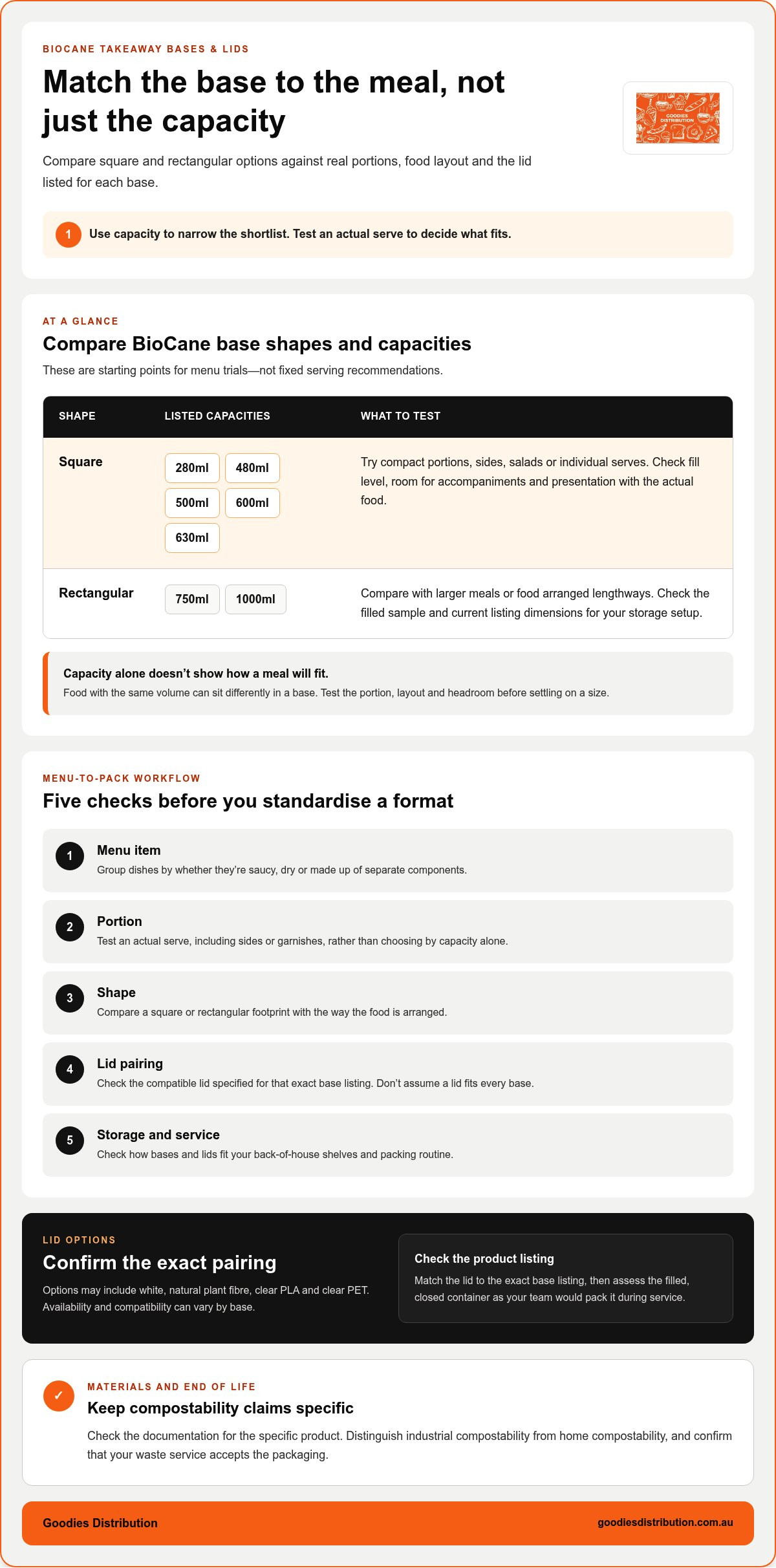
Capacity helps narrow the shortlist, but it can’t tell you exactly how a meal will fit. The listed BioCane options include five square capacities and two rectangular capacities. Compare by shape, then trial your usual portion in a sample before deciding which sizes work for your menu.
| Shape | Listed capacities | Useful starting point |
|---|---|---|
| Square | 280ml, 480ml, 500ml, 600ml and 630ml | Assess smaller portions, sides, salads or individual serves against the actual food and fill level. |
| Rectangular | 750ml and 1000ml | Compare with larger meals or food arranged lengthways, checking the layout with a filled sample. |
Choose a base by portion and food layout, not capacity alone. Two dishes with the same volume can sit very differently: one may be compact, while another spreads out or needs room for toppings. Product dimensions can help you compare fit and storage, but use the current product information rather than inferring dimensions from capacity.
When square takeaway bases may suit
The 280ml and 480ml square listings are smaller-capacity options to test with compact menu portions. The 500ml, 600ml and 630ml sizes offer further comparisons for sides, salads or individual serves. Treat these as trial categories, not fixed serving recommendations. Fill a sample as your team would during service, then check headroom, presentation and whether staff can portion it consistently.
Test the same recipe and serving measure in nearby capacities. For example, if a salad needs room for a garnish, check whether it fits without pressing the contents against the lid. Record the portion and selected size so staff can repeat the pack consistently. A menu-by-menu trial can help distinguish a genuine size need from choosing a larger base simply for extra room.
When rectangular bases may suit
The listed 750ml and 1000ml rectangular bases are options to compare with larger meals. Their shape may suit food arranged lengthways or meals whose components need a considered layout. Don’t assume they have compartments or that the shape will improve presentation or transport. Check the current listing dimensions before planning shelf storage or assessing fit in your packing setup.
Shape and capacity are practical selection tools; material and end-of-life claims need a separate review. The Ellen MacArthur Foundation’s perspective on compostable packaging in a circular economy considers compostability in the wider context of how packaging is used and managed. For your product claims, rely on documentation for the specific item and consider the available waste pathway. Once you’ve shortlisted by portion and layout, compare the BioCane base listings to plan your next menu test.
Which BioCane lid should you pair with each takeaway base?
A lid needs to match the exact base, not just look close in size. The BioCane range includes white and natural plant fibre lids, as well as clear PLA and clear PET options. Compatibility can differ between listings, so don’t assume one lid fits every base or that lids for similar capacities are interchangeable.
Use the product listing to confirm the pairing. This table shows how to approach the listed capacity groups without assigning a lid material or fit that hasn’t been verified for the individual product.
| Base capacity | How to identify its compatible lid | Material or appearance options to check |
|---|---|---|
| 280ml, 480ml and 630ml | Use the lid named as compatible on the exact base listing. | Check whether that listing specifies white or natural plant fibre, clear PLA or clear PET. |
| 500ml and 600ml | Check the stated pairing for each capacity separately; don’t assume the lid group above applies. | Use only the material and colour stated for its compatible lid. |
| Other base capacities | Match each base to the compatibility details shown in its current product information. | Confirm the material and colour for that specific pairing. |
Match the lid to the exact base listing
Pay particular attention to the distinction between lids listed for 280ml, 480ml and 630ml bases and those listed for 500ml and 600ml bases. Similar-looking capacities don’t establish a fit. Before adding a pairing to your regular stock, confirm that the current product information identifies the base and lid together. Then test the lid on a filled base and check how it sits during your normal packing routine.
Keep product names or listing details together in your ordering notes. This helps staff replenish the right lid for each base and reduces mix-ups at the packing bench. When you trial a different base, repeat the fit check rather than carrying over an assumption from another size.
Compare lid materials and customer presentation
Plant fibre, PLA and PET are distinct material options, not interchangeable descriptions. A clear lid can make food visible to customers and staff, which may help with order identification and presentation. Transparency alone doesn’t establish leak resistance or suitability for every dish, so assess the filled, closed pack as your team will handle it.
PLA is a plant-based bioplastic commonly made from renewable starch sources such as corn or sugarcane. That description doesn’t confirm a disposal outcome for every item. Make compostability or certification claims only when documentation for the individual lid supports them, and check the base’s documentation separately. This product-by-product approach helps you choose a lid that suits the base, service routine and information you share with customers.
Plan BioCane takeaway packaging around service, storage and sustainability
A good packaging choice needs to work beyond a menu trial. Build your plan around four checks: test actual portions, confirm the lid pairing, review documentation for product claims, then organise stock around expected use and available storage. This gives your team a clearer basis for ordering and supports consistent packing during busy service.
- Test portions: Prepare typical serves and check how they sit in the selected base.
- Confirm lid fit: Use the exact base-to-lid pairing stated in current product information, then trial it with food inside.
- Review claims: Check documentation for the specific base and lid before describing materials or compostability to customers.
- Plan stock: Review the carton quantity on each current product listing and compare it with menu demand, storage space and how quickly your venue uses each size.
Carton quantities are useful for stock planning when considered alongside your service pattern. Track which sizes your team reaches for and avoid ordering a mix that takes up more room than your shelves allow. Store cartons in an organised area, away from high humidity and moisture, and rotate stock so older cartons are used first. Keep each base and its matching lid identifiable, using shelf positions or clear product labels.
Avoid common ordering and service mistakes
Capacity numbers don’t show how a real portion will look or pack, so test menu samples before settling on a size. Don’t mix lids between capacities just because they appear similar; confirm each pairing against its listing. Make selected bases and lids easy to distinguish at the packing bench. Clear stock locations and consistent labels help staff choose the right combination when orders are moving quickly.
Review your shortlist when menu portions or service routines change. A seasonal dish, new side or different packing sequence can affect which formats your team uses most. Keep a simple record of the selected base, compatible lid and product listing. Checking carton quantities against actual use can also help you avoid excess stock.
Use environmental claims accurately
Certification marks such as seedling logos indicate that a product meets specified compostability requirements. Check the logo and supporting documentation for each item before making a claim. Name standards such as AS 4736, AS 5810 or EN 13432 only when the product’s documentation supports it. A verified product attribute doesn’t automatically apply to every item in a range.
Industrial compostability and home compostability are different: AS 4736 relates to industrial or commercial composting, while AS 5810 relates to home compostability. One certification doesn’t imply the other. Disposal also depends on an appropriate collection or composting pathway, so confirm whether your waste service accepts the packaging before giving customers disposal guidance. For product-by-product planning, shop BioCane takeaway bases and lids and review the current listing details.
Find the right BioCane bases and lids with Goodies Distribution
Once you’ve matched a shape and capacity to your menu, narrow your options to specific product listings. Goodies Distribution is an official wholesale distributor, with a Sydney-based warehouse and Sydney-wide delivery for hospitality businesses. Our BioCane bases and lid options give Sydney cafés, restaurants and takeaway operators formats to assess against their service needs. Use the shortlist below as a starting point, then make your selection using product details and menu tests.
A quick shortlist for common menu needs
- 280ml and 480ml square bases: Compare these smaller capacities with actual serves of sides or compact menu items. Check how the portion sits and whether there’s room for garnish.
- 500ml, 600ml and 630ml square bases: Trial these against portions that need more capacity, such as an individual serve or a fuller side. Capacity alone won’t tell you how the meal will fit.
- 750ml and 1000ml rectangular bases: Compare these with larger meals or dishes arranged lengthways. Consider how the food sits and how your team will pack it for takeaway.
White and natural options appear on relevant product listings. Check the specific listing for the base you’re considering rather than assuming both colours apply to every capacity. Then identify the lid stated as compatible with that exact base. A clear lid may suit a service where customers or staff benefit from seeing the food, while a plant fibre option offers a different presentation. Choose using listed product details and your operational needs.
Ready to compare the current options? Shop BioCane takeaway bases and lids and review the relevant product listings before finalising your pairing.
Browse the collection and finalise your selection
Before placing a wholesale order, check the current capacity, colour, lid compatibility and carton quantity on each listing. Keep a short record of the base and lid selected for each menu item. This helps staff identify the correct pairing and lets your team plan replenishment around actual use, without treating similar-looking sizes or colours as interchangeable.
Goodies Distribution’s hospitality industry experience supports practical stock planning for cafés, restaurants and takeaway venues. For Sydney operators, our local warehouse and Sydney-wide delivery provide a wholesale supply option. Start with the menu items your team serves most, compare the relevant listings and build a packaging selection that fits your portions, presentation and storage routine.
For accurate environmental communication, rely on documentation for each specific product. Don’t extend a compostability or material claim from one base or lid to another. A considered product pairing can support an organised service and help your packaging choices align with the information you share with customers.
Set your takeaway service up for what’s next
Your packaging should support the way your business serves customers today and adapt as your menu evolves. After introducing a new format, gather staff feedback and note where packing slows down or presentation could improve. These day-to-day observations can guide future ordering and help your team keep service consistent.
Use your shortlist as a working reference, not a permanent decision. A change to a dish, serving style or takeaway routine may call for a fresh review of your packaging. Keep product details accessible to the people who order and pack, and base any customer-facing claims on documentation for the specific item. This practical approach helps make biocane rectangular and square takeaway bases and lids part of a thoughtful, adaptable service plan.
Ready to explore options for your menu? Shop BioCane rectangular and square takeaway bases and lids and choose a packaging setup that works for your team and your customers.
Frequently Asked Questions
Are BioCane rectangular and square bases suitable for hot food?
Suitability for hot food depends on the particular base and its stated conditions of use. Check the current product information before packing freshly cooked dishes, especially if food will remain inside the container before collection. In your kitchen trial, follow the handling directions and observe the pack during normal service. Don’t infer temperature suitability from the BioCane name or the container’s shape.
Can I use one lid across different BioCane base capacities?
No. Don’t treat one lid as a universal fit across capacities. Keep lid stock identifiable by product name or listing details so staff can select the right item during service. If a lid is moved to another shelf or storage area, retain its label. This simple stockroom habit helps prevent an untested pairing from becoming the default at the packing bench.
What is the difference between plant fibre, PLA and PET lids?
They’re different material categories, so don’t treat their names as interchangeable when ordering or describing packaging. Record the lid material alongside the product reference and keep customer-facing disposal instructions specific to that lid. A clear lid can make its contents visible, but the material name alone doesn’t tell customers how to dispose of it or establish a compostability claim.
Are BioCane takeaway bases industrially compostable or home compostable?
The answer depends on the certification documented for the specific base. Keep the relevant product documentation with your purchasing records so staff can respond accurately if customers ask about disposal. Make sure menu notes, signs or packaging guidance use the same claim as the supporting documentation. Don’t extend a certification from one product to another simply because both are part of the BioCane range.
How do I choose between a 500ml, 600ml and 630ml base?
Consider how consistently each size supports your portion standards across the menu. If two bases both suit a dish, choose the one your team can use reliably for that serving and record it in the recipe or packing guide. This helps keep presentation consistent across shifts and clarifies which base to use for similar dishes with different portion specifications.
Can takeaway bases go in the microwave, oven or freezer?
Only use a base in a microwave, oven or freezer if its product information expressly permits that use. Approval for one appliance or storage condition doesn’t automatically apply to another. If your workflow includes reheating or freezing, check the instructions for the exact item before adopting it, then make the permitted use clear to kitchen staff. Don’t rely on assumptions based on the base’s material or appearance.
Does Goodies Distribution deliver BioCane takeaway packaging across Sydney?
Yes. Goodies Distribution offers Sydney-wide delivery for BioCane takeaway packaging. Keep a reference of the specific products your venue uses and check current carton quantities when planning replenishment. This helps your team prepare an order that reflects its menu and stock needs.