


A six-oyster tray gives raw bars and caterers a clear serving format. Compostable oyster trays made from plant fibre offer an alternative for presenting oysters, sauces and garnishes. Their suitability depends on the service task and the tray’s stated composting pathway.
Choosing compostable oyster trays involves more than checking the material label. Consider whether the tray suits a chilled serve, how it will travel from preparation to guests, and whether your venue has a suitable disposal route. These practical details help food businesses choose packaging that works in daily service.
This guide explains how compostable oyster trays can work for catering and raw bars, including their materials, food-use considerations and end-of-life options. You’ll also learn how to assess compostability claims and make packaging part of a considered seafood presentation.
Key Takeaways
- Match the tray format to your serving style, from individual raw bar portions to catered seafood presentations.
- Consider how sauces, garnishes and moisture affect handling and presentation during service.
- Compare the material and compostability certification, then align disposal with the facilities available to your customers or venue.
- Use plant-fibre packaging choices to support a considered seafood presentation while keeping practical service needs in view.
The environmental case for sustainable seafood packaging
Compostable oyster trays are one option for seafood service, alongside paper and reusable formats. Each has different material and recovery requirements. For Sydney caterers and raw bars, the environmental case depends on how the packaging is used and what happens after service.
Environmental benefits of sustainable seafood packaging
Sustainable seafood packaging considers both a tray’s material and its end-of-life route. In Australia, millions of single-use trays are used to sell oysters. For seafood businesses, packaging choices need to account for presentation as well as the practical waste systems available to staff and customers.
Compostable oyster trays may suit a venue with a composting pathway that accepts the product. Paper packaging has different recovery considerations, including whether its coatings affect recycling suitability. Reusable trays can reduce reliance on disposable formats when a business can collect, wash and return them between services. The right option depends on the service model, back-of-house space and how packaging moves through the venue.
Comparing packaging alternatives
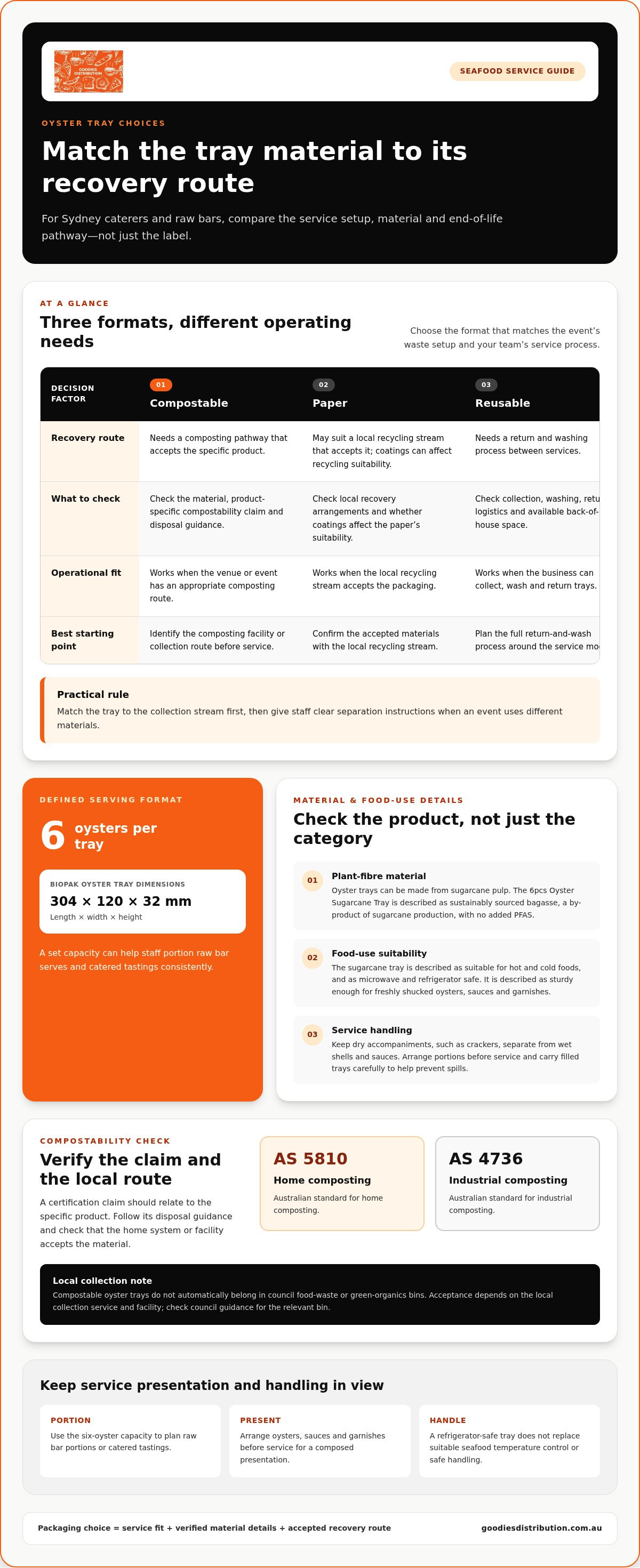
Compostable, paper and reusable trays each suit different operating arrangements. Compostable formats make sense when an appropriate disposal route is available. Paper may fit where the local recycling stream accepts it. Reusables require a return and washing process that works for the business. The best choice depends on actual service and recovery arrangements.
For catering teams, start by reviewing the event’s waste setup. Identify the packaging streams that will be collected, then match the tray to an accepted route. Give staff clear separation instructions, especially when an event uses different materials. Compostable oyster trays can be a considered choice when the material, intended use and disposal pathway align. Paper or reusable formats may suit other service arrangements. Planning ahead helps businesses choose practically, without relying on material labels alone.
Compostable oyster plates for catering and raw bars
For raw bars and caterers, tray choice affects portioning, presentation and end-of-service handling. Check the product’s stated material and compostability certification against how your venue serves oysters.
Tray materials and construction
Plant-fibre oyster trays can be made from sugarcane pulp, a by-product of sugar processing. The material description tells food businesses what a tray is made from, while product-specific information explains its compostability claims. Don’t assume that all fibre trays have the same composition, certification or disposal instructions.
Available sizes and capacities
The BioPak oyster tray holds 6 oysters and measures 304 mm × 120 mm × 32 mm high. Its defined capacity can help staff portion serves consistently for a raw bar or catered tasting. Before service, consider how the tray will fit into your preparation and plating routine.
Catering and raw bar uses
A six-oyster tray provides a defined serving format for events where staff need to prepare portions efficiently. It can hold freshly shucked oysters with sauces and garnishes, creating a composed raw bar presentation. For catering, plan how trays will be arranged and carried to keep service orderly.
Composting requirements
Some oyster trays are described as home compostable and suitable for commercial composting. A plant-fibre tray may be suitable for home composting, but check the specific product’s disposal guidance. Australian compostability standards include AS 5810 for home composting and AS 4736 for industrial composting; a certification claim should relate to the specific product.
A tray certified for home composting may break down in a suitable home composting environment. Commercial composting is another route for products designed for that process. In either case, the home system or facility needs to accept the material, so follow the tray’s disposal guidance.
Hot, cold, wet and dry product suitability
Seafood service involves chilled storage, moisture and careful presentation. Compostable oyster trays should suit the intended food use, but packaging doesn’t replace temperature control or safe handling. The sugarcane tray described here is suitable for hot and cold foods, and is microwave and refrigerator safe.
Oysters are often served with sauces and garnishes, so moisture is part of the service. The tray is described as sturdy enough to hold freshly shucked oysters, sauces and garnishes. For a raw bar, arrange each portion before service and carry filled trays carefully to help prevent spills.
Keep dry accompaniments, such as crackers, separate from wet shells and sauces to help preserve their texture. At catered events, prepare serves close to service time and plan how staff will carry them from the kitchen to guests. These steps help compostable oyster trays support a tidy presentation.
Seafood is highly temperature-sensitive and perishes quickly after harvest. A refrigerator-safe tray can support chilled storage, but operators still need to manage seafood appropriately during preparation and service. Compostable oyster trays do not determine safe storage conditions.
Compostable oyster trays don’t automatically belong in Australian council food-waste or green-organics bins. Acceptance depends on the local collection service and facility, so follow the council’s guidance on accepted materials for the relevant bin. The U.S. Environmental Protection Agency notes that composting facilities vary in the organic materials they accept.
Material and sourcing details can be considered alongside temperature and moisture suitability. The 6pcs Oyster Sugarcane Tray is made from sustainably sourced bagasse, a by-product of sugarcane production, and has no added PFAS. These details describe the tray’s material and composition; they do not change the need to handle oysters carefully or confirm acceptance in a local composting collection.
Seafood sourcing can be considered separately from the tray. Blue Harvest identifies Best Aquaculture Practices (BAP) as the accreditation program for aquaculture products. Oyster farming is a passive form of food production: oysters consume naturally occurring food and do not require artificial feed. This context can inform consideration of aquaculture and packaging together, while product suitability remains grounded in intended service conditions and local waste guidance.
What are compostable oyster trays made from?
Some oyster trays use bagasse, the fibrous material left after sugarcane processing. Quality plant-fibre oyster trays are made from sugarcane pulp, a by-product of the sugar refining industry. This gives food businesses a clear material description to consider alongside the tray’s function. Naming the material can also help customers understand packaging choices.
Bagasse comes from sugarcane already processed for sugar, rather than from oysters. To make a tray, plant fibres are formed into a shaped container. Both the material and finished construction matter: the tray must hold its intended serve and suit its stated disposal route. Don’t assume every plant-fibre product has the same composition or compostability claims.
Specific product details can also distinguish one tray from another. The 6pcs Oyster Sugarcane Tray is described as having no added PFAS. That is a product-specific statement, not a claim about every sugarcane or bagasse tray. For purchasing decisions, read the product information for the exact material and any stated additives rather than relying on broad terms such as “natural”.
A material name alone doesn’t explain how a tray should be discarded. A sugarcane-pulp tray may have disposal instructions and certification specific to its design. Keep packaging information available to staff so they can sort trays correctly after service. This helps prevent fibre packaging from being treated as interchangeable with recyclable paper or other compostable items.
For catering teams comparing plant-fibre options, start with the material, intended food use and disposal guidance. Then match those details to your service and waste arrangements. Explore bagasse containers, trays and bowls for other food-service packaging formats from Goodies Distribution.
At the Narooma Oyster Festival, Australia’s Oyster Coast switched from compostable serving trays to clear recyclable trays because compostable bins were unavailable. The example shows why disposal options matter alongside material: a compostable claim doesn’t determine what collection services are available at a particular event. Before service, check which bins will be provided and choose packaging to match the planned disposal route. If the intended collection stream is unavailable, consider another packaging option, as Australia’s Oyster Coast did.
Goodies Distribution: Custom Branding Services
Goodies Distribution offers Custom Branding Services for food businesses that want packaging to contribute to the customer experience. If you’re refining how your brand appears across catering or takeaway service, branded packaging can create a consistent look from order handover to table.
Custom branding can complement packaging such as takeaway containers and paper bags, while biodegradable cutlery supports the practical needs of takeaway meals. Consider how your logo and brand colours will appear on each format, and choose items suited to how customers receive and enjoy your food.
For Sydney hospitality businesses, Goodies Distribution can bring packaging and brand presentation together. Contact Goodies Distribution to discuss your packaging needs.
Shape a more considered service experience
Packaging sets the tone before the first oyster is tasted. Treat it as part of the service design: choose formats that suit how guests order, how staff serve and how your business wants to present itself. Compostable oyster trays can form part of a wider packaging approach rather than a stand-alone decision.
Goodies Distribution offers BioPak Compostable Cups, Takeaway Containers and Custom Branding Services, helping food businesses coordinate practical packaging with their brand presentation. A consistent look across dine-in events and takeaway orders can make the customer experience feel thoughtfully connected.
As you plan your next packaging update, focus on what your team can use confidently and customers can understand. Contact Goodies Distribution to discuss packaging options for your business. Small, considered choices can help shape a service that feels distinctive and responsible.
Frequently Asked Questions
Are compostable oyster trays safe for storing and transporting fresh oysters?
Oyster trays designed for serving can hold freshly shucked oysters, but they aren’t a substitute for suitable chilled transport. For an event in Sydney, keep oysters under appropriate temperature control during transit and service, and use the tray for its intended presentation role. Plan how filled trays will be carried and protected from movement before guests are served.
What are the environmental benefits and limitations of compostable oyster trays?
A composting pathway is available only when a suitable facility accepts the specific tray, and compostable doesn’t mean recyclable. The BioPak plant-fibre oyster tray, for example, is not recyclable and shouldn’t go in paper recycling. For catering teams, sorting packaging by its intended recovery route helps prevent compostable items from entering the wrong stream.