

What if the very cold paper biocups and lids you're using to "go green" are about to become a legal liability under Australia's 2026 packaging mandates? It's a challenging time to run a food business, especially when you're caught between shifting state regulations and the practical frustration of soggy containers. You've likely felt the sting of a customer complaint because a lid popped off during delivery or the paper lost its structural integrity before the ice had even melted. We know you want to protect the planet and move away from microplastics, but you shouldn't have to sacrifice a professional presentation to do it.
This expert guide helps you master the transition to sustainable service by selecting the right products for your specific menu. We'll show you how to achieve a spill-free delivery experience while ensuring your business remains fully compliant with the latest environmental standards, including South Australia's 2026 labelling mandate. We'll walk through the technical differences between PLA and aqueous coatings, helping you find the perfect material synergy for a brand that customers genuinely appreciate.
Key Takeaways
- Understand the 2026 Australian single-use plastic bans and how to keep your venue compliant with mandatory labelling and material standards.
- Learn the technical differences between PLA and aqueous coatings to select the best cold paper biocups and lids that won't go soggy or leak during delivery.
- Master the 80mm and 90mm diameter sizing system to ensure a universal lid fit across your entire range of beverage sizes.
- Match your packaging durability to your specific drink types, ensuring thick shakes and icy coffees maintain their professional presentation.
- Discover how Sydney-local expertise and custom branding can help you organise bespoke, eco-friendly packaging that resonates with your local community.
Why Your Venue Needs to Ditch Plastic Cold Cups in 2026
The year 2026 marks a pivotal shift for the Australian hospitality industry. It's no longer just about making a "green choice"; it's about staying ahead of a mandatory regulatory framework that's quickly becoming the law of the land. With the Australian Packaging Covenant Organisation (APCO) moving to enforceable targets, businesses must be more transparent about their waste. Even for smaller Sydney cafes, the cultural tide has turned. Customers now expect their iced lattes and smoothies served in vessels that won't outlive them. Switching to cold paper biocups and lids isn't just a compliance tick-box. It's a bold statement that your brand values the health of our local beaches as much as the quality of your brew.
The Problem with Traditional Plastic
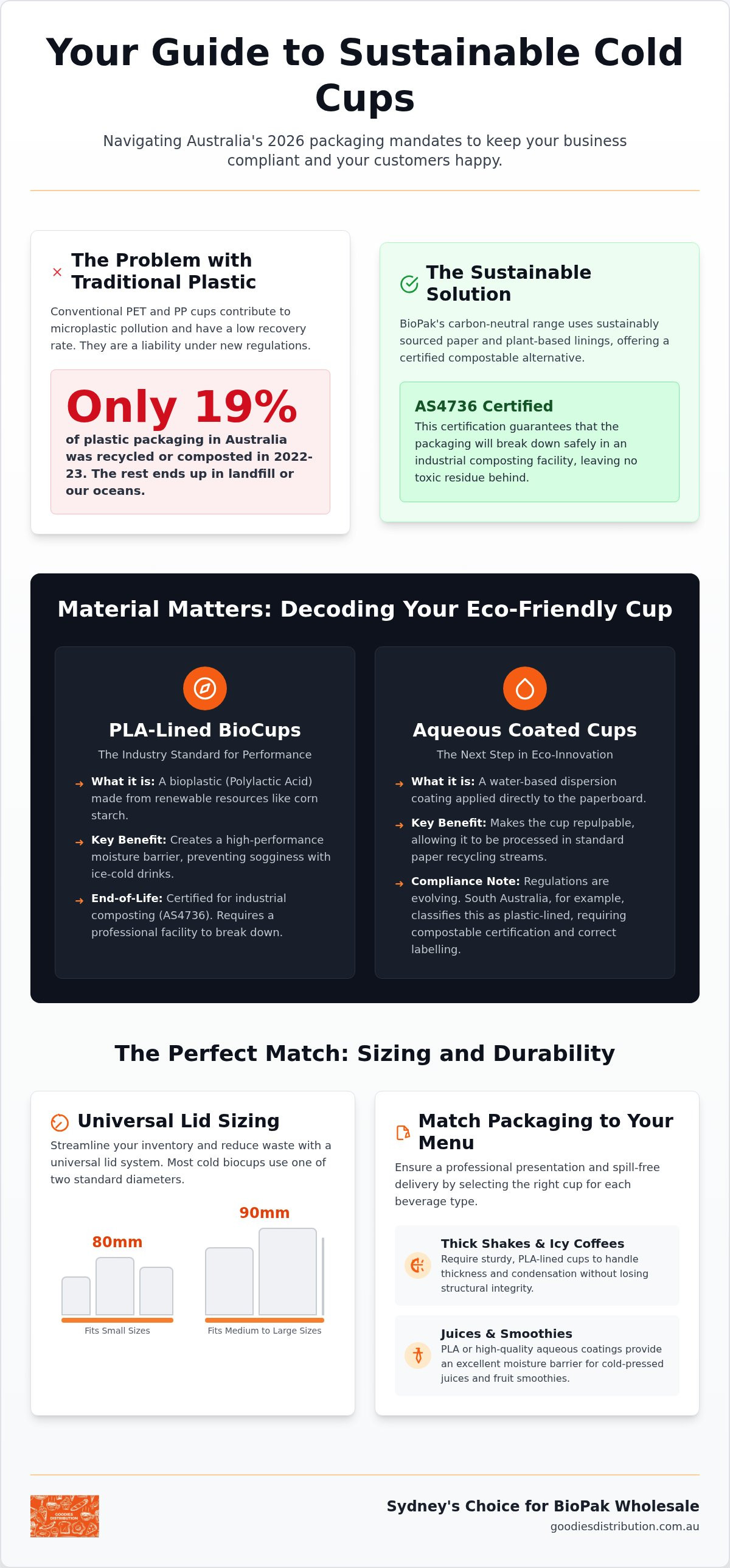
Traditional PET and PP cups have long been the industry standard, yet they carry a heavy ecological price. These materials contribute significantly to the microplastic crisis, breaking down into tiny particles that infiltrate our oceans and food chains. In Australia, the recovery rate for plastic packaging remains a significant challenge. Data from 2022-23 shows that only 19% of plastic packaging was actually recycled or composted. Contamination from milk or fruit residue often makes these cups unrecyclable, meaning they head straight to landfill. You've likely seen products labelled "biodegradable," but this term is often misleading. Without a specific certification, these items might simply break into smaller plastic pieces rather than returning to the earth as organic matter.
The BioPak Solution
As a leader in the sustainable space, BioPak offers a clear path forward with their carbon-neutral range. These cups are crafted from sustainably sourced paper and lined with Polylactic acid (PLA), a plant-based bioplastic derived from renewable resources like corn starch. This material provides the essential moisture barrier needed for chilled drinks without the long-term environmental waste of oil-based plastics. When you choose cold paper biocups and lids, you're investing in products that meet rigorous Australian standards. Look for the AS4736 certification for industrial composting. This isn't just a technical code; it's your guarantee that the packaging will break down safely, leaving no toxic residues behind. It's a practical, reliable way to align your business with the health of the wider world while delivering a premium experience to your customers.
Understanding the Materials: PLA, Aqueous, and Plant Fibre
Choosing the right materials for your beverage service isn't just about aesthetics. It's about understanding the science that keeps a drink cold and a cup sturdy. While traditional takeaway cups rely on petroleum-based linings, modern cold paper biocups and lids use plant-derived alternatives that align with current compostable plastic regulations. The most common materials you'll encounter today are PLA and the increasingly popular aqueous coatings. Both offer unique benefits for the environment and the end-user experience, but they function in slightly different ways.
PLA-Lined BioCups: The Industry Standard
PLA, or Polylactic Acid, is a bioplastic typically fermented from renewable resources like corn starch. It acts as a high-performance moisture barrier, ensuring your cup doesn't lose its shape when filled with ice-cold beverages. This is particularly vital during high-humidity Sydney summers, where condensation can quickly turn a poorly made cup into a soggy mess. It's important to remember that PLA requires specific conditions to break down. These cups are certified for industrial composting (AS4736), meaning they need the heat and microbial activity of a professional facility to return to the earth. They provide the familiar performance of plastic without the long-term environmental footprint.
Aqueous coatings represent the next step in this material evolution. These water-based dispersion coatings are applied directly to the paperboard, making the cup repulpable and often easier to process in standard paper recycling streams. However, it's essential to stay informed about local changes. For instance, South Australia classifies aqueous coatings as plastic-lined, meaning they must be certified compostable and labelled correctly to remain exempt from single-use plastic bans. This "future-proof" solution is gaining traction for its versatility and reduced material weight.
The Evolution of Cold Paper Lids
The lid is where your customer interacts most closely with your brand, and the choice of material significantly impacts the drinking experience. You generally have two paths: CPLA or plant fibre. CPLA (crystallised PLA) feels and looks like traditional plastic, offering a familiar "snap" fit and a smooth mouthfeel. On the other hand, plant fibre lids made from reclaimed sugarcane pulp (bagasse) provide a textured, organic feel. Many eco-conscious brands prefer fibre because it's often suitable for home composting (AS5810) and removes the "plastic" look entirely, reinforcing your commitment to sustainability with every sip.
One final rule for your team: cold cups are strictly for cold use. The plant-based linings have a lower melting point than traditional plastic, so using them for hot coffee will cause the lining to fail and the cup to soften. If you're looking to upgrade your venue's setup with reliable, sustainable options, you can explore our full range of BioPak solutions to find the right fit for your menu.
The Perfect Match: Sizing Your BioCups and Lids
Understanding the "Series" system is the secret to a smooth, efficient beverage service. As the trend of bioplastics in packaging continues to grow, manufacturers have worked hard to standardise dimensions. This makes it much easier for you to manage your stock levels. Most cold paper biocups and lids are designed around a specific rim diameter, usually 90mm for the majority of the commercial range. By selecting cups that share a universal lid size, you can significantly reduce the amount of storage space needed in your back-of-house area while speeding up service during the morning rush.
A secure "snap-fit" is non-negotiable, especially for Sydney businesses relying on third-party delivery apps. There is nothing worse than a lid popping off in a courier's bag or leaking over a customer's car seat. A high-quality BioCup ensures a tight, audible seal between the paper rim and the compostable lid. This provides the structural integrity needed for a spill-free journey, ensuring your drinks arrive exactly as they left the counter.
BioCup Size Guide
Choosing the right volume for your menu helps you manage portion control and customer satisfaction. While some venues prefer a simplified small and large offering, others find a tiered system works best for varied drink types.
- 8oz (240ml) and 12oz (355ml): These are the "go-to" sizes for water, small juices, or kids' treats. They're compact and easy for smaller hands to hold.
- 16oz (470ml) and 20oz (600ml): This is the sweet spot for iced lattes, protein shakes, and fruit smoothies. These sizes typically share the 90mm lid diameter.
- 22oz (650ml): The jumbo choice, perfect for thickshakes or large frozen drinks where volume is the priority for the customer.
Lid Styles: Flat vs. Dome
The lid style you choose should reflect the "theatre" of your drink. Flat lids are the practical choice for standard soft drinks and iced teas. They're easy to stack in a carry tray and offer the best stability for delivery. If your menu features whipped cream, chocolate drizzles, or fruit garnishes that sit above the rim, dome lids are essential. They provide the extra clearance needed to keep your presentation intact until the first sip. For any straw-based service, ensure you're using "X-Slot" lids. These are specifically designed to hold a paper or bamboo straw firmly in place, preventing it from wobbling or causing unnecessary leaks around the opening.
Choosing for Your Menu: Shakes, Juices, and Iced Coffees
Not all cold drinks behave the same way in a takeaway setting. A light, watery juice has very different structural requirements than a heavy, dairy-based thickshake. When you select cold paper biocups and lids, you're matching the structural integrity of the paper to the weight and viscosity of your menu items. For high-viscosity drinks, the wall thickness of the cup is your best friend. It prevents that dreaded "squish" when a customer picks up a full drink, ensuring the experience remains premium from the first sip to the last. It's these small details that build trust with your regulars.
Condensation management is another area where paper often outperforms traditional plastic. Sydney's humidity can be brutal, causing plastic cups to "sweat" excessively. High-quality BioCups provide a natural layer of insulation that keeps the exterior drier and the cup firmer for longer. This is a massive win for customer comfort and brand perception. Speaking of brand, your packaging is essentially a walking billboard. We love helping local businesses move beyond plain white to custom branded designs that spark conversations in the street, turning every takeaway order into a marketing opportunity.
Smoothies and Thickshakes
Thick textures require a wider 90mm diameter to allow for easier drinking and better stability. If your signature smoothie features a mountain of whipped cream or a drizzle of dessert sauce, dome lids are a necessity. They provide the extra clearance needed for that aesthetic "over-fill" without creating a sticky mess for your staff or customers. We always recommend pairing these with jumbo compostable straws to ensure the drinking experience is effortless. Avoiding the common mistake of over-filling is key; leave a small 5mm gap at the top to ensure the lid-seat doesn't fail due to moisture on the rim.
Iced Coffee and Cold Brew
Iced coffee is a visual experience. Whether you choose the iconic BioPak leaf-print or a bespoke logo, the presentation of your cold brew says a lot about your craft. Crucially, the plant-based lining in these cups ensures there's no "cardboard taste" to interfere with the delicate notes of your beans. It's about maintaining purity while being kind to the planet. For a deeper dive into the technical specs of these materials, take a look at our BioPak Sustainable Packaging: Australian Wholesale Guide. If you're ready to make the switch, you can order your wholesale supplies today and start serving with confidence.
Why Goodies Distribution is Sydney’s Choice for BioPak Wholesale
Transitioning to sustainable service is far easier when you have a partner who understands the local landscape. For 40 years, we've supported the Australian food-service industry, evolving from traditional supplies to becoming a specialist official BioPak distributor. Being Sydney-local means we aren't just a voice on the phone; we're a part of your community. Our Sydney-based warehouse ensures fast delivery and reliable support, so you never have to worry about running out of cold paper biocups and lids during a mid-summer heatwave. We're here to bridge the gap between your commercial requirements and environmental stewardship.
Reliability is the backbone of any successful hospitality venue. When you choose a wholesale partner with deep roots in the industry, you're investing in a supply chain that won't let you down. We pride ourselves on being a visionary mentor for businesses, providing the technical expertise needed to navigate shifting regulations while offering the warmth and friendliness of a local partner. It's about more than just a transaction; it's about a shared commitment to a healthier planet and a more successful business for you.
Personalise Your Packaging
One of the most effective ways to build a loyal following is through professional, custom-branded packaging. We specialise in helping you organise bespoke logo prints that turn every takeaway order into a statement of quality. Our process is designed to be accessible, offering low minimum order quantities that allow growing cafes and boutique juice bars to compete with larger chains. Custom packaging does more than just look good; it increases customer loyalty by showing that you care about every detail of the guest experience, from the first glance to the final sip.
Order Your Cold Cup Supplies Today
Managing a sustainable inventory shouldn't be a complex chore. We've streamlined our online platform to make wholesale ordering simple and efficient for Sydney venues. Whether you need the standard 16oz leaf-print or the jumbo 22oz for thickshakes, our range of 43+ cold paper products is ready to ship from our local centre. We're committed to helping you scale sustainably without the stress of fragmented supply chains or long lead times. You can Shop the Cold Paper BioCups and Lids Collection right now to secure your stock. Join the growing number of local businesses making a positive impact on the planet while delivering a superior experience to their customers.
Elevate Your Service with Sustainable Solutions
Transitioning to plant-based packaging is a powerful way to align your business with the expectations of modern Sydney customers. We've explored how matching the right material, whether it's PLA or an aqueous coating, ensures your drinks stay cold without compromising the planet. By mastering the "Series" sizing system, you'll streamline your inventory and guarantee a spill-free experience for every delivery. Selecting high-quality cold paper biocups and lids is a significant step toward future-proofing your venue against the 2026 plastic bans.
As an official BioPak distributor with 40 years of industry experience, Goodies Distribution provides the Sydney-based local support you need to make this shift seamless. Our carbon neutral products help you meet environmental requirements with confidence and style. We're here to help you grow your brand while protecting the local beaches we all love. Ready to make the switch? You can Shop the Cold Paper BioCups and Lids Collection today and lead the way in sustainable hospitality. Let's create a cleaner, brighter future together.
Frequently Asked Questions
Are paper cold cups better for the environment than plastic?
Paper cold cups are a superior choice for the environment because they utilise renewable plant-based materials instead of finite fossil fuels. Traditional PET or PP plastic cups can take centuries to break down, whereas BioPak’s carbon neutral range is designed to be composted. This shift significantly reduces the volume of persistent microplastics in our ecosystems. Choosing these products helps your Sydney business meet national packaging targets while reducing your overall carbon footprint.
Do BioPak paper lids get soggy when drinking?
BioPak paper and plant fibre lids are specifically engineered to maintain their structural integrity even when exposed to moisture. Unlike inferior paper alternatives, these lids use high-quality materials that resist softening during use. Whether you choose CPLA or bagasse-based plant fibre, the design ensures a firm fit and a comfortable mouthfeel. Your customers won't experience the soggy texture often associated with older paper technology, provided the drink remains at a cold temperature.
Which lid fits the 16oz BioCup?
The standard 16oz (470ml) BioCup uses a 90mm diameter lid, which is part of a universal sizing system. This 90mm "Series" also fits 12oz, 20oz, and 22oz cups, allowing you to simplify your inventory management in a busy Sydney cafe. You can choose between flat, dome, or straw-slot designs within this range. Ensuring you have the correct 90mm cold paper biocups and lids in stock prevents service delays and ensures a secure seal.
Can I use these cold paper cups for hot coffee?
No, you should never use these cold cups for hot beverages like coffee or tea. The plant-based PLA lining used in cold cups has a lower melting point than the linings found in dedicated hot cups. If exposed to high temperatures, the lining will fail, causing the cup to soften and potentially leak. For hot drinks, always select BioPak’s specific hot cup range, which is designed to handle temperatures up to 100 degrees Celsius safely.
Are BioPak cups and lids recyclable in Australia?
Most compostable cups are not suitable for standard kerbside paper recycling bins in Australia due to their moisture-barrier linings. While aqueous-coated cups are technically repulpable, the current Australian infrastructure prioritises composting for these items. To ensure the best environmental outcome, these products should be disposed of in a dedicated organics bin where industrial composting is available. This prevents the contamination of traditional paper recycling streams and ensures the material returns to the earth as compost.
What is the difference between industrial and home compostable?
Industrial composting (AS4736) requires specific temperatures and microbial activity only found in commercial facilities to break down bioplastics like PLA. In contrast, home compostable products (AS5810) are designed to biodegrade in a standard backyard compost bin at lower temperatures. While most cold paper biocups and lids are certified for industrial facilities, many plant fibre lids and bagasse products are now suitable for home composting, offering even greater flexibility for your eco-conscious customers.
How do I store wholesale paper cups to prevent damage?
To protect your wholesale stock, store paper cups in a cool, dry place away from direct sunlight and moisture. Extreme heat can affect the plant-based linings, while humidity may compromise the structural integrity of the paperboard over time. Keeping the cups in their original sleeves until needed prevents dust accumulation and ensures they remain hygienic. At our Sydney warehouse, we maintain strict climate controls to ensure every order arrives in perfect condition for your venue.
Does Goodies Distribution offer custom printing on cold cups?
Yes, Goodies Distribution specialises in professional custom branding services for the entire BioPak range. We help local businesses organise bespoke logo prints with low minimum order quantities, making it easier for growing cafes and boutique juice bars to personalise their packaging. Our team guides you through the design process to ensure your brand stands out on every cup. This service is an excellent way to increase customer loyalty and turn your takeaway drinks into a mobile marketing tool.