


The container that looks greener on the label may not suit your menu or waste stream. Choosing between PLA vs bagasse containers means looking beyond material names: the right option needs to suit the food you serve, perform during service and have a realistic end-of-life pathway.
If you’re weighing up packaging for hot, cold, wet or oily dishes, it helps to know how these materials differ. PLA is a plant-based bioplastic, while bagasse is made from sugarcane fibre. Neither material name alone tells you how a specific container will perform. Product specifications and certification matter.
This guide compares PLA and bagasse for practical food-service needs, explains what compostability claims can and can’t tell you, and helps you match packaging to your menu and operations. Certification to standards such as AS 4736 or AS 5810 does not guarantee a container will be accepted in your local collection. For Sydney cafes, restaurants and takeaway venues, a responsible choice considers presentation, service performance and the disposal options available to your business.
Key Takeaways
- Compare PLA vs bagasse containers by the exact product’s material, format and verified specifications, not by material name alone.
- Match container performance to your menu and service style, considering how food is packed, handled and presented.
- Check certification for the specific item and confirm your disposal pathway accepts it before making compostability claims.
- Use clear, substantiated packaging information to help customers understand what to do with a container after use.
- Build a practical packaging brief around your menu, service format, disposal options and branding needs.
PLA vs bagasse containers: what is the difference?
For Sydney cafes, restaurants and takeaway businesses, packaging needs to suit both the menu and the way food is served. Material is one part of the decision, but its name alone won’t tell you whether a specific container is right for your use. Compare the item’s composition and stated purpose with your food-service requirements before choosing a format.
PLA is a bioplastic; bagasse is a plant-fibre packaging material. The materials have different origins, but neither description establishes a finished product’s performance or end-of-life claim. Keeping those questions separate makes product comparisons clearer and customer-facing claims more precise.
What is PLA packaging used for?
PLA is a plant-based bioplastic commonly made from renewable starch sources such as corn or sugarcane. It is used in packaging, but the word PLA alone doesn’t tell you whether a finished item is certified compostable. For background on the material, see Polylactic Acid (PLA) on Wikipedia. For a purchasing decision, refer to the product information for the exact item.
PLA packaging comes in different forms, so don’t assume a product suits your cafe’s menu based on its material. Consider a clear or formed container only when its specifications identify that format and support the intended food use. The stated purpose is a more reliable guide than appearance alone.
What are bagasse containers made from?
Bagasse is a fibre material associated with sugarcane processing. It is commonly described as the fibrous residue left after sugarcane is pressed for juice, though the composition of a finished package can vary. Goodies Distribution supplies bagasse containers, trays and bowls wholesale for food-service businesses, including Sydney operators.
The material’s origin doesn’t establish how an item performs or what environmental claims apply to it. Containers, trays and bowls serve different presentation needs, so assess the exact format alongside its product information. Avoid inferring a product’s properties or end-of-life pathway from the word “bagasse” alone.
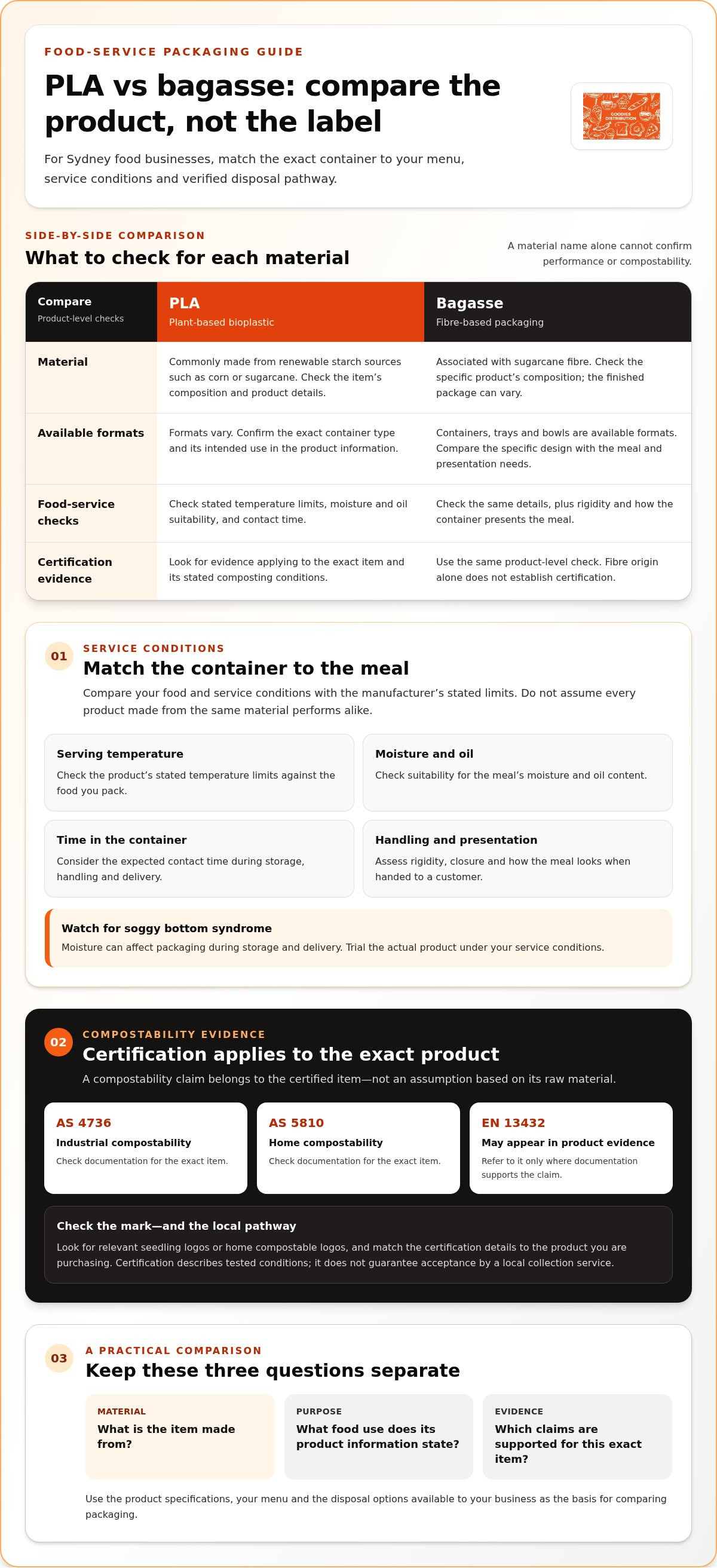
As you compare options for your Sydney venue, keep three questions distinct: What material is the item made from? What purpose and food use does its product information state? What claims are supported for that exact item? This gives your team a clear basis for comparing packaging and avoids relying on assumptions about raw materials.
PLA vs bagasse containers: compare performance and compostability
A useful comparison starts with the meal, not assumptions about either material. Packaging for a hot, sauced takeaway needs different checks from a container for a chilled item or a catered platter. For Sydney food businesses, review the exact product’s specifications alongside its compostability evidence. The material name alone can’t confirm food-service performance or the right end-of-life claim.
| What to compare | PLA | Bagasse |
|---|---|---|
| Material | Plant-based bioplastic; check the item’s composition and product details. | Fibre-based packaging; check the specific product’s composition. |
| Typical format | Formats vary. Confirm the exact container type and intended use. | Containers, trays and bowls are available formats; compare the specific design. |
| Food-service considerations | Check stated temperature limits, moisture and oil suitability, and contact time. | Check the same details, plus the container’s rigidity and how it presents the meal. |
| Certification evidence | Look for certification applying to the exact item and its stated composting conditions. | Use the same product-level check. Fibre origin alone doesn’t establish certification. |
How do PLA and bagasse differ during food service?
Compare the serving temperature, food moisture, oil content and expected time in the container with the manufacturer’s stated limits. For a sauced meal, consider soggy bottom syndrome: moisture can affect packaging during storage and delivery. Trial the actual product under your service conditions, and don’t generalise across every container made from either material. Construction and specifications matter.
Consider how the pack looks when handed to a customer, too. A clear format may suit a presentation-led application if that exact product is designed for it; a fibre container creates a different visual impression. In both cases, check rigidity, closure and handling requirements against the product information rather than assuming a material will deliver a particular result.
What do compostability certifications actually tell you?
A compostability claim belongs to the certified product, not to assumptions about its raw material. In Australia, AS 4736 relates to industrial compostability and AS 5810 to home compostability. EN 13432 may also appear in product evidence. Refer to these standards only where documentation supports the claim for the exact item. Certification describes tested conditions; it doesn’t guarantee acceptance by a local collection service.
Look for the relevant seedling logos or home compostable logos, then match the mark and certification details to the product you’re purchasing. A logo on another item in the range isn’t evidence for this one. Goodies Distribution’s bagasse packaging options give food-service operators formats to assess against their menu, handling needs and verified disposal pathway.
Which container suits your menu, service style and brand?
For a Sydney cafe, restaurant, caterer or takeaway venue, start with the order you need to serve. A container that works at the counter may be less practical for a meal packed for delivery or carried to an event. Compare your menu, service format and handling routine rather than choosing one material as a universal solution. The right format supports the food and the way customers receive it.
Match the container to the food
For each menu item, note its serving temperature, moisture, oil content, portion size and expected time in the pack. Include sauces or garnishes that could shift in transit. Then check those conditions against the exact product’s specifications. Don’t assume PLA or bagasse suits a particular food because of its material; the item’s stated use and construction matter.
Bagasse containers, trays and bowls may be worth assessing when their format suits your portions and presentation needs. For a cafe takeaway lunch, consider whether the selected shape keeps separate components arranged as intended. For a restaurant delivery order, assess how the pack handles the full meal during the expected journey. These are selection prompts, not guarantees about product performance.
Illustrative example, not a product guarantee: A Sydney caterer preparing a moist, sauced dish for an event could record the portion, packing temperature and time between packing and service. The team can then compare candidate formats with their product specifications and trial them using its own packing routine before adopting one.
Consider the service workflow and brand experience
Think through the full sequence: where packs are stored, how staff stack and fill them, how the order is carried, and how it looks at handover. A dine-in container may be judged mainly at the table; takeaway and delivery packs also need to fit the venue’s packing and transport process. For catering, consider how the format will be carried and presented at the event.
Check lid compatibility with the exact container and consider how its shape affects packing speed, stacking and the customer’s view of the meal. A team trial can reveal mismatches before a packaging choice becomes routine. Record staff feedback as well as customer responses, especially when presentation is part of the meal experience.
Custom branding can carry your venue’s identity through to the packaging. Keep the design and information clear at handover, while making sure the chosen format still fits the food and workflow. For Sydney businesses, branded packaging is an opportunity to make the customer experience feel considered without losing sight of function.
How to check compostability and disposal options in Australia
A compostability claim is useful only when it relates to the exact packaging item and there’s a suitable way to collect it after use. For Sydney operators comparing PLA vs bagasse containers, separate three questions: what the product is certified to do, which conditions it needs, and whether your venue’s waste service accepts it. Certification doesn’t guarantee collection.
What should businesses verify on product claims?
Use this four-step check before choosing packaging or making a claim to customers:
- Identify the exact item. Record the container, lid and any other components separately. A claim for one part doesn’t automatically apply to the rest.
- Read the claim carefully. Look for wording that specifies industrial compostability or home compostability, rather than relying on broad terms such as “biodegradable”.
- Verify the certification. Check that certification evidence and any relevant seedling logos or home compostable logos apply to the exact product. In Australia, AS 4736 relates to industrial composting, while AS 5810 relates to home composting. Use a standard reference only when the product’s evidence supports it.
- Check disposal acceptance. Review current council or commercial collection instructions, including any requirements for business collections. A certified product may still have no suitable collection pathway at your venue.
Industrial compostability depends on the conditions specified for certification, including managed composting conditions, and an appropriate collection and processing pathway. It doesn’t mean an item will break down in any bin, home compost or general outdoor setting. Likewise, a home compostability claim doesn’t mean every household compost system can process every item under the same conditions.
How can Sydney businesses communicate disposal clearly?
Set bin signage and customer instructions to match the collection service available at your venue. If the service accepts only certain certified items, name the accepted packaging accurately and keep other items out of that stream. For takeaway customers, avoid blanket instructions unless they reflect the disposal options actually available to them. Use current council guidance and commercial collection instructions, and review them when your arrangements change.
The Australian Sustainable Packaging Guidelines can help your team assess packaging choices and lifecycle considerations. They are a decision-making resource, not a compostability certification. Keep product evidence and waste-service instructions together so staff can answer customer questions consistently and packaging claims remain clear and substantiated.
To compare packaging choices against your menu and operational needs, explore sustainable packaging options.
Choose PLA or bagasse containers with Goodies Distribution
Turn your comparison into a practical buyer brief before selecting packaging. Record what your menu and service require, then use those details to assess product options. A clear brief helps your team compare formats consistently and consider operational needs alongside verified product information.
Prepare a packaging brief for your business
Include the details that will guide your packaging selection:
- Menu and formats: List the dishes to pack, portion sizes and required formats, such as containers, trays or bowls.
- Food conditions: Note the food’s temperature, moisture and oil, plus how long it may remain packed.
- Service workflow: Describe whether the packaging is for dine-in, takeaway, delivery or catering, and note any handling or transport needs.
- Disposal information: Record the verified product claim and the disposal instructions supported by your venue’s collection pathway.
- Brand presentation: Describe how you want the packaging to look and what it should communicate about your venue.
Keep the brief accessible to the people who select, store and pack the packaging. This makes it easier to compare products against the same requirements and revisit the choice if your menu or service changes.
Explore wholesale bagasse and branded packaging options
Goodies Distribution supplies bagasse containers, trays and bowls wholesale for food-service businesses. Use your brief to identify formats worth assessing, then review the relevant product information for intended use and any compostability claim. The material name alone doesn’t establish suitability or disposal acceptance.
For Sydney operators, Goodies Distribution’s Sydney-local warehouse and Sydney-wide delivery support wholesale packaging planning. Keep the selected format, product evidence and customer disposal instructions aligned so your packaging choice works for your operation as well as your presentation.
Ready to put your brief into action? Explore wholesale bagasse containers and packaging options.
Make your next packaging choice a considered one
Make the decision practical: note the menu items you’re reviewing, the service conditions they face and the disposal pathway you can support. This gives your team a useful brief for assessing packaging as your menu or operations change, while keeping customer-facing claims clear and evidence-based.
For Sydney food businesses, Goodies Distribution brings more than 40 years of combined director experience in hospitality to its wholesale packaging range. That experience supports informed packaging decisions grounded in the realities of food service and your venue’s identity.
Ready to explore options for your business? Explore wholesale bagasse containers and packaging options and find packaging that fits your food, workflow and customer experience.
Frequently Asked Questions
Is PLA or bagasse better for takeaway containers?
Neither material is automatically better; the right choice depends on the specific container and the food it needs to hold. When comparing PLA vs bagasse containers, assess the product’s stated food-use conditions, shape, closure and verified compostability claim. A clear format may suit a meal where customers value visibility, while a fibre-based format may suit a different presentation. Check the exact item rather than choosing by material alone.
Can PLA containers go in a home compost bin?
Only put a PLA container in a home compost bin if that exact product is certified for home compostability and its instructions support home composting. A plant-based origin or an industrial compostability claim isn’t enough. Look for applicable home compostable logos and product documentation, and follow the stated conditions. If the item is certified only for industrial composting, a backyard compost bin isn’t the right disposal route.
Are bagasse containers suitable for hot or oily food?
Some bagasse products may suit particular hot or oily foods, but you need the specifications for the exact container to decide. Check the stated temperature limits and any guidance on oil, moisture and contact time. For a new menu item, trial the container with a typical portion and your usual packing and holding routine. This can help identify leaks, loss of structure or changes to food presentation before rollout.
What is the difference between industrial and home compostable packaging?
Industrial compostable packaging is certified for managed composting conditions, while home compostable packaging is assessed for composting in a domestic environment. In Australia, AS 4736 relates to industrial compostability and AS 5810 to home compostability. These claims describe different tested conditions, so one certification doesn’t mean an item meets the other. Neither mark alone confirms that a local council or commercial collector accepts the packaging.
Do PLA and bagasse containers carry the same compostability certification?
No. Certification applies to the specific finished product, not automatically to every item made from PLA or bagasse. Check the product documentation and mark for each container, lid or separate component you plan to use. A container and its lid may have different materials or claims. Confirm that any standard or logo applies to the exact item, then review whether your waste collection service accepts it.
How should a Sydney café choose between PLA and bagasse containers?
A Sydney cafe can start with a short trial of packaging for its most common takeaway orders. Note the food’s temperature, moisture and oil, the portion size, how long it stays packed, and how staff stack and hand over the order. Then compare suitable products against their specifications and verified claims. Use current council or waste-service disposal instructions so customer signage reflects the cafe’s actual collection pathway.